
When someone in the family needs surgery, the first questions are usually about safety, recovery time, treatment costs and finding the right surgeon. Today, another option is becoming part of these conversations: robotic surgery.
What once seemed like something from a science-fiction film is now being used in hospitals across India. With advanced cameras, specialised instruments and computer-assisted technology, surgeons can perform certain operations through smaller incisions.
But does robotic surgery actually make a difference? Is it safer than traditional surgery? And why are more Indian hospitals investing in this technology?
Let’s explore how robotic surgery is changing modern healthcare, what patients should know and what the future could look like.
What Is Robotic Surgery and How Does It Work?
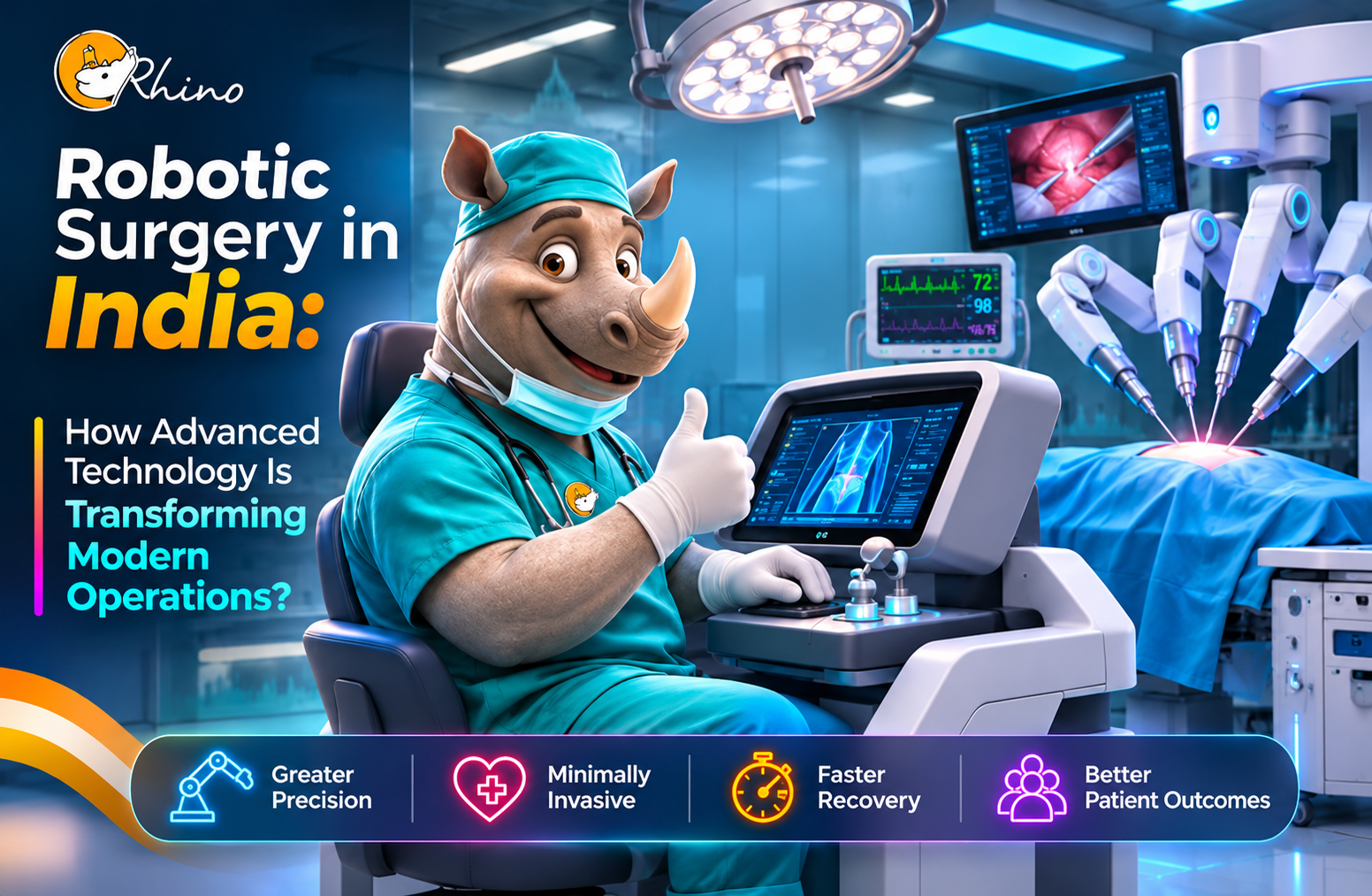
Robotic surgery, also called robot-assisted surgery, is a minimally invasive surgical technique in which a trained surgeon controls specialised robotic instruments.
Instead of directly handling surgical instruments, the surgeon operates from a console that controls robotic arms positioned near the patient.
A typical robotic surgical system includes:
- Surgeon’s console: Allows the surgeon to control the instruments using hand and foot controls.
- Robotic arms: Hold and move specialised surgical instruments.
- 3D camera: Provides a magnified, high-definition view of the surgical area.
One important thing to understand is that robots do not perform operations independently. The surgeon remains in control throughout the procedure.
According to the US Food and Drug Administration (FDA), these systems help trained physicians control surgical instruments through small incisions.
Robotic Surgery in India: What Do the Latest Numbers Tell Us?
India’s healthcare sector is gradually adopting advanced surgical technologies, and robotic-assisted procedures are becoming more common.
The numbers highlight just how quickly this technology is gaining attention.
According to data presented at the Society of Robotic Surgery India 2026 conference, reported by The Economic Times in October 2026, India recorded 44,857 robotic-assisted surgical procedures in 2025, compared with 8,912 in 2021.
That’s approximately a fivefold increase in four years.
Important Statistics
- 44,857 procedures: Robotic-assisted surgeries recorded in India in 2025.
- 8,912 procedures: Recorded in 2021.
- 39 hospitals: Hospitals in Delhi-NCR equipped with robotic systems.
- 10,937 procedures: Robotic-assisted surgeries performed in Delhi-NCR in 2025.
These figures indicate growing adoption, particularly in major healthcare centres.
The technology is being used in specialities such as urology, gynaecology, general surgery and selected cancer-related procedures.
5 Ways Robotic Surgery Is Changing Patient Care
For patients, the biggest question is simple: What difference does this technology make during and after surgery?
Here are five potential benefits.
1. Greater Precision During Surgery
Some operations require surgeons to work around delicate structures, including nerves and blood vessels.
Robotic systems provide enhanced instrument control and magnified visualisation, helping surgeons perform controlled movements in confined spaces.
This can be particularly useful during certain prostate, kidney and pelvic procedures.
2. Smaller Incisions and Less Tissue Damage
Traditional open surgery may require larger incisions to access the affected area.
Many robotic-assisted procedures use smaller incisions instead.
Potential benefits include:
- Less tissue disruption.
- Reduced blood loss in certain procedures.
- Smaller surgical wounds.
- Less post-operative discomfort for some patients.
However, results depend on the procedure and the patient’s condition.
3. Better Visualisation
Robotic systems often provide magnified, high-definition 3D images of the operating area.
This gives surgeons a detailed view of anatomical structures while performing complex procedures.
Better visualisation can be particularly helpful when working around delicate tissues.
4. Potentially Faster Recovery
Nobody wants to spend more time than necessary recovering in a hospital.
Since many robotic-assisted procedures are minimally invasive, some patients may experience shorter hospital stays and return to everyday activities sooner than after comparable open surgery.
However, recovery is not the same for everyone. Age, existing medical conditions and the complexity of the operation also matter.
5. Greater Flexibility for Complex Operations
Specialised robotic instruments can perform controlled movements in areas that may be difficult to access using conventional instruments.
This can help surgeons during selected complex procedures.
For more information, the FDA’s guidance on robotically assisted surgical systems explains their capabilities and appropriate uses.
Which Medical Procedures Use Robotic Surgery?
Robotic-assisted surgery is now used across several medical specialities.
Some common applications include:
- Urology: Prostate removal and selected kidney procedures.
- Gynaecology: Hysterectomy and certain complex pelvic surgeries.
- General surgery: Selected hernia repairs and gastrointestinal procedures.
- Cancer surgery: Certain prostate, colorectal and other cancer-related operations.
- Cardiac and thoracic surgery: Selected heart and chest procedures.
For example, a patient requiring prostate surgery may be offered a robotic-assisted approach depending on the diagnosis, medical history and surgeon’s assessment.
However, robotic surgery is not suitable for every patient. The treating specialist must decide which approach is appropriate.
What Are the Challenges of Robotic Surgery in India?
Despite its growing popularity, robotic surgery still faces some practical challenges.
1. High Treatment Costs
Robotic systems require significant investment in equipment, maintenance and specialised instruments.
These expenses can increase the overall cost of treatment, making the technology less accessible to some patients.
A systematic review of 38 randomised clinical trials involving 5,832 patients found that robotic-assisted surgery was more expensive in 33 of the 36 trials reporting comparable cost data.
2. Limited Availability
Not every hospital has the infrastructure needed for robotic surgery.
Patients living in smaller cities and rural areas may need to travel to larger healthcare centres to access these facilities.
3. Specialised Training
Operating a robotic system requires specific training and practical experience.
Surgeons, nurses and operating-room teams must understand the equipment and work together effectively.
4. Maintenance and Technical Support
Hospitals need reliable technical teams, regular maintenance and specialised equipment to keep robotic systems operational.
These requirements can make adoption challenging for smaller healthcare facilities.
What Should Patients Check Before Choosing Robotic Surgery?
Hearing that a hospital offers robotic surgery may sound reassuring, but patients should look beyond the technology itself.
Before deciding, discuss these important points with your surgeon:
- Experience: How experienced is the surgeon with the specific robotic procedure?
- Suitability: Is robotic surgery appropriate for your medical condition?
- Cost: What is included in the total treatment package?
- Risks: What complications and recovery challenges should you understand?
- Alternatives: Could laparoscopic or traditional surgery provide similar results?
The FDA’s patient guidance also recommends discussing the surgeon’s training, experience, potential risks and alternative treatment options.
Remember, choosing the latest technology does not automatically mean choosing the best treatment. Clinical experience and individual medical needs should always come first.
What Does the Future of Robotic Surgery Look Like in India?
India’s growing interest in medical technology is creating new opportunities for robotic-assisted surgery.
Three developments are particularly interesting.
Indigenous Surgical Robotics
Indian medical technology companies are exploring locally developed robotic systems.
Domestic innovation could help address equipment costs and create more opportunities for hospitals to adopt advanced surgical technology.
Robotic Telesurgery
Imagine a specialist surgeon in one city assisting with an operation taking place hundreds of kilometres away.
Robotic telesurgery is exploring this possibility through remote-controlled surgical systems.
In October 2026, The Economic Times reported demonstrations involving remote robotic procedures between India and other locations.
However, wider adoption will require reliable connectivity, cybersecurity, emergency planning and appropriate regulatory safeguards.
Artificial Intelligence in Surgical Technology
AI may support surgeons through medical imaging, surgical planning and navigation.
Combining AI with robotic systems could create new possibilities for technology-assisted procedures.
However, medical professionals must remain responsible for clinical decisions and patient care.
Conclusion
Robotic surgery is changing how certain operations are performed in India. What was once considered specialised medical technology is gradually becoming part of modern hospital care. With improved visualisation, controlled instrument movements and smaller incisions, robotic-assisted procedures offer potential benefits for patients undergoing suitable operations.
The increase from 8,912 procedures in 2021 to 44,857 in 2025 also shows how quickly adoption is growing. However, high treatment costs, limited availability and the need for specialised training remain important challenges.
For patients and families, the priority should always be understanding the available treatment options and choosing an experienced surgeon. Robotic surgery is not automatically the right choice for everyone.
As India continues investing in healthcare innovation, this technology could open new possibilities for surgical care. Want to discover more about the technologies shaping modern healthcare? Visit Rhino Tech Media for more informative articles, practical insights and the latest technology developments.
