
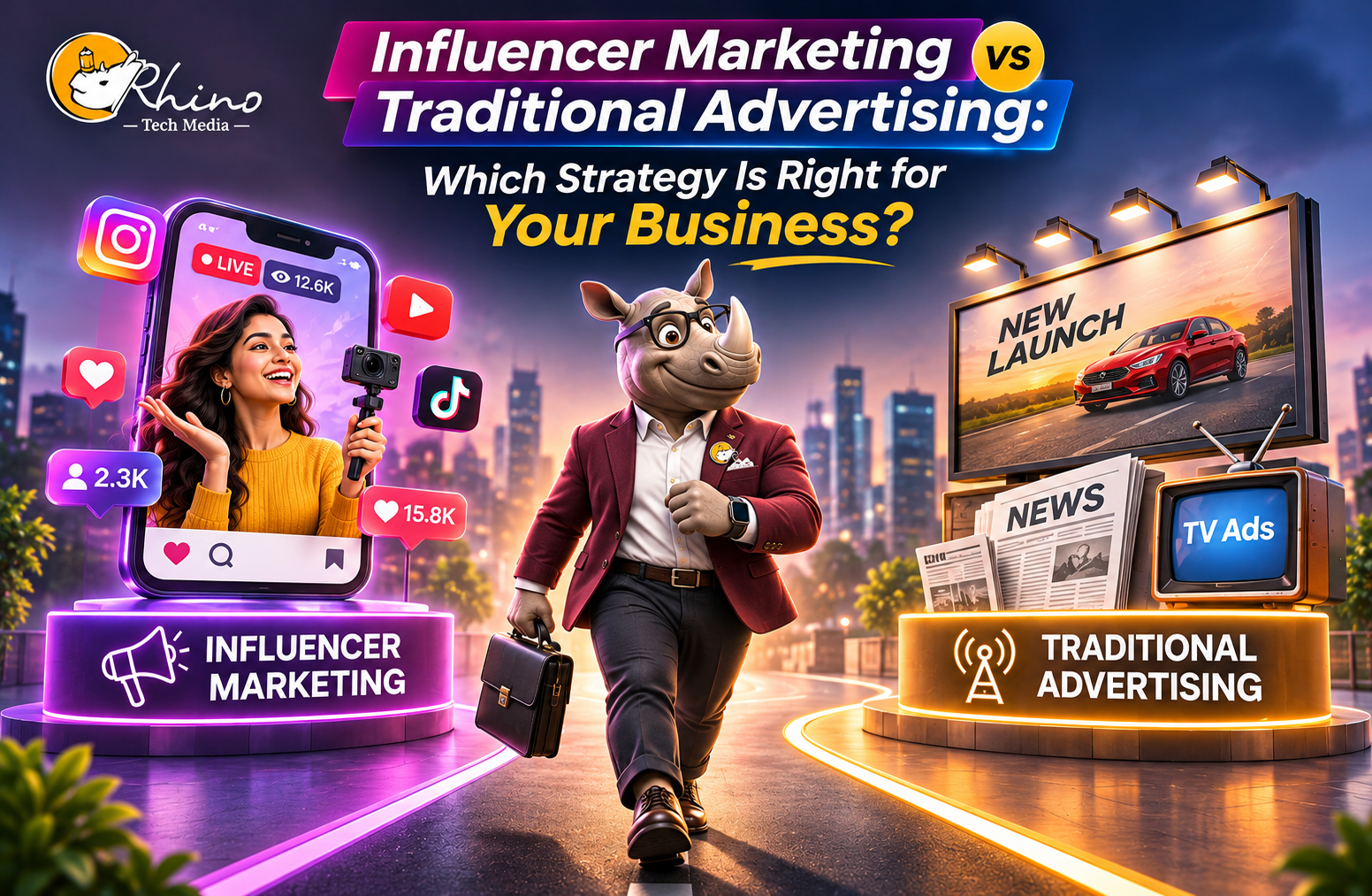
Think about the last time you discovered a new product. Was it through an Instagram reel, a YouTube review, a television commercial or a billboard you noticed on your way to work?
Today, people discover brands in different ways. Some trust recommendations from creators they follow, while others remember familiar brands through advertisements they see regularly.
This changing behaviour has made businesses rethink their marketing strategies. Two approaches that continue to play an important role are influencer marketing and traditional advertising.
But which one works better? Should businesses invest in social media creators or stick with conventional advertising methods?
The answer depends on your target audience, budget and business goals. Let’s understand how both strategies work and how to choose the right approach.
What Is Influencer Marketing?
Have you ever considered buying a product after watching someone review or demonstrate it online? That’s influencer marketing in action.
It involves collaborating with content creators who have built an audience on platforms such as Instagram, YouTube and Facebook. They promote products or services through reviews, tutorials, demonstrations and sponsored posts.
For example, a skincare brand might collaborate with a beauty influencer who demonstrates how its moisturiser fits into a daily skincare routine. Instead of seeing a regular advertisement, potential customers get to see the product being used.
Types of Influencers
- Nano-influencers: Typically have 1,000–10,000 followers and connect with niche communities.
- Micro-influencers: Usually have 10,000–100,000 followers and focus on specific interests.
- Macro-influencers: Have larger audiences and offer wider brand exposure.
- Mega-influencers: Celebrities and popular creators with millions of followers.
Businesses should consider audience relevance and engagement rather than choosing influencers based only on follower numbers.
What Is Traditional Advertising?
Think about television commercials, newspaper promotions, radio advertisements and billboards along busy roads. These are all examples of traditional advertising.
It involves promoting products and services through established offline media channels.
Common methods include:
- Television advertisements: Reaching audiences through commercial breaks.
- Radio advertising: Promoting products through audio advertisements.
- Newspaper and magazine ads: Reaching regular print readers.
- Billboards: Building visibility in busy locations.
- Brochures and flyers: Sharing product details and promotional offers.
For example, a new shopping mall might use newspaper advertisements and outdoor banners to inform local residents about its opening.
Traditional advertising remains valuable, particularly for businesses targeting specific locations or wider audiences.
Influencer Marketing vs Traditional Advertising: 5 Key Differences
Both strategies help businesses attract customers, but they approach marketing differently.
| Factors | Influencer Marketing | Traditional Advertising |
| Communication | Personal and conversational | Brand-controlled |
| Audience | Specific communities | Broad audiences |
| Trust | Creator-audience relationships | Brand reputation |
| Cost | Flexible, depending on the creator | Depends on the advertising medium |
| Engagement | Comments, shares and interactions | Generally one-way communication |
Let’s explore the differences that matter when planning a marketing campaign.
1. Audience Reach and Targeting
Reaching thousands of people sounds impressive, but are they actually interested in your products?
Traditional advertising helps businesses reach wider audiences through television, newspapers and outdoor promotions.
Influencer marketing offers more focused targeting by connecting brands with creators whose followers share relevant interests.
Example: A fitness centre could advertise through local billboards while collaborating with fitness influencers to reach people interested in exercise and healthy lifestyles.
Both approaches increase visibility, but they connect with potential customers differently.
2. Customer Trust and Credibility
People don’t always believe everything they see in advertisements. Before purchasing something, they often look for reviews, recommendations and product demonstrations.
Influencer marketing can help businesses build familiarity by showing how products work in everyday situations.
However, creators need to maintain credibility. Too many promotional posts or exaggerated claims can affect audience trust.
Traditional advertising builds recognition through consistent messaging, professional presentation and repeated exposure.
3. Advertising Costs and Budget
Marketing budgets are important, especially for small businesses.
Influencer marketing offers flexibility because businesses can collaborate with smaller creators instead of immediately investing in celebrity partnerships.
Traditional advertising costs depend on the channel, location, production requirements and campaign duration. Television and premium billboard placements may require significant investment.
Before choosing either strategy, consider:
- Your available marketing budget.
- Your target audience.
- Expected campaign results.
- The ability to measure enquiries and sales.
The cheapest option isn’t always the most effective. Focus on the value your campaign delivers.
4. Customer Engagement
Imagine seeing a newspaper advertisement for a new restaurant. You might notice its menu and offers, but you cannot directly interact with the advertisement.
Now imagine watching a food influencer visit the restaurant, try different dishes and share their experience.
You can ask questions, check prices and read other people’s comments.
This interaction makes influencer marketing useful for businesses that want to encourage conversations and understand customer interests.
5. Measuring Marketing Results
How do you know whether your advertising campaign is bringing actual customers?
Influencer marketing can be measured through:
- Likes, comments and shares.
- Website visits and referral traffic.
- Discount code usage.
- Product enquiries and leads.
- Sales and return on investment (ROI).
Traditional advertising can be evaluated through audience reach, impressions, promotional codes, QR codes and campaign-specific contact numbers.
Businesses can also use Google Analytics 4 to understand website traffic and customer behaviour.
Important Influencer Marketing Statistics
The growing investment in influencer marketing shows how businesses are adapting to changing customer behaviour.
India’s influencer marketing industry: According to the India Influencer Marketing Report, the industry was valued at approximately ₹3,600 crore in 2024, with 25% growth projected for 2025.
Global creator advertising investment: The Interactive Advertising Bureau (IAB) projected US creator advertising spending to reach $37 billion in 2025, representing 26% year-on-year growth.
These figures highlight the growing importance of creator partnerships. However, spending more doesn’t automatically guarantee better results. Choosing relevant creators and creating useful content remain essential.
Which Strategy Is Right for Your Business?
There isn’t one strategy that works for every business. Your decision should depend on your customers and marketing objectives.
Choose Influencer Marketing If:
- Your customers actively use social media.
- Your products benefit from reviews and demonstrations.
- You want to reach specific communities.
- You operate in fashion, beauty, food, fitness or lifestyle industries.
- You want to increase online engagement and sales.
Choose Traditional Advertising If:
- You want stronger local or regional visibility.
- Your audience regularly consumes television, radio or print media.
- You’re launching a new store, product or public event.
- You want to reach a broad customer base.
- You want to build brand recognition through repeated exposure.
Can You Combine Both Strategies?
Absolutely! Businesses don’t always have to choose between influencer marketing and traditional advertising.
For example, imagine you’re opening a new restaurant in Coimbatore.
You could:
- Put up outdoor banners to create local awareness.
- Publish newspaper advertisements announcing the opening.
- Invite local food influencers to try the menu and share their experiences.
- Promote their videos through social media advertisements.
- Track reservations and customer enquiries to understand campaign performance.
This approach combines traditional visibility with digital engagement.
Businesses working with influencers in India should also follow the ASCI influencer advertising guidelines and clearly disclose paid partnerships.
Conclusion: Choose the Strategy That Supports Your Business Growth
Influencer marketing and traditional advertising both offer valuable ways to reach customers and build brand recognition. While traditional advertising helps businesses create wider visibility, influencer marketing encourages more personal connections through creators and their communities.
The right choice depends on your audience, marketing budget and business objectives. Instead of following every new marketing trend, focus on understanding your customers and how they make purchasing decisions.
Start with clear goals, choose the right channels and measure what actually brings results. You can also combine both approaches to create a stronger marketing presence.
At Rhino Tech Media, we believe successful marketing is about more than getting attention. It’s about reaching the right people, building meaningful connections and turning opportunities into business growth.
Ready to improve your marketing strategy? Connect with Rhino Tech Media and explore smarter ways to grow your business.
