
Introduction
India’s digital shopping market is growing fast, and the government introduced the Open Network for Digital Commerce to help small businesses become part of this online revolution. The idea behind ONDC is powerful and simple — give every small seller, kirana store, home business, and local brand a fair chance to sell online without depending completely on giant platforms like Amazon or Flipkart.
ONDC was designed like a digital public network, similar to how UPI changed online payments in India. Instead of one company controlling everything, ONDC allows buyers and sellers from different apps to connect with each other freely. In theory, this creates more opportunities, lower commissions, and better visibility for small sellers.
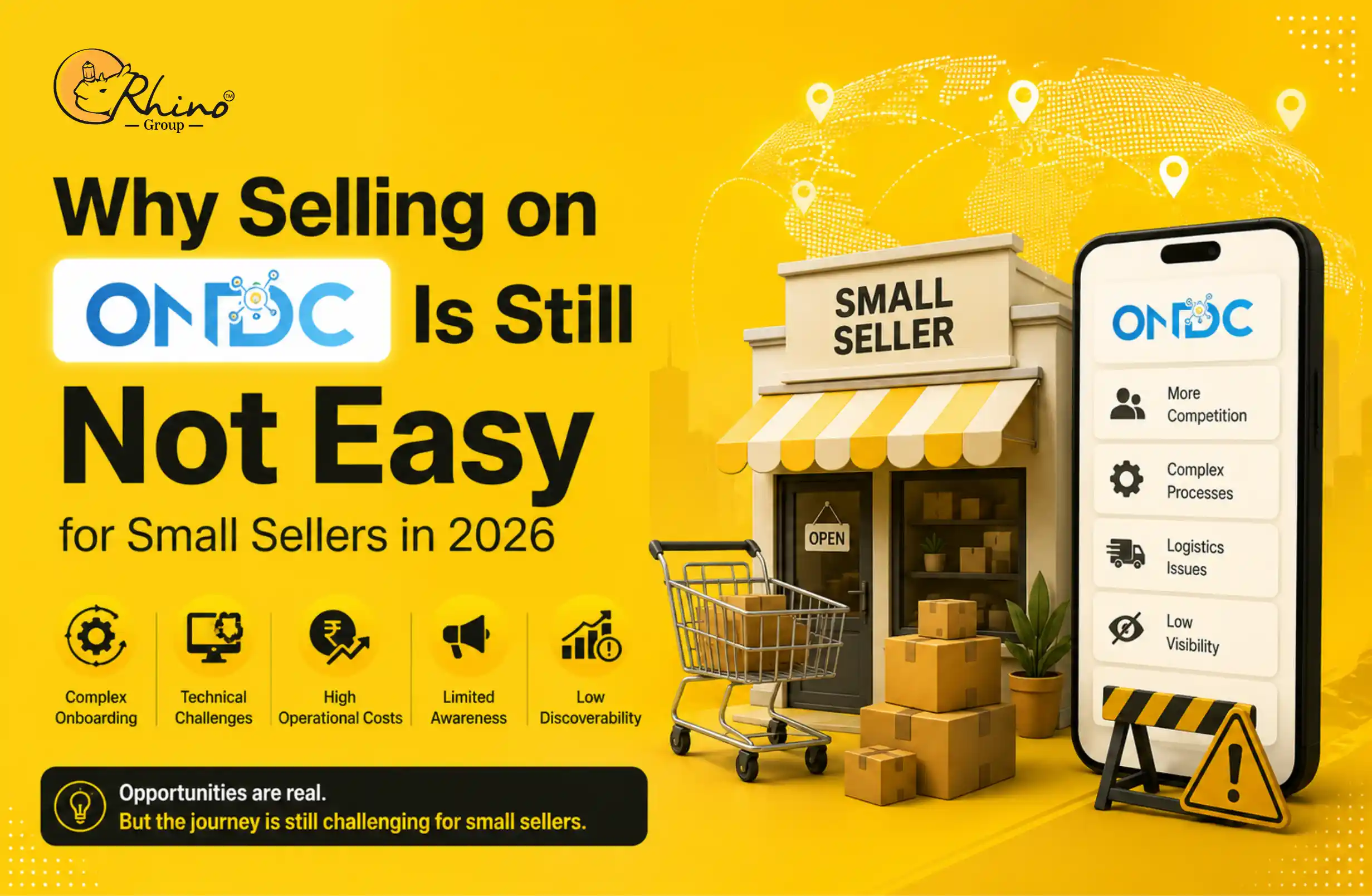
But in 2026, many small business owners say the ground reality is very different. While joining ONDC is easy, earning consistent profit from it is still difficult. Sellers are struggling with delivery costs, late payments, returns, technology confusion, and low visibility. Many people who entered the platform with excitement are now frustrated because managing ONDC requires time, money, and technical knowledge that small businesses often do not have.
This blog explains in simple language why selling on ONDC is still not easy for small sellers, what real challenges they face every day, and what changes are needed to make the platform truly helpful for India’s local businesses.
What Is ONDC and Why Was It Created?
The Open Network for Digital Commerce is not a shopping app like Amazon or Flipkart. It is an open digital network that connects sellers, buyer apps, and logistics companies together.
To understand it easily, think about UPI. A person using PhonePe can send money to someone using Google Pay because both apps are connected to the same network. ONDC works in a similar way for online shopping. A customer using one buyer app can purchase products from a seller registered on another seller app.
The government introduced ONDC mainly to solve one major problem — the domination of a few big ecommerce companies. Small sellers often complained that large platforms charged high commissions, controlled product visibility, and forced businesses into price wars. ONDC promised to create a more open and fairer marketplace.
Some important features of ONDC include:
- Open access for all types of sellers
- Lower platform commissions
- Freedom to choose different seller apps
- Better opportunities for local businesses
- More competition in ecommerce
Because of these promises, thousands of small sellers across India joined the network hoping to grow their business online.
Why Small Sellers Are Still Struggling on ONDC
Even though ONDC’s vision is impressive, many sellers say the daily experience is stressful and complicated. The platform may be open, but success is not automatic.
Here are the biggest problems small sellers face in 2026.
1. High Costs Are Reducing Profits
One of the biggest promises of ONDC was lower commission fees. Technically, platform charges may be lower than traditional ecommerce marketplaces, but sellers say the total cost of doing business is still very high.
Many small sellers discover that simply listing products is not enough. To get visibility, they must spend money on advertisements inside buyer apps. Without promotions, their products rarely appear in search results.
At the same time, delivery charges are becoming a major burden. For low-value orders, logistics costs can consume a large part of the profit margin. Packaging expenses and return shipping costs add even more pressure.
For example, if a seller receives a ₹250 order, the final profit may disappear after including:
- Delivery charges
- Packaging materials
- Advertisement spending
- Seller app fees
- Return losses
Many small business owners say that after all deductions, they lose around 25% to 35% of their earnings. For a local kirana shop or home-based business, this makes long-term survival difficult.
2. Technology Is Still Too Complicated
Large ecommerce companies have teams that manage inventory, order processing, and customer support. Small sellers usually manage everything alone.
This is where ONDC becomes difficult for many people.
A local seller must constantly:
- Update stock availability
- Change product prices
- Print shipping labels
- Handle packaging
- Track deliveries
- Manage returns
- Monitor payments
If inventory is not updated correctly, customers may place orders for products that are already out of stock. This can lead to penalties and poor ratings.
Another problem is that many seller apps are not beginner-friendly. Small business owners who are not comfortable with technology often struggle to understand dashboards, reports, and logistics systems.
Many sellers also complain that proper training is missing, especially in regional languages like Tamil, Hindi, Marathi, or Telugu. A small shop owner should not need advanced technical knowledge just to sell products online.
As a result, sellers spend hours daily managing online operations instead of focusing on their actual business.
3. Payment Delays Create Cash Flow Problems
3. Payment Delays Create Cash Flow Problems
For small businesses, regular cash flow is extremely important. Most local sellers use daily income to purchase fresh stock and run their shops. But on ONDC, payment systems are still confusing for many sellers.
Unlike traditional ecommerce platforms that often provide fixed settlement cycles, ONDC payments may come from different buyer apps and logistics partners. This creates delays and confusion.
Common complaints include:
- Payments taking 7 to 15 days
- Unclear deductions in reports
- Money arriving in multiple small settlements
- Delayed dispute resolution
- Lack of transparency in refunds and penalties
For a large company, delayed payments may not be a major issue. But for a small seller, waiting two weeks for money can completely affect business operations. Many sellers say they cannot restock products quickly because their payments are stuck in the system.
4. Return Orders Are Becoming a Big Loss
Returns are one of the most painful problems for small sellers on ONDC.
To build customer trust, many buyer apps offer easy return policies. While this benefits customers, it often creates losses for sellers.
Some buyers place orders only to check products and later return them without serious reasons. In cash-on-delivery orders, fake addresses and rejected deliveries are also common.
For small businesses, every return means:
- Loss of delivery charges
- Return shipping expenses
- Damaged or unsellable products
- Wasted packaging costs
- Time loss
This problem becomes even worse for categories like clothing, handmade items, food products, and cosmetics.
Many sellers feel there are not enough protections against return abuse and fake orders. Because of this, some businesses avoid listing expensive or fragile products altogether.
5. Small Sellers Still Struggle to Get Visibility
ONDC gives every seller a chance to join the network, but visibility remains a major challenge. Customers naturally trust well-known brands more than unknown local sellers. Buyer apps also tend to promote businesses that spend heavily on advertisements.
As a result, new or small sellers often remain hidden at the bottom of search results.
Some major visibility challenges include:
- Big brands dominating search rankings
- Expensive ad competition
- Low customer trust for unknown sellers
- Lack of reviews for new businesses
- Extreme price competition
For example, a small homemade snacks business in a tier-2 city may struggle to compete with established national brands that spend lakhs on promotions every month.
Even if the product quality is excellent, visibility becomes the biggest obstacle.
What ONDC Must Improve for Small Sellers
The core idea of ONDC is still strong and important for India’s future digital economy. But the system needs practical improvements to truly support local businesses.
Some important changes that could help small sellers include:
Simpler Technology
ONDC should create easier tools where sellers can manage listings, orders, payments, and support from one simple dashboard.
Faster Payments
Quick payment settlement within 2–3 days would reduce financial pressure on small businesses.
Better Seller Training
Training programs in regional languages would help small shop owners understand ecommerce operations more confidently.
Stronger Protection Against Fake Returns
There should be stricter rules to reduce fraud returns and fake cash-on-delivery orders.
Lower Delivery Costs
Affordable logistics support for small-value orders would improve seller profitability.
More Visibility for Small Businesses
Buyer apps should promote local and small sellers fairly instead of favoring only large advertisers.
Conclusion
The Open Network for Digital Commerce was launched with a strong vision to make online selling more open and fairer for small businesses across India. It has already helped many local shops, home businesses, and small brands enter the digital marketplace and reach customers beyond their cities. This is a big step toward creating equal opportunities in ecommerce.
Although small sellers still face challenges like high delivery costs, return losses, payment delays, and technology confusion, ONDC continues to improve and expand. With better seller support, easier tools, faster payments, and training in regional languages, the platform can become much more useful for small businesses in the coming years.
The positive side is that ONDC has created hope for lakhs of entrepreneurs who earlier had limited access to online selling. If the ecosystem becomes more seller-friendly and practical, ONDC has the potential to transform India’s ecommerce industry and help small businesses grow successfully in the digital economy.
