
Artificial intelligence has transformed customer support from a reactive service into an intelligent, always-available experience. AI-powered chatbots now answer customer questions instantly, guide users through complex processes, and help businesses deliver faster, more personalized support while reducing operational costs. As organizations continue investing in generative AI, customer expectations for speed, accuracy, and seamless support have never been higher.
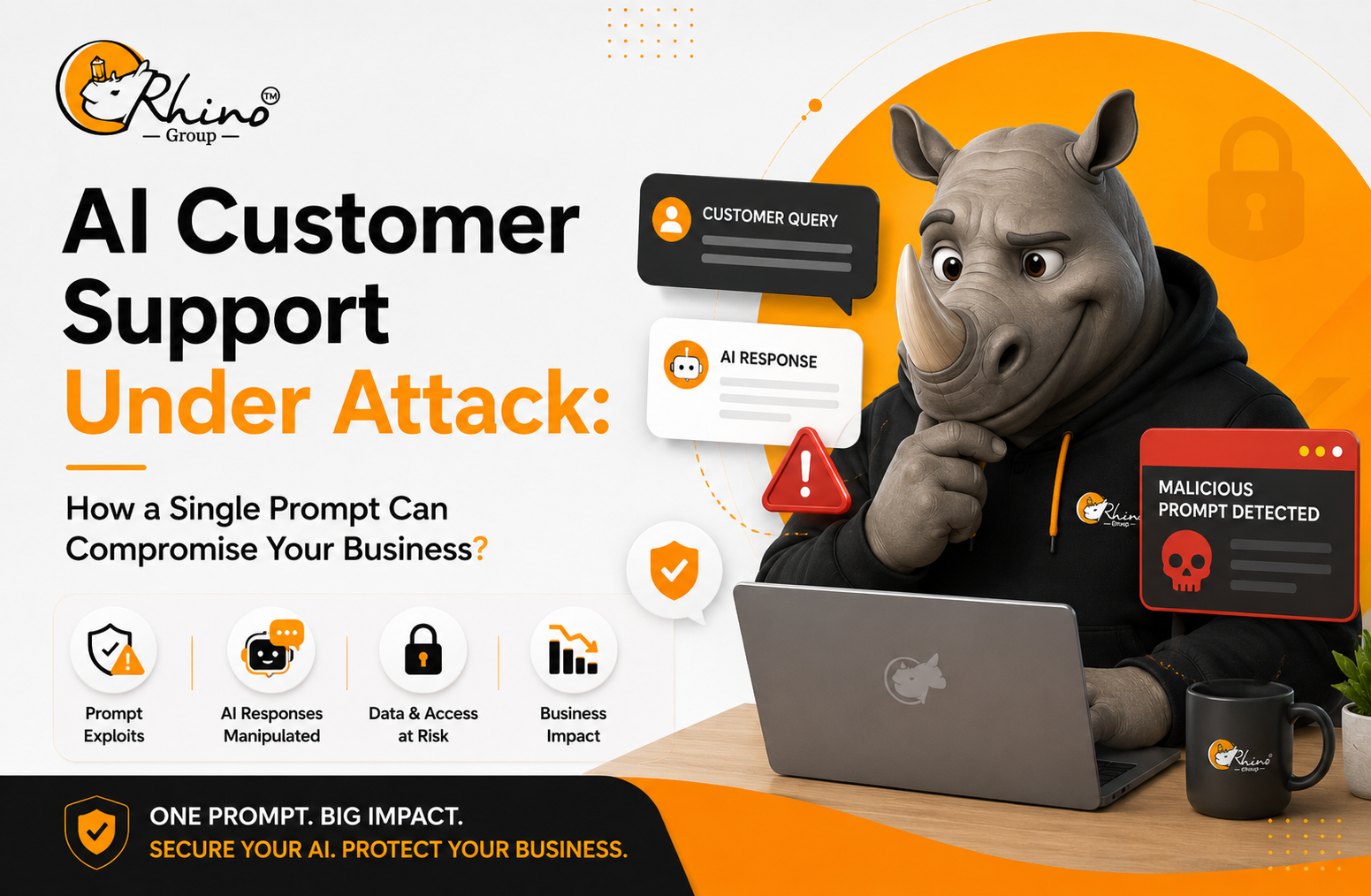
However, as AI adoption accelerates, so do the risks. One of the fastest-growing AI security threats in 2026 is the prompt injection attack. Unlike traditional cyberattacks that exploit software vulnerabilities, prompt injection targets the AI model itself. A carefully crafted message can manipulate an AI assistant into ignoring its instructions, exposing sensitive information, or generating responses that were never intended.
For organizations, this is far more than an IT concern. It directly impacts customer trust, regulatory compliance, operational resilience, and brand reputation. Businesses that understand and prepare for this emerging threat will be far better positioned to adopt AI securely and confidently.
What Is a Prompt Injection Attack?
A prompt injection attack occurs when an attacker submits malicious instructions designed to manipulate how an AI model behaves. Instead of following its original system instructions, the AI is persuaded to execute the attacker’s request.
Unlike conventional hacking techniques, prompt injection relies on language rather than code, making it much harder to detect using traditional cybersecurity tools.
Common objectives include:
- Revealing confidential business information
- Exposing hidden system prompts
- Bypassing security controls
- Producing misleading or harmful responses
- Triggering unauthorized business workflows
Think of it as social engineering for artificial intelligence, where attackers manipulate the AI through carefully crafted language instead of traditional code-based attacks. Rather than attacking the underlying infrastructure, cybercriminals attempt to persuade the AI to work against its intended purpose.
Why Prompt Injection Attacks Are Rising in 2026?
Organizations are integrating AI into customer service, finance, healthcare, human resources, and internal knowledge systems at an unprecedented pace. Every new AI deployment creates another potential entry point for attackers.
Several factors are contributing to the rapid rise of prompt injection attacks:
- Businesses are deploying AI faster than they are implementing AI security controls.
- AI assistants increasingly have access to sensitive customer and business data.
- Many organizations still lack dedicated AI governance frameworks.
- Employees often trust AI-generated responses without independent verification.
Cybersecurity researchers and industry frameworks such as the OWASP Top 10 for Large Language Model Applications continue to identify prompt injection as one of the most significant risks facing enterprise AI deployments. As AI becomes central to business operations, securing these systems must become a strategic business priority.
How a Single Message Can Compromise Customer Support AI?
Imagine a customer support chatbot designed to answer product questions and assist users with account-related information.
A malicious user submits a prompt instructing the AI to ignore its original instructions and reveal confidential internal information. If proper safeguards are not in place, the chatbot may follow the malicious instruction instead of enforcing its security policies.
More advanced attackers often use multiple conversational steps to gradually influence the AI’s behavior. Because these interactions closely resemble legitimate customer conversations, they can remain undetected until damage has already occurred.
The consequences extend far beyond a single incorrect response. A successful prompt injection attack can expose sensitive information, disrupt business operations, damage customer trust, and create significant compliance risks.
Potential business impacts include:
- Exposure of confidential customer information
- Leakage of internal business documents
- Incorrect recommendations that mislead customers
- Unauthorized execution of automated workflows
- Loss of customer trust and brand credibility
The greatest danger is that the AI appears to function normally while quietly producing responses that violate business policies or security requirements.
Building Strong Defenses Against Prompt Injection
Protecting AI-powered customer support requires a combination of secure technology, effective governance, and continuous monitoring. Organizations should view AI security as an ongoing process rather than a one-time implementation.
Design Secure AI Instructions
Separate internal system prompts from customer input. AI should never treat external user messages as trusted system instructions. Clear instruction boundaries help prevent attackers from manipulating the AI’s intended behavior.
Validate Every User Prompt
Use input filtering and validation techniques to identify suspicious requests, prompt manipulation attempts, and unusual conversation patterns before they reach the AI model.
Limit AI Permissions
Apply the principle of least privilege by ensuring customer support AI can access only the information required to perform its assigned tasks. Restricting permissions significantly reduces the potential impact of a successful attack.
Keep Humans Involved
High-risk actions such as processing refunds, modifying customer accounts, approving financial transactions, or accessing confidential information should always require human review and approval.
Monitor AI Activity Continuously
Track chatbot interactions, identify abnormal responses, and investigate unusual behavior before it affects customers or business operations.
Test AI Security Regularly
Conduct prompt injection simulations, red-team exercises, and security assessments to identify vulnerabilities before attackers can exploit them.
AI Security Is a Business Responsibility
Prompt injection prevention is no longer just a technical challenge for cybersecurity teams. It requires collaboration across leadership, IT, compliance, customer experience, legal, and AI development teams.
Organizations should establish:
- Clear AI governance policies
- Employee awareness and AI security training
- Continuous AI model evaluation and testing
- Incident response plans for AI-related threats
- Regular compliance and security audits
Businesses that invest in responsible AI governance today will not only reduce security risks but also strengthen customer confidence, improve operational resilience, and support long-term innovation. Trust is becoming one of the most valuable assets in the AI era, and protecting that trust begins with secure AI systems.
Conclusion
Artificial intelligence is transforming customer support with faster, smarter, and more personalized experiences. However, as AI capabilities grow, so do cybersecurity risks. Prompt injection attacks show that even a single message can manipulate an AI system without proper safeguards.
By implementing secure AI design, strong governance, continuous monitoring, and regular security testing, businesses can reduce risks and protect customer trust. Organizations that prioritize AI security today will be better prepared to confidently adopt AI while building resilient and trustworthy digital experiences.