
Overview
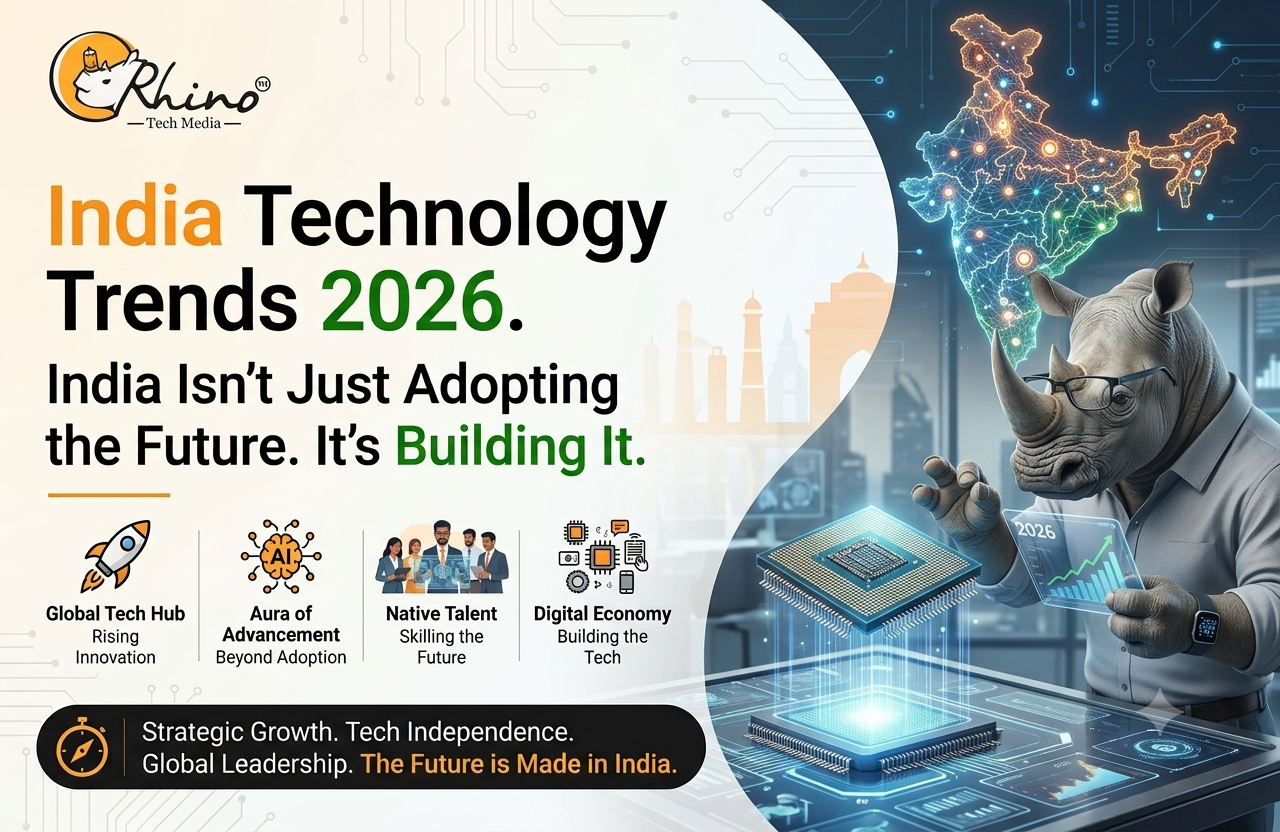
India’s technology ecosystem is entering a new phase in 2026—moving beyond digital adoption toward AI-driven innovation, advanced manufacturing, semiconductor development, and intelligent digital infrastructure. With a large technology talent pool, rapidly expanding digital economy, and strong public and private investment, India is strengthening its position as a global technology powerhouse.
Key Technology Highlights in India 2026:
- l Artificial Intelligence & Generative AI: Businesses are increasingly integrating AI into customer service, software development, analytics, marketing, healthcare, finance, and operations.
- l Agentic AI: AI systems capable of planning, reasoning, and completing multi-step tasks are emerging as the next stage of enterprise automation.
- l Semiconductor Growth: Investments in chip manufacturing, electronics, and semiconductor supply chains are strengthening India’s position in the global technology ecosystem.
- l Digital Public Infrastructure: India’s digital platforms and payment infrastructure continue to support large-scale digital services, commerce, financial inclusion, and innovation.
- l Cloud & Data Centres: Growing AI workloads and digital services are driving demand for cloud infrastructure, data centres, high-performance computing, and edge technologies.
- l Smart Manufacturing: AI, robotics, Industrial IoT, automation, and predictive analytics are helping manufacturers improve productivity, efficiency, and quality.
- l Cybersecurity: As digital adoption expands, organizations are increasing investments in AI-powered threat detection, data protection, identity management, and cyber resilience.
- l Deep Tech & Robotics: Startups and technology companies are increasingly exploring robotics, space technology, advanced engineering, quantum technologies, and other deep-tech sectors.
- l India-Language AI: AI solutions designed for India’s diverse languages and regional markets are opening new opportunities in education, healthcare, commerce, government services, and financial technology.
- l FinTech Innovation: Digital payments, embedded finance, AI-powered financial services, and technology-led banking continue to reshape India’s financial ecosystem.
From artificial intelligence and cloud computing to fintech, cybersecurity, robotics, and deep tech, emerging technologies are transforming how Indian businesses operate, compete, and create value. At the same time, India’s focus on domestic innovation and digital infrastructure is creating opportunities across industries and supporting the country’s ambition to become a major global technology hub.
Artificial Intelligence Becomes a Major Growth Driver
Artificial intelligence is one of the defining technology trends in India in 2026. Businesses are moving from experimenting with AI to integrating it into everyday operations.
Generative AI, predictive analytics, machine learning, and AI-powered automation are being adopted across industries including banking, healthcare, retail, manufacturing, education, IT, and telecommunications.
Key developments include:
- l Wider adoption of Generative AI for content, software, research, and customer service.
- l AI-powered business intelligence and decision-making.
- l Automated customer support and personalized experiences.
- l Predictive analytics for demand, risk, and operations.
- l AI-assisted software development.
- l Greater investment in domestic AI models and computing infrastructure.
The shift is clear: AI is moving from an experimental technology to a core business capability. From financial services and healthcare to manufacturing, retail, education, and IT, AI is helping businesses improve productivity, personalize customer experiences, analyze complex data, and make faster decisions.
Agentic AI and Intelligent Automation
The next stage of AI is moving beyond generating information toward taking action.
Agentic AI systems can potentially plan tasks, interact with software, analyze information, and complete multiple steps with limited human intervention. Indian enterprises are beginning to explore these technologies for complex workflows.
Potential applications include:
- l Automated customer service.
- l Financial and insurance processing.
- l Software development.
- l Research and data analysis.
- l Supply-chain management.
- l Fraud detection.
- l Internal business operations.
As adoption grows, companies will increasingly focus on AI governance, security, transparency, and human oversight.
Semiconductor and Electronics Manufacturing
Semiconductors are becoming strategically important to India’s technology ambitions.
India is strengthening its semiconductor ecosystem through investments in chip manufacturing, electronics production, semiconductor packaging, design capabilities, and supporting supply chains.
Key areas of development:
- l Semiconductor fabrication.
- l Chip design and engineering.
- l Advanced packaging.
- l Electronics manufacturing.
- l Semiconductor equipment and supply chains.
- l Development of skilled semiconductor talent.
The long-term objective is to build a stronger domestic technology manufacturing ecosystem while becoming a more significant participant in global semiconductor supply chains.
Cloud Computing and Data Centre Expansion
The growth of AI and digital services is creating significant demand for computing power and data storage.
Businesses are increasingly adopting cloud platforms to support applications, analytics, cybersecurity, remote collaboration, and AI workloads. At the same time, India’s expanding digital economy is driving investment in data centres.
Key developments:
- l Expansion of cloud infrastructure.
- l AI-ready computing facilities.
- l Hyperscale data centres.
- l Edge computing.
- l Hybrid and multi-cloud adoption.
- l Greater focus on data security and sovereignty.
As AI applications become more computationally intensive, high-performance computing infrastructure will become an increasingly important part of India’s digital economy.
Cybersecurity Becomes a Strategic Priority
As organizations become increasingly digital, cybersecurity is no longer simply an IT function—it is becoming a core business priority.
The growth of AI also creates new opportunities for cyber defence while introducing new risks, including sophisticated automated attacks and AI-generated threats.
Businesses are focusing on:
- l AI-powered threat detection.
- l Cloud security.
- l Identity and access management.
- l Data protection.
- l Security automation.
- l Zero-trust architecture.
- l Cyber-resilience planning.
Organizations will need to balance rapid technology adoption with strong security and governance frameworks.
India-Language and Inclusive AI
India’s linguistic diversity creates a unique opportunity for AI development.
Technology companies and researchers are increasingly working on AI systems that can understand and generate India’s many languages and dialects.
Potential applications include:
- l Education.
- l Healthcare.
- l Government services.
- l Financial services.
- l Customer support.
- l E-commerce.
- l Rural digital access.
Localized AI could help bring advanced digital services to millions of people who have historically faced language barriers online.
Healthcare Technology and Digital Health
Technology is transforming healthcare delivery across India.
AI, digital diagnostics, telemedicine, electronic health records, wearable devices, and data analytics are creating new possibilities for prevention, diagnosis, monitoring, and personalized care.
Key developments include:
- l AI-assisted diagnostics.
- l Telemedicine.
- l Digital health records.
- l Remote patient monitoring.
- l Wearable health technologies.
- l Healthcare analytics.
- l Personalized medicine.
The combination of healthcare expertise and emerging technology could create significant opportunities for India’s health-tech ecosystem.
Technology-Driven Sustainability
Technology is increasingly being used to address environmental and energy challenges.
AI and digital systems can help organizations monitor energy consumption, optimize operations, manage resources, and reduce waste.
Important areas include:
- l Renewable energy technology.
- l Smart grids.
- l Energy-efficient data centres.
- l Electric mobility.
- l Smart buildings.
- l Sustainable manufacturing.
- l AI-powered resource management.
The intersection of technology and sustainability is expected to become increasingly important for both businesses and policymakers.
Conclusion
India’s technology landscape in 2026 is entering a new era defined by AI, innovation, connectivity, and intelligent infrastructure. From artificial intelligence and semiconductor manufacturing to FinTech, cloud computing, robotics, cybersecurity, and deep tech, emerging technologies are reshaping industries and creating new opportunities for businesses.
The country’s growing digital ecosystem, expanding technology talent, startup culture, and investment in advanced infrastructure are strengthening its position on the global technology stage. At the same time, the adoption of India-focused and multilingual technologies is helping make innovation more accessible across diverse markets.
The road ahead will depend on how effectively businesses and policymakers balance innovation with cybersecurity, responsible AI, sustainability, and digital inclusion.
