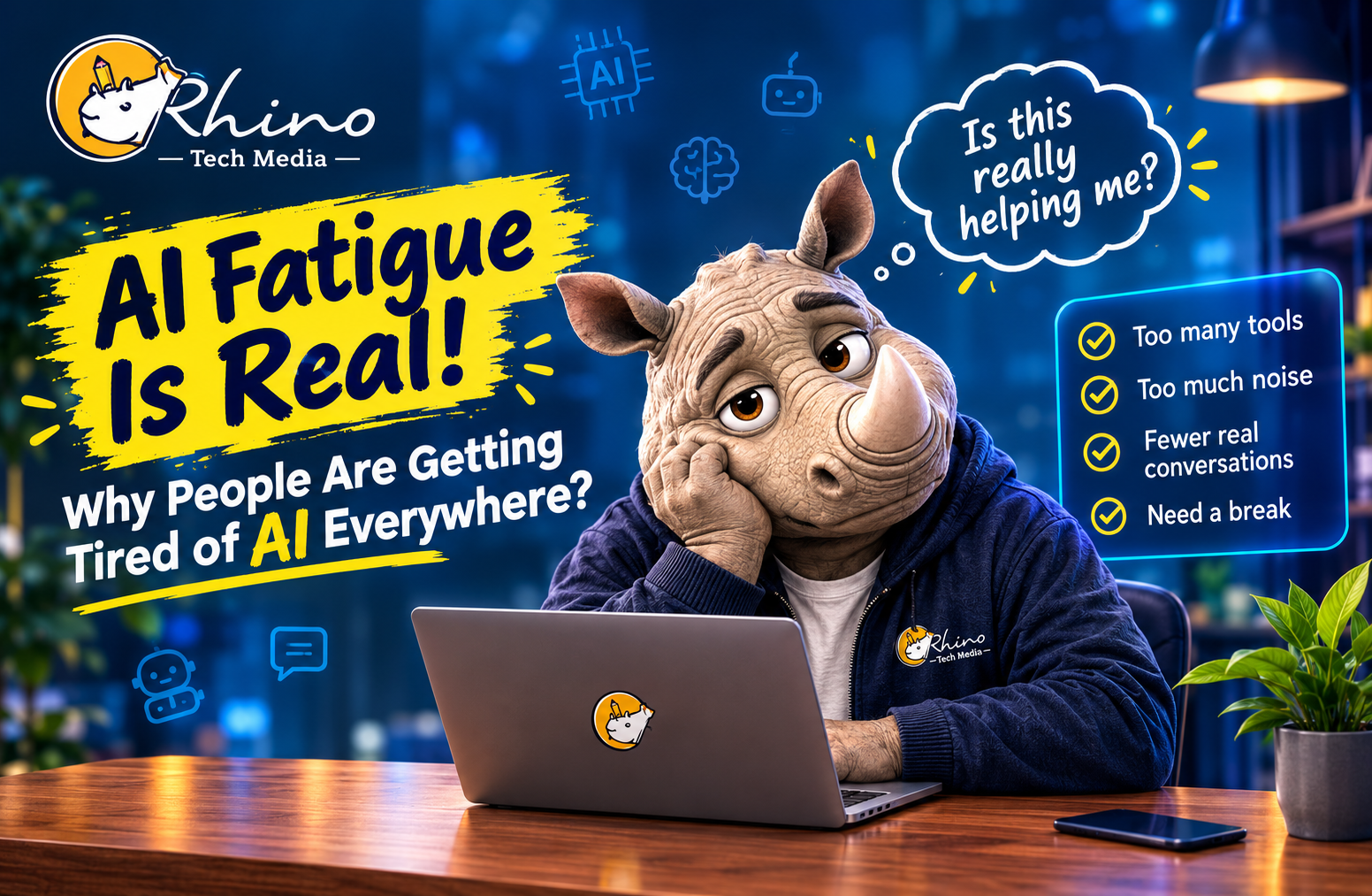
AI is becoming part of our everyday work. Businesses are exploring it to improve efficiency, support their teams, and simplify daily tasks. But as AI becomes more common, a new concern is emerging: people are starting to feel overwhelmed by it.
Think about scrolling through social media and seeing similar posts everywhere. Or imagine being expected to learn another AI tool at work when you are already struggling to manage your daily responsibilities.
It can get exhausting.
This growing frustration is known as AI fatigue. The problem is not necessarily artificial intelligence itself. It is how businesses use it, how quickly they introduce new technology, and whether they remember the people behind the process.
The solution is not to reject AI. It is to understand its role. AI should support human expertise, not replace human thinking, creativity, and decision-making. And this is where the right professional guidance can make a real difference.
What Is AI Fatigue, and Why Does It Matter?
AI fatigue describes the frustration or mental overload people experience when technology becomes another demand rather than a genuine help.
It can affect employees, business owners, marketers, and customers.
Some common signs include:
- Feeling pressured to keep up with every new AI development.
- Seeing repetitive content that lacks a personal touch.
- Worrying about job security and changing workplace expectations.
- Spending additional time checking AI-assisted work for mistakes.
- Feeling frustrated when automated services cannot understand a real problem.
For businesses, these challenges can affect productivity, customer trust, and the quality of their digital communication.
The important question is not how much AI a business can adopt. It is how effectively people can use technology to achieve better results.
Why Are People Getting Tired of AI Everywhere?
1. Digital Content Is Losing Its Personal Touch
AI-assisted content production has made it easier for businesses to prepare marketing materials. However, when companies rely too heavily on similar templates and generic ideas, their communication can start to feel repetitive.
Customers want to know what makes a business different. They want helpful information, genuine experiences, and a brand that understands their needs.
Simply publishing more content does not guarantee better engagement.
What businesses should do:
- Start with real customer questions and problems.
- Add original insights and industry knowledge.
- Maintain a consistent brand voice.
- Use AI to assist the process while people shape and review the final content.
Human experience gives communication its relevance and personality. Technology should help bring those qualities forward, not remove them.
2. Keeping Up With Every AI Tool Is Exhausting
New tools, updates, and features appear regularly. Businesses can feel that they need to try everything to avoid falling behind.
But adopting more technology does not automatically improve productivity.
Teams may spend hours learning new systems without knowing whether those systems solve an actual problem.
A better approach is to identify the challenge first and choose technology accordingly. Human expertise helps determine which solutions are useful, which are unnecessary, and how they fit into existing workflows.
Sometimes, the smartest decision is not to introduce another tool.
3. People Are Worried About AI and Their Jobs
One of the biggest concerns surrounding AI is its effect on employment.
Employees may wonder whether their skills will remain valuable or whether their responsibilities will change without warning. These are genuine concerns that businesses should address openly.
According to a Pew Research Center survey published in February 2025:
- 52% of surveyed U.S. workers said they were worried about how AI might be used in the workplace.
- 33% said they felt overwhelmed by its future use.
- 36% said they felt hopeful about it.
The survey involved 5,273 employed U.S. adults and reflects their views, not those of the entire global workforce.
These findings show that people can recognise AI’s potential while remaining uncertain about its impact.
Businesses can help by providing training, explaining changes clearly, and showing employees how AI can assist their work.
The aim should be to help people become more capable with technology, not make them feel that their experience no longer matters.
4. AI Can Make Mistakes, Too
AI can produce useful suggestions, but its output is not automatically correct.
It may misunderstand instructions, overlook context, or present inaccurate information confidently. This is why human supervision remains essential.
Imagine a company preparing a marketing campaign with AI assistance. The initial material may look professional, but the information could be inaccurate or the message might not match the brand’s actual values.
Without a proper review, a small error can become a larger problem.
Businesses should make sure people:
- Check important facts and statistics.
- Review information before publishing it.
- Correct errors and add necessary context.
- Make the final decisions based on their knowledge and experience.
Google’s helpful, reliable, people-first content guidance also encourages businesses to prioritise useful, trustworthy information that serves readers.
AI can assist with the work, but human judgment is what helps make the result appropriate, accurate, and meaningful.
5. Customers Still Want to Feel Heard
Consider a customer contacting a business about a delayed order or an unresolved complaint. They receive an automated response, explain the problem again, and still cannot find a solution.
That experience can quickly become frustrating.
Technology can support routine communication, but customers may need human understanding when their situation is complicated or personal.
Businesses should make it easy for customers to receive real assistance when automated processes are not enough.
After all, a good customer experience is not just about responding quickly. It is about resolving the problem.
How Rhino Can Help Businesses Find the Right Balance?
AI fatigue creates an opportunity for businesses to rethink their digital strategy.
The challenge is not simply adopting AI. It is deciding how technology, professional expertise, and creativity can work together to support business goals.
This is where Rhino’s expertise becomes relevant.
According to the Rhino Group website, Rhino Creative Agency provides digital marketing, branding, and web-based solutions. Rhino Tech Media focuses on digital content creation, media production, and brand storytelling.
These services connect directly with the challenges businesses face when trying to stand out in an increasingly crowded digital environment.
With the right strategy and professional support, businesses can work towards:
- Stronger brand communication: Keep messaging consistent, recognisable, and relevant to the intended audience.
- More meaningful digital marketing: Focus on customer needs instead of following every new technology trend.
- Better content quality: Combine creative thinking, industry knowledge, and appropriate technology with human review.
- A clearer digital presence: Align branding, web solutions, and marketing activities with business objectives.
AI alone cannot determine every business’s priorities or understand every customer situation. People still need to guide the strategy, review the work, and decide what best serves the audience.
Rhino’s role is to bring relevant creative and digital expertise into that process, helping businesses approach their challenges with greater clarity and purpose.
The goal is not to use AI everywhere. It is to make the right decisions about where technology can genuinely help.
5 Practical Ways to Reduce AI Fatigue
Businesses do not need to abandon AI. They need to use it more thoughtfully.
1. Start with a real problem. Identify what needs improvement before choosing a technology or service.
2. Keep people involved. Let experienced team members guide the work, review the results, and make important decisions.
3. Choose quality over quantity. Focus on useful communication rather than producing more material simply because it is easier.
4. Help employees build confidence. Provide training and explain how AI can support their responsibilities without overlooking their expertise.
5. Seek professional guidance. Work with specialists who understand your business goals and can help connect your digital strategy with your audience’s needs.
These steps help make technology a practical part of work rather than another source of unnecessary pressure.
Conclusion: AI Works Better When People Lead
AI fatigue reminds us that technology should make work more manageable, not more overwhelming. AI can support daily tasks and improve efficiency, but it can also make mistakes, misunderstand context, and produce results that need improvement.
AI is a supporting tool, not a substitute for human creativity, experience, and responsibility. Its real value comes from how people guide it, supervise its output, and apply their judgment.
For businesses, this means choosing technology carefully, protecting quality, and keeping customers at the centre of every decision.
This is where professional expertise matters. Through its digital marketing, branding, and media capabilities, Rhino can help businesses build a more purposeful digital presence while keeping human understanding at the heart of their work.
The next step is simple: look at your current digital strategy and identify where the right expertise could make a meaningful difference.
Ready to strengthen your digital presence? Explore Rhino’s services and discover how the right combination of human expertise, creativity, and technology can support your business goals.
