
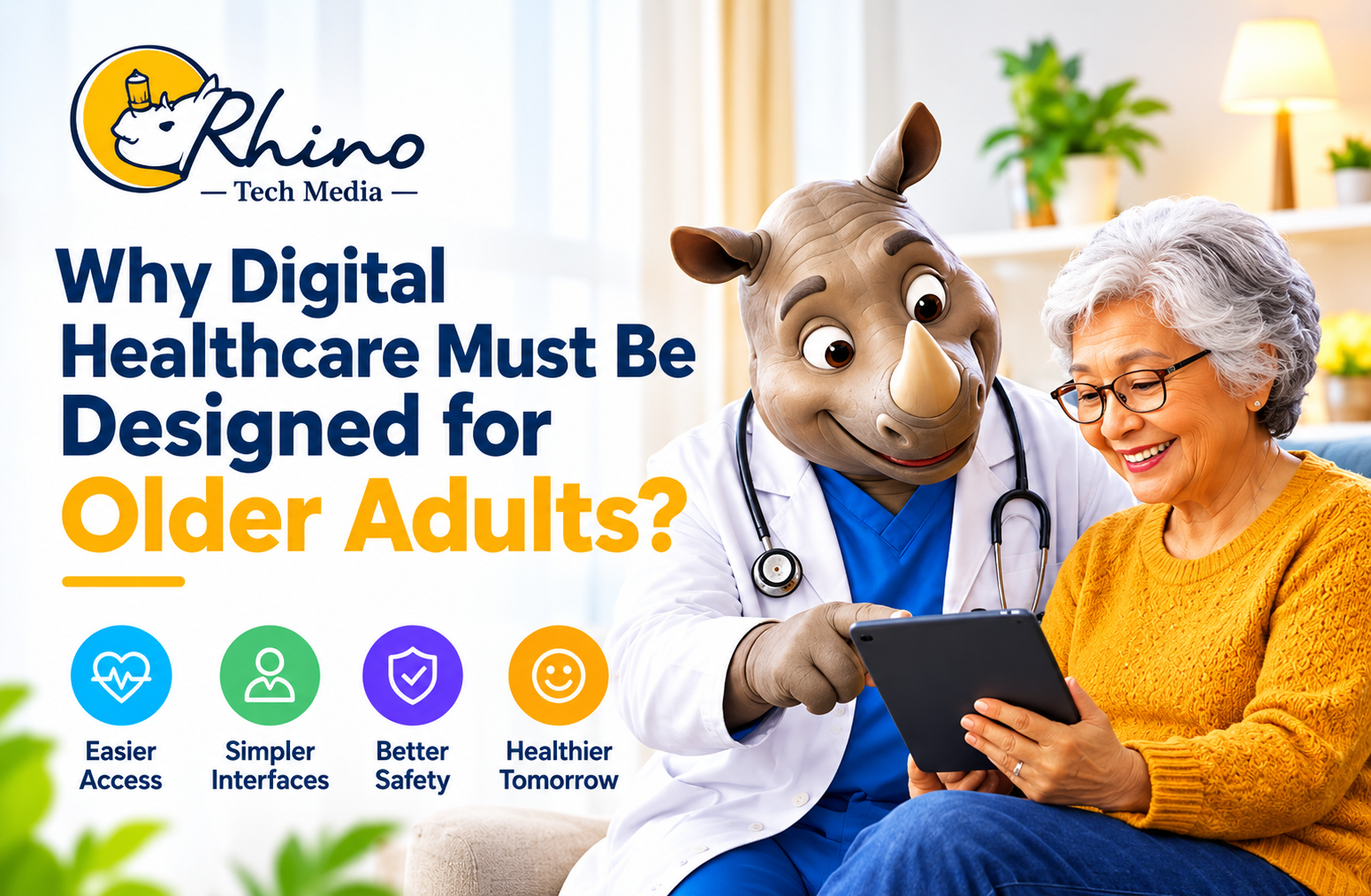
Imagine your mother needs to book a doctor’s appointment.
Instead of calling the hospital, she is told to download an app.
She opens it. Then comes the login. Password. OTP. Another verification. Then she has to find the right department, choose a doctor, select a time slot, and confirm the appointment.
For someone who uses apps every day, this might take a few minutes.
For an older person, it can feel like a lot.
And when they’re already worried about their health, the last thing they need is technology making things more stressful.
That is why digital healthcare needs to be designed for older adults too.
Older Adults Are Using Technology. But Is It Easy for Them?
There is a common assumption that older people don’t understand technology.
That’s not really the problem.
Many older adults use smartphones every day. They message their children on WhatsApp, make video calls, watch YouTube, use digital payments, and check information online.
According to AARP’s technology research, around 90% of adults aged 50 and older owned a smartphone in 2025.
So, the question isn’t whether older adults can use technology.
The better question is:
Why are so many digital healthcare experiences still difficult to use?
A healthcare app shouldn’t require someone to be highly tech-savvy just to book an appointment or see a test report.
Healthcare Is Already Stressful. Technology Shouldn’t Add to It
Think about what happens when someone is sick.
They may already be worried about their symptoms, treatment, medicines, test results, or expenses.
Now add a confusing app.
Maybe the text is too small.
Maybe the “Book Appointment” button isn’t obvious.
Maybe the app logs them out while they’re filling in a form.
Maybe they can’t remember which password they used.
Or maybe the video consultation simply won’t connect.
These may look like small design problems to a developer.
To a patient, they can become a reason to stop using the service.
The W3C Web Accessibility Initiative points out that ageing can affect vision, hearing, motor skills, memory, concentration, and navigation.
Good healthcare design needs to account for these real-life differences.
Start With the Basics: Make Things Easy to See
One of the simplest problems is also one of the most common: small text.
You may have seen an older family member holding their phone at arm’s length or asking someone, “Can you read this for me?”
That shouldn’t be necessary when accessing healthcare.
Healthcare apps and websites should provide:
- Larger, readable text
- Strong colour contrast
- Clear headings
- Enough space between buttons
- Simple screens
- Text that can be enlarged easily
These aren’t complicated features.
They’re basic usability choices that can make a huge difference.
Don’t Make People Guess What to Do
Have you ever opened an app and thought, “Where am I supposed to click?”
Now imagine feeling that way when you’re trying to access a medical report.
Healthcare platforms should make important actions immediately obvious.
For example:
Book an Appointment
View My Reports
Renew Prescription
Call the Clinic
Talk to a Doctor
Clear labels are often better than fancy icons that users have to figure out.
When someone’s health is involved, clarity matters more than clever design.
Use Words People Actually Understand
Healthcare already has enough complicated terminology.
Digital platforms don’t need to make it worse.
For example, instead of:
“Authentication unsuccessful.”
Say:
“We couldn’t verify your details. Please try again.”
Instead of:
“Medication reconciliation required.”
Say:
“Please review your current medicines.”
The goal isn’t to make healthcare sound childish.
It’s to make information clear when people may already be tired, worried, or confused.
Telehealth Is Helpful, But It Can’t Replace Everything
Telehealth has made healthcare more convenient for many people.
An older adult may not have to travel across the city for a simple follow-up appointment. A family member living in another city can sometimes help them join the consultation.
That’s a real benefit.
Research from AARP has found strong satisfaction among older adults who have used telehealth.
But convenience doesn’t mean everyone wants virtual healthcare for everything.
Some patients still want to sit across from their doctor.
Others may prefer a phone call because they aren’t comfortable with video.
And sometimes a physical examination simply makes more sense.
That’s why digital healthcare should give people more choices, not fewer.
What About the Daughter or Son Helping From Another City?
This is another part of digital healthcare that is easy to overlook.
An older parent may be the patient, but their son, daughter, spouse, or caregiver may be helping them manage healthcare.
Think about a daughter living in another city who reminds her father about his appointment.
Or a son helping his mother download a blood test report.
Or a family member keeping track of several medicines.
Digital healthcare can make these situations easier with features such as:
- Permission-based caregiver access
- Shared appointment details
- Medicine reminders
- Easy access to reports
- Emergency contacts
- Simple communication with healthcare providers
But there needs to be a balance.
Convenience should never mean giving away someone’s health information without their permission.
Privacy Matters More Than Ever
Imagine receiving a message saying:
“Your medical report is ready. Click here to download.”
Would you know whether the message was genuine?
Older adults can be particularly vulnerable to confusing interfaces, suspicious messages, and online scams.
Privacy and security therefore need to be built into healthcare technology from the beginning.
Healthcare providers should explain clearly:
- What data is being collected
- Why it is needed
- Who can see it
- How it is protected
- How patients can manage permissions
A long privacy policy that nobody understands doesn’t build trust.
Simple explanations do.
Don’t Just Design for Older Adults. Design With Them.
This may be the most important point.
Healthcare companies shouldn’t sit in an office and guess what older people need.
They should actually involve them.
Give an older person the app and ask them to:
- Book an appointment
- Find their prescription
- Download a medical report
- Join a video consultation
- Contact support
Then watch what happens.
Where do they stop?
What do they ask?
Which button do they miss?
What makes them uncomfortable?
Those observations can reveal problems that a design team may never notice on its own.
According to W3C guidance on older users, involving users in accessibility and usability testing can help identify barriers that designers might otherwise overlook.
A Few Small Changes Can Make a Big Difference
Healthcare organizations don’t necessarily need to rebuild their entire digital system.
They can start with simple improvements:
- Make text easier to read.
- Use plain language.
- Make buttons larger and clearer.
- Reduce unnecessary steps.
- Keep important information easy to find.
- Provide telephone support.
- Allow trusted caregivers to help with permission.
- Give patients digital and offline options.
- Make privacy settings understandable.
- Test products with real older users.
These improvements can also help many other people, including users with disabilities, temporary injuries, low digital confidence, or limited internet access.
Technology Should Help People Feel More Independent
There is something important about independence as we get older.
Being able to book your own appointment, check your prescription, read your medical report, or speak with your doctor without constantly asking someone else for help can make a person feel more confident.
That’s what good digital healthcare should provide.
Not more screens.
Not more complicated passwords.
Not more confusion.
More independence.
The Best Healthcare Technology Still Feels Human
Technology can make healthcare faster and more convenient.
But healthcare is still deeply personal.
When someone is sick, they don’t just need information. They need reassurance, clarity, patience, and sometimes another human being to help them.
That’s why the best digital healthcare systems shouldn’t try to remove the human side of healthcare.
They should support it.
An older patient should be able to use an app when it’s convenient, call someone when they need help, and visit a doctor when face-to-face care is better.
That is what inclusive digital healthcare really looks like.
Conclusion
Digital healthcare is changing how people book appointments, speak with doctors, manage medicines, and access medical information. But for these changes to truly improve healthcare, older adults need to be part of the conversation. The world’s population aged 60 and above is expected to reach 1.4 billion by 2030, according to the WHO. That means age-friendly digital healthcare will become increasingly important. The solution isn’t to create separate technology for older people. It’s to create technology that is simple, readable, secure, flexible, and genuinely easy for everyone to use. Healthcare apps should reduce stress, not create it. They should help older adults stay independent while still giving them access to family members, caregivers, doctors, and human support when needed.
If your healthcare organization is building or improving a digital platform, don’t just ask whether it works. Ask whether your parents or grandparents could use it comfortably. That’s where better healthcare technology begins.
