
Overview
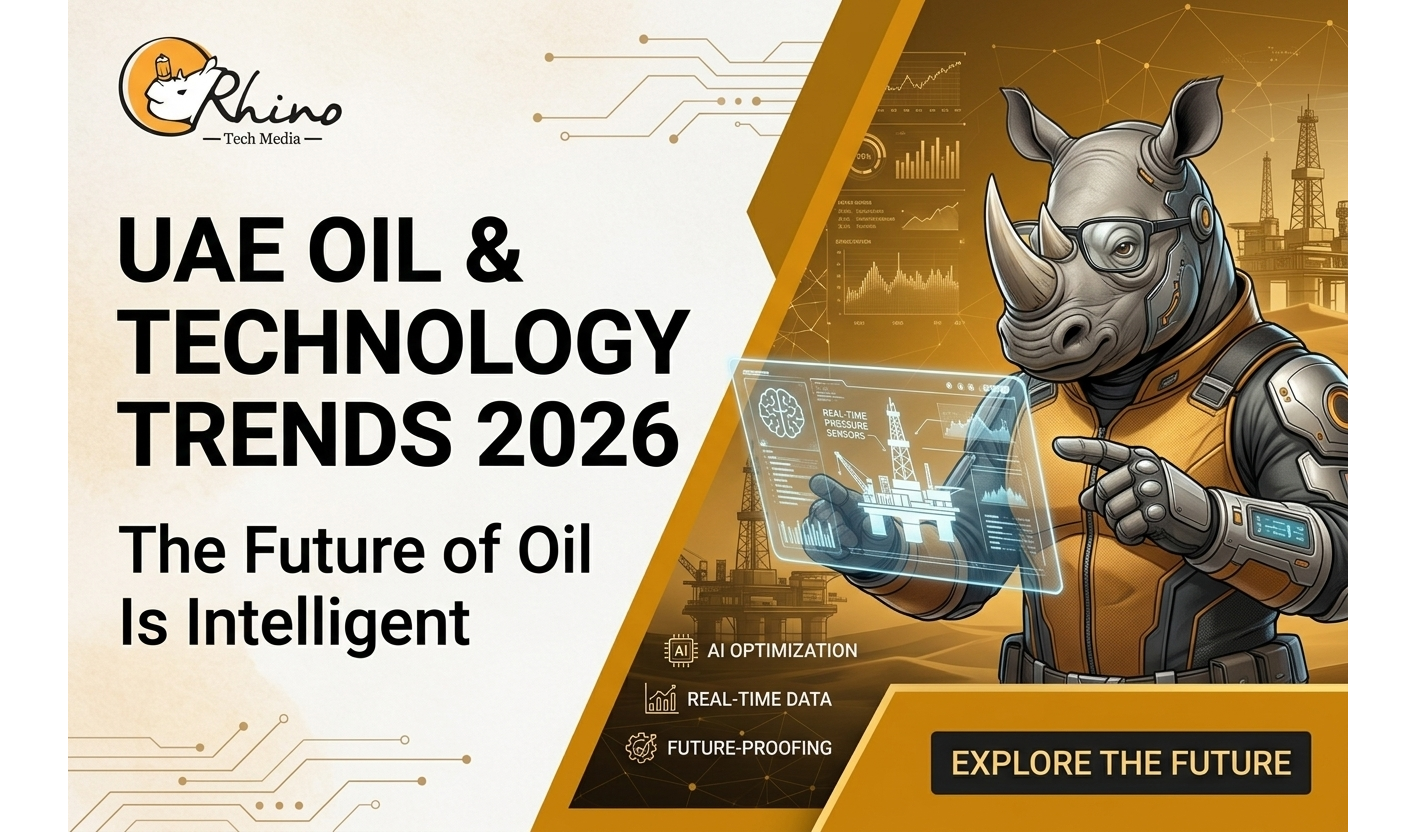
The UAE’s oil and gas industry is entering a new era where artificial intelligence, automation, advanced analytics, and connected digital systems are becoming central to how energy is explored, produced, processed, and delivered. In 2026, the focus is shifting from simply adopting new technology to embedding intelligence throughout the energy value chain.
UAE energy companies are increasingly using AI to improve operational efficiency, predict equipment failures, optimize reservoirs, enhance drilling, reduce downtime, strengthen safety, and lower emissions. ADNOC, for example, is expanding AI-enabled technologies across its operations, while ADNOC Drilling is deploying automated and AI-enabled rigs.
Key Technology Trends Shaping UAE Oil & Gas in 2026:
- l AI-Powered Oilfield Operations
AI is moving from experimental projects into everyday energy operations, helping companies analyze complex data, optimize processes, and make faster decisions. - l Smart & Autonomous Drilling
AI-enabled rigs, automation, real-time monitoring, and robotics are transforming drilling operations by improving precision, safety, and well-delivery efficiency. - l Predictive Maintenance
Advanced analytics can identify equipment problems before they become major failures, reducing unplanned downtime and improving asset reliability. - l Digital Oilfields & Real-Time Data
Connected sensors, digital platforms, and real-time monitoring are creating more responsive oilfields where operators can track assets and processes continuously. - l AI-Driven Reservoir Management
AI and machine learning are being used to analyze subsurface data, improve reservoir understanding, optimize field-development plans, and support higher recovery rates. - l Remote Operations & Automation
Digitalized wells and remote-control systems allow operators to monitor and manage assets from centralized control environments, improving safety while reducing unnecessary on-site intervention. - l AI for Energy Efficiency & Sustainability
Technology is increasingly being used not only to increase production but also to reduce energy consumption, emissions, and operational waste. - l Agentic AI for the Energy Value Chain
AI systems capable of performing complex, multi-step tasks are emerging as a major trend, supporting areas such as seismic analysis, geological modeling, process monitoring, and logistics.
The big shift in 2026: UAE oil technology is moving from “digitalization” to “intelligent operations”—where AI, automation, data, and human expertise work together to create a faster, safer, more efficient, and more sustainable energy industry.
Artificial Intelligence Becomes the New Oilfield Intelligence
AI is becoming one of the most important technologies in the UAE energy sector. Instead of relying exclusively on historical data and manual analysis, energy companies can use AI to process enormous volumes of operational information and identify patterns in real time.
ADNOC is developing AI applications for activities ranging from seismic analysis and reservoir modeling to production optimization and logistics. Its ENERGYai platform uses specialized AI agents to perform complex energy-sector tasks.
Key developments include:
- l AI-powered analysis of geological and seismic data
- l Intelligent production optimization
- l Real-time operational monitoring
- l AI-assisted decision-making
- l Automated workflows
- l AI agents capable of performing complex technical tasks
- l Faster identification of operational problems
The major shift is from using AI as a separate tool to making intelligence part of everyday energy operations.
Smart Drilling and Autonomous Rigs
Drilling is becoming increasingly automated. Modern rigs can combine sensors, AI, robotics, digital control systems, and real-time analytics to improve how wells are drilled.
In 2026, ADNOC Drilling delivered the AD-300, an AI-enabled automated walking island rig designed to move between wells while integrating automation, AI-enabled monitoring, digital systems, and hybrid power.
Smart drilling is helping to:
- l Improve drilling precision
- l Reduce manual intervention
- l Shorten well-delivery times
- l Increase equipment utilization
- l Improve worker safety
- l Reduce operational downtime
- l Support more consistent drilling performance
The future of drilling is therefore moving toward more autonomous, data-driven and continuously optimized operations.
Predictive Maintenance: Fixing Problems Before They Happen
Traditional maintenance often depends on scheduled inspections or reacting after equipment fails. Predictive maintenance changes this approach.
AI systems can analyze equipment performance, sensor readings, temperature, vibration, pressure, and other operational data to identify potential failures before they occur.
ADNOC Drilling is using predictive maintenance and intelligent workflows as part of its AI-native operating model.
Benefits include:
- l Fewer unexpected shutdowns
- l Lower maintenance costs
- l Longer equipment lifespans
- l Improved asset reliability
- l Reduced downtime
- l Better maintenance planning
For a large-scale oil operation, preventing even a small number of major equipment failures can create significant economic value.
Digital Oilfields and Real-Time Data
The oilfield of 2026 is increasingly becoming a connected digital environment.
Sensors installed throughout wells, rigs, pipelines, and processing facilities continuously collect information. That data can then be analyzed through centralized platforms and AI systems.
ADNOC has been advancing well digitalization through sensors, control valves, real-time data transmission and private 5G connectivity, allowing remote monitoring and automated operations.
Digital oilfields can provide:
- l Real-time visibility into operations
- l Faster decision-making
- l Remote asset monitoring
- l Automated controls
- l Improved production management
- l Better use of operational data
This creates an environment where engineers can identify changes and respond much faster than traditional operating models allow.
AI-Powered Reservoir Management
Understanding what is happening beneath the surface is one of the biggest challenges in oil and gas.
AI is helping energy companies process geological, reservoir, production, and well-performance data to improve understanding of underground resources.
ADNOC’s AI solutions include technologies such as RockInsight for subsurface analysis and AR360 for intelligent reservoir management and field-development planning.
AI can support:
- l Reservoir modeling
- l Well-placement decisions
- l Production optimization
- l Recovery-rate improvements
- l Subsurface analysis
- l Field-development planning
- l Identification of previously difficult-to-detect patterns
The objective is not simply to produce more oil, but to extract resources more efficiently and intelligently.
Robotics and Remote Operations
Robotics are becoming increasingly important in environments where conditions can be hazardous, complex, or difficult for humans to access.
Combined with AI and remote-control systems, robotics can perform inspections, monitoring, maintenance, and other tasks while reducing human exposure to operational risks.
Emerging applications include:
- l Automated inspections
- l AI-powered visual monitoring
- l Robotic equipment
- l Remote-controlled operations
- l Hazard detection
- l Automated safety systems
- l Offshore asset monitoring
ADNOC has reported expanding robotics and AI applications across its operations, reflecting a broader move toward technology-assisted energy production.
Automation Is Redefining the Energy Workforce
Automation does not simply mean replacing human workers. Instead, the role of the workforce is increasingly shifting toward supervising intelligent systems, interpreting data, managing complex operations, and making strategic decisions.
Engineers and technical specialists are increasingly working alongside AI platforms, robotics, digital twins, and advanced analytics.
The future workforce will increasingly need:
- l AI and data skills
- l Digital engineering expertise
- l Cybersecurity knowledge
- l Automation capabilities
- l Advanced analytics
- l Robotics experience
- l Human-AI collaboration skills
This means the UAE’s energy transformation is also creating demand for a more technologically sophisticated workforce.
Technology for Greater Safety
Safety remains one of the strongest reasons for accelerating digitalization.
AI-powered cameras, sensors, predictive analytics, and automated monitoring can identify hazards and abnormal conditions faster than conventional systems.
ADNOC Drilling has highlighted AI-enabled safety technologies and digital monitoring as part of its efforts to reduce operational risk.
Technology can help improve safety by:
- l Detecting hazardous conditions
- l Monitoring restricted areas
- l Reducing worker exposure
- l Predicting equipment problems
- l Automating high-risk activities
- l Supporting faster emergency responses
- l Improving safety documentation and compliance
The long-term objective is an energy environment where technology prevents incidents rather than simply responding to them.
The Rise of the Intelligent Energy Ecosystem
The UAE’s technology strategy is ultimately creating a connected energy ecosystem rather than a collection of individual digital projects.
AI, robotics, sensors, 5G, automation, cloud platforms, advanced analytics, and human expertise are increasingly working together.
The emerging model looks like this:
Sensors → Data → AI → Automated Decisions → Human Oversight → Optimized Operations
This integrated approach can help energy companies move faster, reduce inefficiencies, improve safety, and extract greater value from existing assets.
What the Future Holds
The UAE is positioning technology as a core component of its long-term energy strategy. The direction is clear: oil and gas operations are becoming increasingly intelligent, automated and data-driven.
In the coming years, we can expect:
- l More autonomous drilling systems
- l Wider deployment of AI agents
- l Greater use of robotics
- l Fully connected digital oilfields
- l More predictive maintenance
- l Increased remote operations
- l AI-powered reservoir optimization
- l Stronger industrial cybersecurity
- l Greater integration of low-carbon technologies
- l More collaboration between energy companies and technology firms
ADNOC Drilling currently reports more than 30 AI solutions embedded across its operations, while its technology strategy continues to expand automation, real-time analytics and predictive maintenance.
Conclusion
The future of UAE oil is not simply about producing more—it is about producing smarter.
AI, automation, robotics, real-time data and advanced analytics are transforming traditional oilfields into intelligent energy systems. From autonomous drilling rigs and predictive maintenance to AI-powered reservoir management and remote operations, technology is changing almost every stage of the energy value chain.
For the UAE, this transformation represents an opportunity to combine its position as a major global energy producer with its ambition to become a leader in AI-powered, efficient and technologically advanced energy production.
The next generation of oil will not just be extracted from the ground—it will be powered by intelligence.
