
Why the Green Transition Is Becoming a Global Economic Strategy
Overview
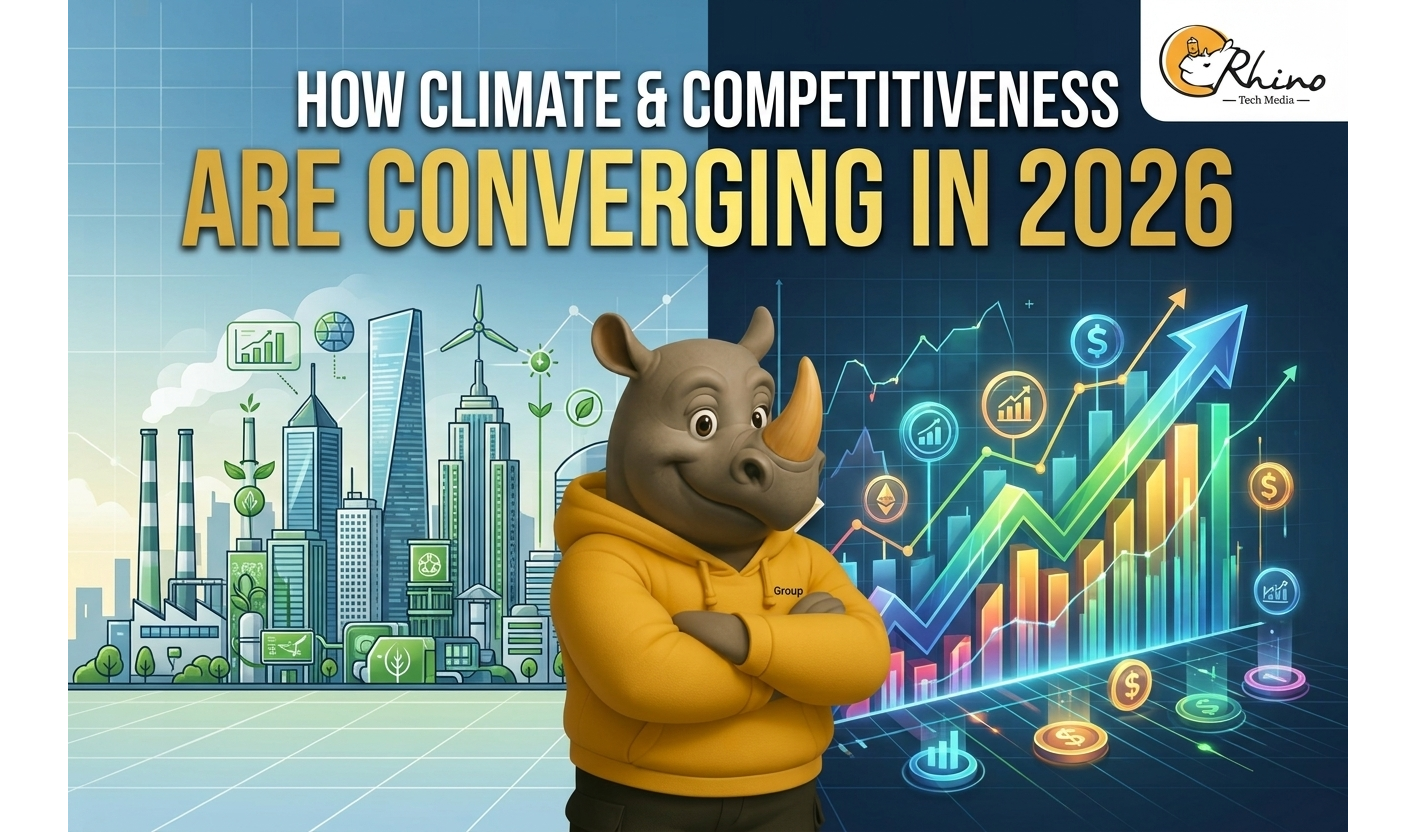
In 2026, climate policy and economic competitiveness are becoming increasingly interconnected. The transition toward cleaner energy, more efficient infrastructure and lower-carbon technologies is no longer viewed only through an environmental lens. It is becoming a strategic economic priority for governments and businesses competing for investment, technology, manufacturing capacity and global market share.
Countries are investing heavily in renewable energy, nuclear power, electricity grids, batteries, electric mobility and advanced manufacturing. At the same time, companies are looking for ways to reduce energy costs, strengthen supply chains, meet changing regulations and develop products for a rapidly evolving global economy.
This convergence is creating a new competitive landscape where energy security, technological innovation, industrial policy and climate strategy increasingly reinforce one another.
Clean Energy Becomes an Economic Advantage
Access to reliable and affordable electricity is becoming increasingly important as economies electrify and demand grows from data centers, AI, advanced manufacturing and transportation.
Key developments include:
- l Expansion of renewable electricity
- l Investment in nuclear power
- l Modernization of electricity grids
- l Growth of battery storage
- l Expansion of energy-efficient technologies
- l Greater investment in domestic energy production
Countries capable of providing reliable, affordable and increasingly clean electricity can strengthen their attractiveness to businesses and investors.
Green Manufacturing Is Becoming Strategic
The race to build clean-technology supply chains is accelerating.
Governments and businesses are investing in:
- l Batteries and energy storage
- l Electric vehicles
- l Solar and wind technologies
- l Semiconductors
- l Heat pumps
- l Low-carbon industrial equipment
- l Advanced materials
The objective is increasingly about more than reducing emissions—it is about capturing future industries and creating high-value manufacturing capacity.
Investment Is Following the Transition
The global shift toward a lower-carbon economy is creating substantial investment opportunities.
Capital is increasingly targeting:
- l Renewable-energy infrastructure
- l Electricity transmission and distribution
- l Nuclear energy
- l Battery technology
- l Sustainable infrastructure
- l Water systems
- l Climate technology
- l Energy-efficient buildings
- l Industrial modernization
For investors, the opportunity extends beyond traditional “green” companies to the infrastructure and technologies required to transform entire economies.
Climate Strategy Meets Energy Security
Recent geopolitical developments have reinforced the importance of energy independence.
Countries are seeking to reduce exposure to international energy-price volatility by diversifying their energy mix and strengthening domestic capacity.
This means climate and energy-security strategies can increasingly overlap:
More domestic clean energy → greater energy diversification → stronger resilience → improved competitiveness.
The Race for Critical Minerals
The clean-energy transition depends on materials such as lithium, copper, nickel, graphite and rare earth elements.
This is creating new competition around:
- l Mining
- l Refining
- l Processing
- l Recycling
- l Battery manufacturing
- l Supply-chain security
Countries with access to critical minerals—or the ability to process and manufacture products using them—can gain an important position in emerging global industries.
AI Is Accelerating Climate Innovation
Artificial intelligence is adding another dimension to the transition.
AI can help companies and governments:
- l Optimize electricity grids
- l Forecast renewable-energy output
- l Reduce industrial energy consumption
- l Improve logistics
- l Monitor infrastructure
- l Detect equipment failures
- l Reduce waste
- l Improve climate-risk analysis
The combination of AI + energy + advanced infrastructure is becoming a major area of technological competition.
Infrastructure Becomes a Competitive Battlefield
Modern economies require infrastructure capable of handling rising electricity demand, extreme weather risks and rapid technological change.
Investment is increasingly focused on:
- l Smart electricity grids
- l Resilient transport networks
- l Water infrastructure
- l Energy-efficient buildings
- l Digital infrastructure
- l Data centers
- l Climate-resilient cities
Infrastructure investment can simultaneously improve economic productivity, climate resilience and long-term competitiveness.
Transportation Is Transforming
The transportation sector is undergoing a major technological shift.
Electric vehicles, charging infrastructure, batteries, public transportation and alternative fuels are changing the competitive landscape for automotive and energy companies.
The transition is creating opportunities across the wider ecosystem, including:
- l Battery production
- l Charging networks
- l Automotive software
- l Power electronics
- l Grid infrastructure
- l Fleet management
- l Advanced mobility
Regulation Is Becoming a Competitive Factor
Climate-related policies increasingly influence where companies invest and how they design products.
Carbon pricing, emissions standards, environmental reporting and clean-energy incentives can affect:
- l Production costs
- l Supply-chain decisions
- l Capital investment
- l Product design
- l International trade
- l Market access
Companies that anticipate regulatory changes may gain an advantage over businesses that react later.
Climate Resilience Becomes Business Resilience
Climate-related disruptions can affect factories, logistics networks, agriculture, insurance and access to resources.
Businesses are therefore investing in resilience through:
- l Supply-chain diversification
- l Water management
- l Disaster-resistant infrastructure
- l Climate-risk monitoring
- l Backup power
- l Geographic diversification
- l More resilient facilities
Climate adaptation is increasingly becoming part of standard corporate risk management.
A New Global Green Competition
The international competition of 2026 is increasingly about who can build the industries of the future.
Countries are competing for:
Capital + Technology + Energy + Talent + Manufacturing + Critical Minerals
This means climate policy is increasingly connected with industrial strategy, trade policy, energy security and national competitiveness.
Key Takeaways for 2026
- l Climate policy is becoming economic policy.
- l Clean energy can strengthen both competitiveness and energy security.
- l Green manufacturing is becoming a strategic industrial priority.
- l Critical minerals are increasingly important to global supply chains.
- l AI is accelerating energy and climate innovation.
- l Modern infrastructure is essential for both economic growth and resilience.
- l Climate regulation is influencing corporate investment decisions.
- l Investors are looking beyond renewable energy toward the infrastructure supporting the transition.
- l Businesses are treating climate resilience as a form of risk management.
- l Countries are competing to lead the industries created by the green transition.
The Bigger Picture
The convergence of climate and competitiveness is creating a fundamentally different economic landscape.
The green transition is no longer just about reducing emissions. It is increasingly about who controls the technologies, energy systems, supply chains and industries that will drive future growth.
In 2026, the competitive advantage may increasingly belong to the countries and companies that can become cleaner, more efficient, more resilient and more technologically advanced at the same time.
Conclusion
In 2026, climate and competitiveness are no longer separate priorities—they are becoming two sides of the same economic strategy. The global transition toward cleaner energy, smarter infrastructure and advanced technologies is creating both challenges and opportunities for governments, businesses and investors.
Countries that can secure affordable energy, strengthen critical supply chains, attract green investment and develop emerging technologies will be better positioned to compete in the global economy. Businesses, meanwhile, are increasingly discovering that energy efficiency, climate resilience and innovation can reduce costs while opening new markets.
The green transition is therefore evolving from an environmental agenda into a global race for investment, technology, industrial capacity and economic leadership.
In 2026, going green is no longer simply about protecting the planet—it is increasingly about building the competitive economies of tomorrow.
