
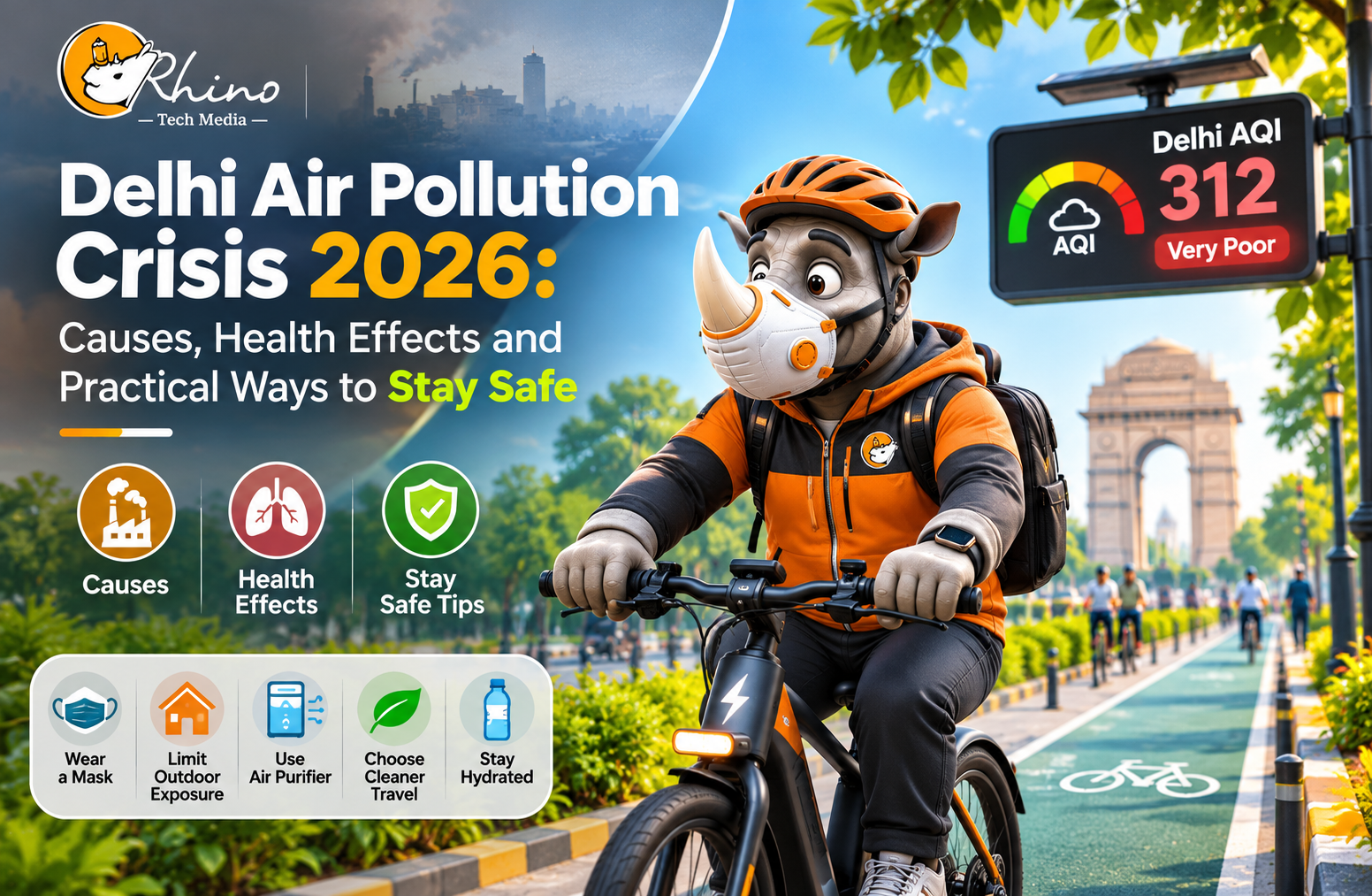
When Breathing Fresh Air Becomes a Challenge?
Imagine getting ready for work, stepping outside and seeing the entire road covered in a layer of grey haze. Your eyes start watering, your throat feels uncomfortable, and even a short walk leaves you coughing.
For many Delhi residents, this is no longer unusual.
The Delhi air pollution crisis in 2026 is affecting everyday life, from schoolchildren travelling to class to office workers spending hours in traffic. People are changing their morning routines, avoiding outdoor exercise and worrying about the air their families breathe.
But where is all this pollution coming from? Why does it become worse during winter? And what can you actually do to protect yourself?
Let’s understand the problem and look at some practical solutions.
Delhi Air Pollution Crisis 2026: How Bad Is It?
Delhi’s air quality often deteriorates between October and January. Vehicle emissions, dust, smoke and unfavourable weather conditions combine to create unhealthy levels of pollution.
The situation became particularly serious on November 13, 2026.
According to NDTV’s report, Delhi’s AQI reached 403, entering the Severe category. Out of 58 monitoring stations, 33 recorded Severe air quality.
Another worrying figure came on November 12, when PM2.5 concentration reached 244 micrograms per cubic metre, approximately four times India’s national standard, according to Hindustan Times.
These numbers matter because they represent the air people are breathing during their daily routines.
What Do Different AQI Levels Mean?
The Air Quality Index (AQI) makes pollution levels easier to understand.
| AQI range | Air quality |
| 0–50 | Good |
| 51–100 | Satisfactory |
| 101–200 | Moderate |
| 201–300 | Poor |
| 301–400 | Very Poor |
| 401–500 | Severe |
When AQI crosses 400, even healthy individuals can experience health effects.
Check your local readings through the CPCB air quality portal.
What Are the Main Causes of Delhi’s Air Pollution?
Delhi’s pollution problem cannot be blamed on one activity alone. Several everyday activities and seasonal factors contribute to the city’s unhealthy air.
1. Vehicle Emissions
Think about the traffic during Delhi’s morning and evening rush hours.
Cars, buses, bikes and trucks release pollutants while travelling. Long traffic queues and unnecessary engine idling make the situation worse.
2. Construction and Road Dust
Construction work, demolition activities and uncovered building materials release dust into the air.
Poorly maintained roads also generate dust when vehicles pass through them. These particles can affect people living and working nearby.
3. Industrial Pollution
Factories, manufacturing units and power plants release harmful pollutants through fuel combustion and industrial processes.
Without proper emission controls, these activities add to the city’s pollution levels.
4. Crop Residue Burning
After harvesting, some farmers in neighbouring states burn leftover crop residue to prepare their fields for the next season.
The smoke can travel towards Delhi-NCR and increase existing pollution. However, stubble burning is only one contributor, alongside local traffic, dust and industrial emissions.
5. Winter Weather Conditions
Have you noticed how pollution sometimes seems to stay over the city for days?
During winter, low wind speeds and temperature inversion can prevent pollutants from dispersing. Fog can also combine with pollutants to create thick smog.
The Commission for Air Quality Management (CAQM) monitors these conditions and coordinates pollution-control measures across Delhi-NCR.
How Does Air Pollution Affect Your Health?
The biggest concern is that you may not immediately realise how polluted air is affecting your body.
Fine particles such as PM2.5 can travel deep into the lungs and enter the bloodstream.
According to the World Health Organization (WHO), outdoor air pollution caused an estimated 4.2 million premature deaths worldwide in 2019.
Here are some common health concerns:
1. Breathing Problems
Polluted air can irritate your respiratory system and cause:
- Persistent coughing.
- Throat irritation.
- Wheezing and shortness of breath.
- Worsening asthma symptoms.
2. Heart Health Risks
Long-term exposure to air pollution is associated with an increased risk of heart disease and stroke.
People with existing cardiovascular conditions need to be particularly careful.
3. Children and Older Adults
Children’s lungs are still developing, while older adults may be more vulnerable to respiratory complications.
For example, a child playing outdoors for hours or an elderly person going for a morning walk may be exposed to unhealthy air without realising it.
4. Eye and Nose Irritation
Burning eyes, frequent sneezing, headaches and unusual tiredness can also occur during pollution episodes.
If symptoms persist or become severe, consult a healthcare professional.
7 Practical Ways to Stay Safe During Delhi’s Pollution Crisis
You cannot control the city’s pollution levels yourself. But you can make a few changes to reduce your daily exposure.
1. Check AQI Before Leaving Home
Before going to work, school or your morning walk, check the latest AQI.
If pollution levels are high, avoid unnecessary outdoor activities.
2. Wear a Properly Fitted N95 Mask
If you need to travel outdoors during severe pollution, consider a well-fitted N95 respirator.
It helps filter fine airborne particles when used correctly. Ordinary cloth masks do not provide equivalent protection.
3. Change Your Outdoor Exercise Routine
Love going for a morning walk or cycling around your neighbourhood?
You may need to move those activities indoors when pollution levels become severe.
- Try indoor workouts.
- Avoid running near busy roads.
- Follow local health advisories before exercising outdoors.
4. Keep Indoor Air Cleaner
Coming home does not automatically mean escaping pollution.
Try these simple measures:
- Keep windows closed when outdoor pollution is high.
- Consider a suitable HEPA air purifier.
- Avoid smoking and unnecessary burning indoors.
- Clean floors with a damp mop instead of dry sweeping.
Ventilate your home when outdoor air quality improves.
5. Protect Children and Elderly Family Members
Limit outdoor exposure for children, older adults and people with existing respiratory or heart conditions.
Follow school advisories and avoid unnecessary outdoor activities during severe pollution episodes.
6. Make Your Daily Commute Safer
Travelling to work is unavoidable for many people.
Whenever practical, use public transport, avoid unnecessary waiting near congested roads and keep vehicle windows closed during heavily polluted journeys.
7. Don’t Ignore Health Symptoms
A persistent cough or breathing difficulty should never be dismissed as an ordinary winter problem.
Follow your doctor’s advice and seek immediate medical attention if you experience severe breathing difficulty or chest pain.
For additional guidance, visit the WHO’s air pollution health resources.
What Is the Government Doing to Control Air Pollution?
The responsibility for cleaner air does not rest entirely with individuals. Government authorities, industries and communities must work together.
The Graded Response Action Plan (GRAP) introduces additional restrictions depending on pollution levels.
Some measures include:
- Restrictions on certain construction activities.
- Road cleaning and dust-control measures.
- Restrictions on specified polluting vehicles.
- Action against non-compliant industrial units.
- Changes to outdoor activities when necessary.
On November 6, 2026, CAQM invoked Stage III GRAP across Delhi-NCR after Delhi recorded an AQI of 382.
Read the official PIB announcement.
However, temporary restrictions are not enough. Cleaner public transport, better waste management, responsible construction and stricter industrial emission controls are essential for lasting improvements.
Conclusion: What Kind of Air Are We Leaving Behind?
A morning walk, children playing outside, an evening spent on the balcony – these are simple things we rarely think twice about. But when the air becomes polluted, even these everyday moments start coming with health concerns.
Delhi’s pollution crisis is a reminder that clean air cannot be taken for granted. While checking AQI levels and protecting ourselves are important, the bigger change must come from how we manage traffic, construction, industries and our surroundings.
We often talk about leaving a better city for the next generation. But shouldn’t that also mean giving them air they can breathe without worry?
The question is not just how we survive another pollution season, but how we make sure the next one is better. It’s time to move beyond temporary precautions and make cleaner air a priority every day.
