Being online is easy. Turning your online presence into real business growth is a different challenge.
A company may have a professional website, active social media profiles, strong search rankings, and regular content. But if these channels do not help customers understand the business, build trust, and take action, visibility alone will not create meaningful results.
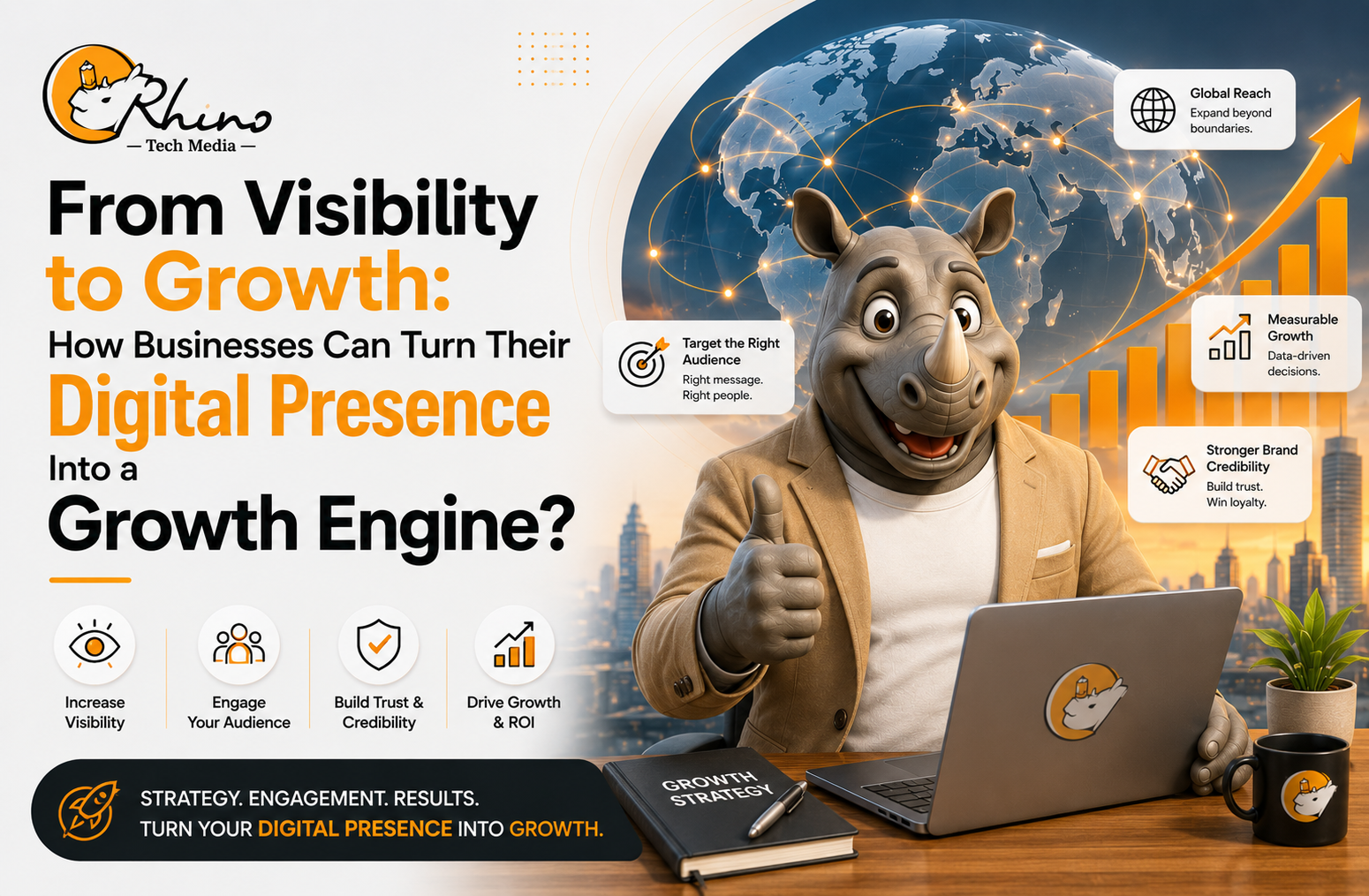
The real opportunity is to turn your digital presence into a growth engine.
This means connecting your website, SEO, content, social media, online listings, reviews, and customer experience so they all support the same business goals.
The opportunity is significant. According to DataReportal’s Digital 2026 Mid-Year Global Update, 6.12 billion people were using the internet worldwide in April 2026, while 5.79 billion social media user identities were recorded globally.
Your customers are already online. The question is:
Does your digital presence give them a reason to choose you?
What Does a Digital Presence Really Mean?
A digital presence is much more than a website. It includes the online channels where people discover, research, compare, and interact with your business.
This can include:
- Business website
- Google Business Profile
- Search engine results
- Social media profiles
- Customer reviews
- Blog content
- Online directories
- Email marketing
- Videos
- E-commerce platforms
Think about your own buying journey. You might discover a business through Google, visit its website, read reviews, check its social media, and then contact the company.
Every interaction shapes your opinion.
That is why your digital channels should not operate as separate pieces. They should work together to create a consistent and useful customer journey.
For more information, explore Powerful Digital Marketing Channels for Small Businesses.
Visibility Is Not the Same as Growth
Traffic and followers can look impressive, but they are not the final measure of success.
A website receiving 10,000 visitors every month may generate fewer enquiries than a website receiving 2,500 highly relevant visitors.
Instead of asking:
“How can we get more traffic?”
Businesses should ask:
“How can we attract the right people and help them take the next step?”
Depending on the business, meaningful outcomes could include:
- Qualified leads
- Online purchases
- Phone enquiries
- Appointment bookings
- Product enquiries
- Store visits
- Newsletter sign-ups
- Repeat customers
The goal is not simply to become more visible. It is to become visible to people who are likely to need what you offer.
Relevant visibility is more valuable than empty traffic.
Build a Website That Helps People Decide
Your website is often where online interest becomes real business activity.
Visitors should quickly understand:
- What you offer
- Who you serve
- What problem you solve
- Why customers should trust you
- What makes you different
- What they should do next
Clear calls to action can make this journey easier.
Instead of generic buttons such as “Click Here,” use specific actions like Request a Quote, Book a Consultation, Schedule a Demo, Shop Now, or Talk to an Expert.
Google’s Search Essentials recommends creating helpful, reliable, people-first content and using words that people naturally use when searching.
The same principle applies to your website:
Make the experience clear and useful for people first.
Use SEO to Reach People With Real Intent
SEO becomes more valuable when it connects your business with people who have a genuine need.
That means creating content around the questions customers actually ask.
For example, a web development company could publish content about:
- How much does a business website cost?
- How do I choose a web development company?
- Why are my website visitors not converting?
- What features does an e-commerce website need?
- How can a small business improve local SEO?
These topics can reach people at different stages of the buying journey.
Someone searching “what is SEO?” may still be learning, while someone searching “SEO company for small business” may already be looking for a provider.
This is why search intent matters.
Effective SEO considers what people are searching for, why they are searching, what problem they want to solve, and what they may want to do next.
For more practical guidance, read Actionable Tips on Crafting Compelling Content and Optimizing for Search.
Make Trust Part of Your Strategy
People do not automatically trust a business simply because it appears in search results.
They look for evidence.
Google describes E-E-A-T as Experience, Expertise, Authoritativeness, and Trustworthiness, while noting that E-E-A-T itself is not a single ranking factor. Google also identifies trust as the most important part of the concept.
Businesses can build trust through:
- Genuine customer reviews
- Testimonials
- Case studies
- Author information
- Industry experience
- Business credentials
- Original photographs
- Clear contact details
- Transparent service information
- Examples of completed work
Instead of simply saying “We are experts,” show customers why they should believe you.
Share real experiences, explain your processes, answer difficult questions, and provide information that helps people make better decisions.
Create Content That Helps Before It Sells
Not every visitor is ready to buy.
Some are still researching, comparing options, or trying to understand a problem.
Useful content can build trust before they are ready to take action.
For example, an article such as “7 Signs Your Business Website Is Losing Customers“ can offer practical advice and end with a clear CTA such as “Request a Website Audit.”
This turns helpful content into an effective lead-generation strategy.
Google’s guidance also emphasizes creating content primarily for people and providing original value rather than producing content simply to attract search traffic.
For more insights, explore Aligning AI-Generated Content With User Intent.
Use Social Media to Build Familiarity
Social media gives businesses a way to remain visible and connected between buying decisions.
With 5.79 billion social media user identities worldwide in April 2026, social platforms continue to provide a significant opportunity for businesses to reach and engage audiences.
Social media can support:
- Brand awareness
- Customer education
- Product demonstrations
- Industry insights
- Behind-the-scenes content
- Customer conversations
- Community building
However, posting every day does not automatically create a successful strategy.
The better question is:
“What can we share that our audience will genuinely find useful?”
A software company could explain common technology problems. A local business could showcase products and customers. A professional service provider could share practical advice based on real experience.
Useful content is more valuable than constant noise.
Connect Your Digital Channels
Your website, SEO, social media, content, reviews, and online listings become more effective when they work together.
A customer journey might look like:
Google Search → Website → Helpful Content → Reviews → Enquiry → Follow-Up
Another could be:
Social Media → Website → Product Page → Trust Signals → Purchase
Every stage should make the next step easier.
Consistent messaging, clear navigation, internal links, relevant calls to action, and strong trust signals can help create a smoother journey.
Your digital presence should not feel like a collection of disconnected channels.
It should create a clear path from discovery to action.
Measure What Actually Drives Growth
You cannot improve your digital strategy without understanding what is working.
You do not need to track every available metric. Focus on numbers that connect digital activity to business outcomes.
Visibility
- Organic impressions
- Search rankings
- Website traffic
- Brand searches
- Social reach
Engagement
- Returning visitors
- Page engagement
- Video views
- Content downloads
- Social interactions
Conversions
- Enquiries
- Phone calls
- Purchases
- Bookings
- Form submissions
- Conversion rate
Business Results
Most importantly, monitor:
- Revenue
- Lead quality
- Customer acquisition cost
- Customer lifetime value
- Marketing ROI
A report showing “website traffic increased by 40%” is useful.
But knowing that qualified enquiries increased and generated additional revenue is far more valuable.
That is the difference between measuring activity and measuring growth.
5 Practical Steps to Start Today
You do not need to rebuild your entire digital presence at once. Start with these five steps:
1. Audit Your Digital Presence
Review your website, Google Business Profile, social media, reviews, search results, and important landing pages.
2. Understand Your Audience
Identify your customers’ questions, problems, concerns, objections, and buying needs.
3. Improve High-Value Pages
Prioritize pages that influence enquiries, bookings, purchases, or important decisions.
4. Create Useful Content
Answer real customer questions instead of producing content simply because a keyword has search volume.
5. Measure What Matters
Track conversions, lead quality, revenue, and ROI rather than focusing only on impressions and page views.
Conclusion: Turn Visibility Into Growth
A strong digital presence should do more than make your business visible.
It should help the right people discover you, trust you, and take action.
The most effective approach is to connect your website, SEO, content, social media, online reputation, and customer experience into one clear journey.
Start by identifying where potential customers are dropping off, then improve those areas step by step.
Visibility gets attention. Trust drives action. A connected digital strategy turns both into growth.
Related Reads From Rhino Tech Media
- Powerful Digital Marketing Channels for Small Businesses — Learn how different digital channels can support business growth.
- Actionable Tips on Crafting Compelling Content and Optimizing for Search — Explore practical ways to combine useful content with SEO.
- Aligning AI-Generated Content With User Intent — Understand the role of relevance and search intent.
- Google Search Algorithm Updates: The Complete History — Explore how Google’s search landscape has evolved.
- Unlock 7 Secret Weapons for Effortless Lead Generation and High-Converting Sales — Discover practical approaches to generating leads and sales.
