
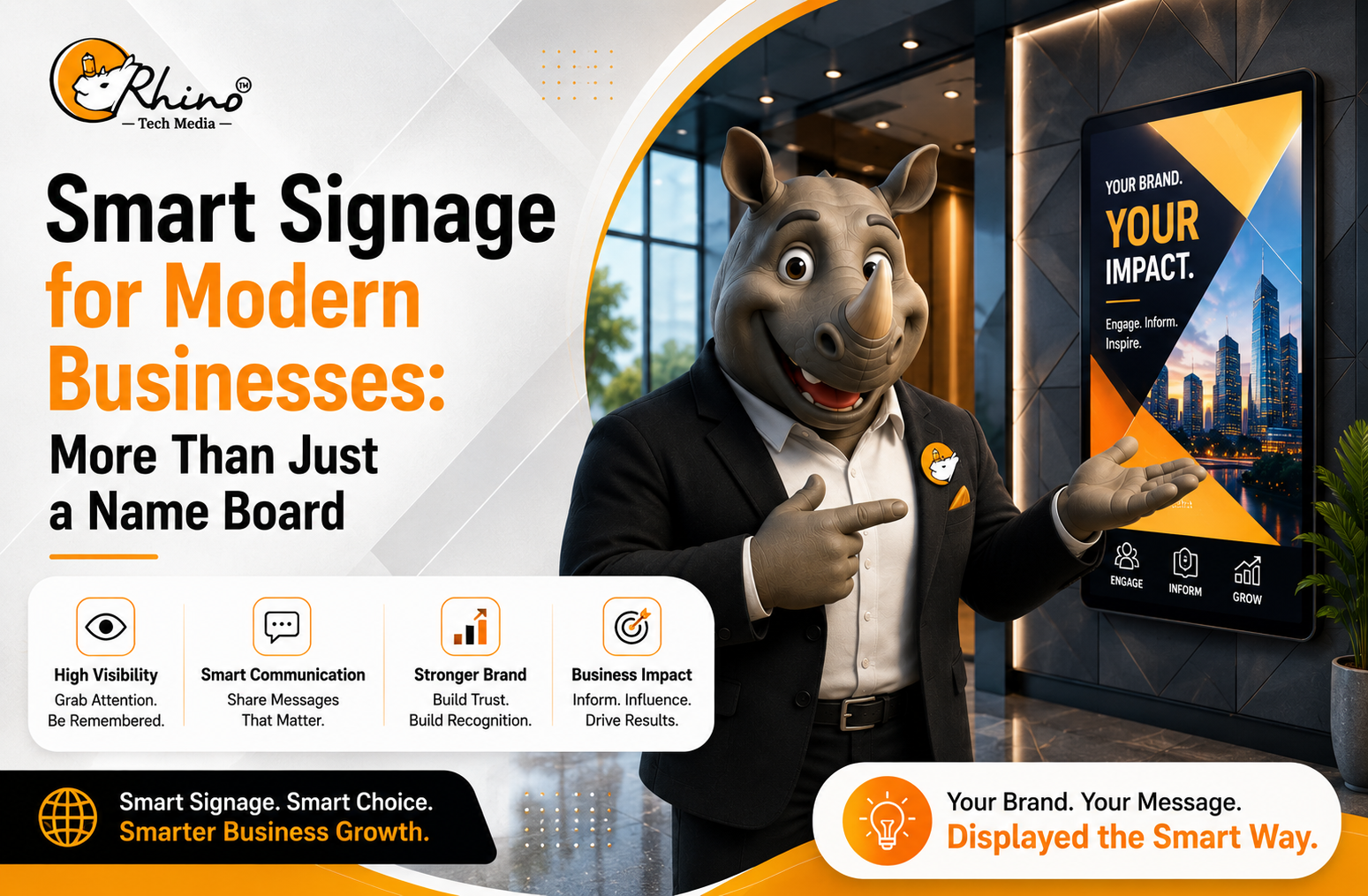
When people think about business signage, they often imagine a name board above a shop or office entrance. Today, signage can do much more. It can attract attention, communicate information, guide visitors, promote products, and strengthen brand recognition.
For modern businesses, smart signage combines branding, design, technology, and customer experience. It can include storefront signs, illuminated letters, digital displays, electronic menu boards, window graphics, QR-code signage, and wayfinding systems.
The goal is not simply to make a sign attractive. It is to make it useful.
A well-planned signage strategy helps customers understand who you are, what you offer, and where they need to go. When combined with a strong digital presence, it becomes an important part of a consistent brand experience.
What Is Smart Signage?
Smart signage is a modern approach to business signage that focuses on how customers receive information, rather than simply displaying a company name.
It can include:
- Illuminated storefront signs
- LED and digital displays
- Electronic menu boards
- Indoor and outdoor wayfinding
- Window graphics
- Promotional displays
- QR-code-enabled signs
- Interactive information screens
Smart signage does not always have to be digital. A clear, well-positioned static sign can be more effective than an expensive screen when information does not need frequent updates.
The right solution depends on the business, location, audience, budget, and communication goals.
Why Signage Matters to Modern Branding?
Customers may discover a business through Google, social media, advertising, or recommendations before visiting its physical location. Therefore, the physical environment should match the online brand.
Consistent signage can help businesses:
- Create a strong first impression
- Improve brand recognition
- Make locations easier to find
- Communicate information quickly
- Support customer navigation
- Promote products and services
- Create a professional environment
Google Business Profile helps businesses appear on Google Search and Maps while providing information such as opening hours, locations, websites, photos, and reviews.
Your storefront and online business profile should therefore communicate a consistent identity.
For more information, read RhinoTech Media’s article, Why Business Listings Matter More Than Ever for Local Visibility.
The Growth of Digital Signage
Digital signage is becoming increasingly common across retail, hospitality, healthcare, corporate environments, and transportation.
According to Grand View Research, the global digital signage market was valued at USD 31.1 billion in 2025 and is projected to reach USD 58.4 billion by 2033, with a compound annual growth rate of 8.2% from 2026 to 2033.
Digital displays give businesses flexibility because content can be updated quickly for promotions, announcements, prices, menus, events, and seasonal campaigns.
However, businesses should not install digital signage simply because it is popular. Technology should solve a genuine communication need.
Static vs. Digital Signage
Both static and digital signage have important roles.
Static signage works well for:
- Business names and logos
- Permanent opening hours
- Building identification
- Directional information
- Safety information
- Long-term brand messaging
Digital signage is useful for:
- Changing promotions
- Restaurant menus
- Product announcements
- Videos
- Events
- Frequently updated information
For example, a restaurant could use an illuminated exterior sign while using digital screens inside for menus and limited-time offers.
For many businesses, combining traditional and digital signage can provide the best results.
How Smart Signage Improves Customer Experience?
Good signage answers questions before customers have to ask them.
Consider a clinic where visitors need to find reception, consultation rooms, departments, elevators, or restrooms. Without clear wayfinding, visitors can become confused and need assistance from staff.
Smart signage can make the journey easier by providing:
- Clear directions
- Product information
- Pricing
- Opening hours
- Queue instructions
- Pickup information
- Promotional offers
- QR codes for additional details
The key is to provide the right information at the right time.
Effective signage should reduce confusion rather than create visual clutter.
5 Design Principles for Effective Business Signage
1. Keep the Main Message Clear
Customers should understand the purpose of a sign quickly. Avoid unnecessary text and make the business name, service, offer, or direction immediately visible.
2. Prioritize Readability
A beautiful sign is ineffective if customers cannot read it.
Consider font size, spacing, colour contrast, lighting, viewing distance, and background design. Storefront signs should be tested from the distance at which customers are most likely to see them.
3. Maintain Brand Consistency
Signage should reflect the same visual identity used across your website, social media, advertising, packaging, and other marketing materials.
Consistent colours, typography, imagery, and messaging make a business easier to recognize.
For more digital marketing insights, read RhinoTech Media’s 7 Digital Marketing Mistakes That Are Quietly Costing Businesses Customers.
4. Consider the Physical Environment
Signage must work in its actual surroundings.
Outdoor signs need to account for sunlight, weather, viewing angles, traffic, and nighttime visibility. Indoor signs should complement the building’s lighting, layout, and customer movement.
5. Use Digital Content Carefully
Digital signage should not become a constantly moving wall of information.
Use short messages, strong visuals, readable text, and clear calls to action. Content should change at a sensible pace so customers have enough time to understand it.
Practical Examples of Smart Signage
Retail Stores
A clothing store can use window graphics for seasonal promotions and digital displays to highlight new arrivals, discounts, or loyalty offers.
Restaurants
Restaurants can combine illuminated exterior branding with digital menu boards and promotional screens.
Hotels
Hotels can use entrance signs, lobby displays, and directional signage to help guests find reception, restaurants, conference rooms, and other facilities.
Healthcare Centres
Clear department signs, room numbers, reception displays, and wayfinding systems can make appointments easier and less stressful.
Corporate Offices
Lobby screens can provide visitor information, meeting-room directions, company announcements, and event details.
How to Create a Smart Signage Strategy?
Before choosing materials, screens, or lighting, start with the customer journey.
Ask:
- Where will customers first see the business?
- What information do they need?
- Where do visitors commonly become confused?
- Which information changes regularly?
- What action should customers take?
- Does the signage match the brand?
Next, create a signage hierarchy.
Primary signage should establish business identity. Secondary signage should help customers navigate or understand services. Digital signage can communicate information that changes regularly.
Where possible, measure results through QR-code scans, promotional responses, enquiries, customer feedback, or changes in foot traffic.
Common Smart Signage Mistakes to Avoid
Even an expensive sign can fail when planning is poor.
Avoid:
- Too much text
- Difficult-to-read fonts
- Poor colour contrast
- Inconsistent branding
- Excessive animation
- Digital screens without a content plan
- Poor sign placement
- Too many competing messages
- Ignoring accessibility
Technology should support communication, not distract from it.
Smart Signage and Your Digital Presence
Physical branding should work alongside digital marketing.
A potential customer might see your storefront, search for the business online, check Google Maps, read reviews, visit your website, and then make an enquiry. Every step should present a recognizable and trustworthy brand.
Google recommends creating helpful, reliable, people-first content and focusing on experiences that genuinely help users.
The same principle applies to signage. Do not add technology simply because it looks modern. Use it when it makes communication easier or improves the customer experience.
Businesses interested in digital growth can also read RhinoTech Media’s How Indian SMEs Are Expanding Globally Through Digital Transformation.
Connecting Signage with Local Visibility
Your physical signage should reinforce the information customers find online.
Keep your business name, branding, location, website, and contact details consistent across your storefront and digital profiles.
This creates a connected customer journey:
See the sign → Search the business → Check online information → Visit the location → Become a customer.
When these experiences are consistent, your business becomes easier to recognize and trust.
Conclusion
Smart signage is no longer simply about placing a business name above a doorway. It is an opportunity to make your brand more recognizable, your location easier to navigate, and your customer experience more useful.
Whether you choose traditional storefront signage, illuminated lettering, digital displays, wayfinding systems, or a combination of solutions, the most important factor is the purpose behind the design.
Keep messages clear, maintain consistent branding, prioritize readability, and use digital technology where it genuinely adds value.
Your signage should also connect with your website, Google Business Profile, social media, and wider marketing strategy.
If your current signage looks outdated or fails to communicate effectively, it may be time for a review. Contact RhinoTech Media to explore stronger branding, digital visibility, and customer-focused solutions that can help your business stand out and create a lasting impression.
