
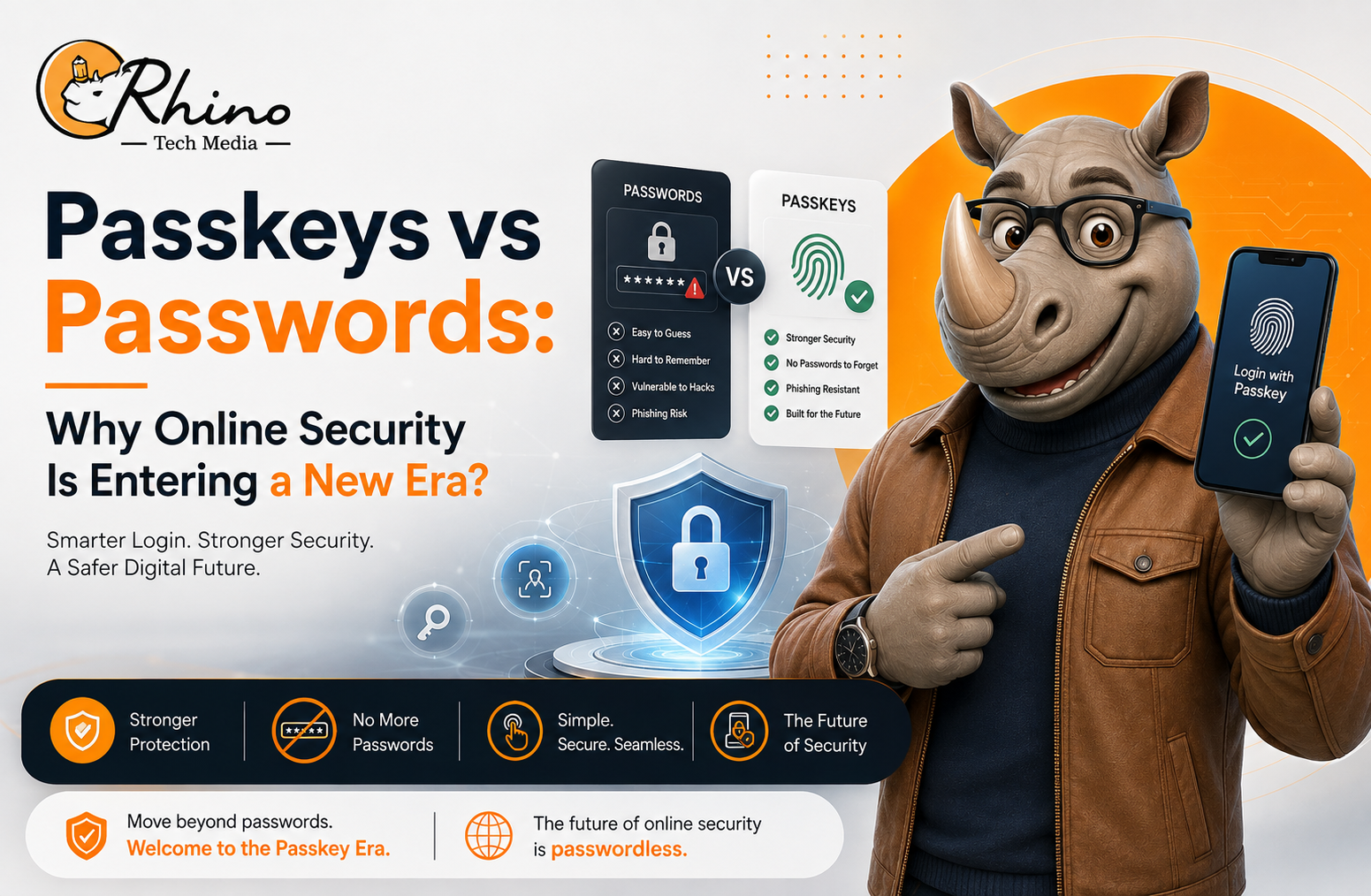
Every day, millions of people rely on passwords to access banking, email, work platforms, and social media. But traditional passwords are becoming increasingly vulnerable to phishing, credential theft, and data breaches.
As cyber threats continue to grow, organizations are adopting passkeys, a passwordless authentication method that uses cryptographic security instead of passwords. Users can securely sign in with fingerprints, facial recognition, or a device PIN, making authentication both safer and more convenient.
This article explores the differences between passkeys and passwords, how passkeys work, and why passwordless authentication is shaping the future of digital security.
Key Takeaways
- Passwords depend on users protecting secret information, making them vulnerable to theft and phishing.
- Passkeys use cryptographic authentication and remove the need for traditional passwords.
- Passkeys provide strong protection against credential theft and phishing attacks.
- Businesses can reduce password management costs and improve account security.
- Passwordless authentication is becoming an important part of the future of online security.
What Are Passwords?
A password is a secret combination of characters used to confirm a user’s identity before granting access to an account.
For years, passwords have been the most common authentication method because they are simple to create and use. However, their security depends heavily on user behavior.
Common password-related risks include:
- Creating weak or predictable passwords
- Reusing the same password across multiple accounts
- Sharing login credentials
- Storing passwords insecurely
- Falling victim to phishing scams
- Losing access due to forgotten passwords
Although organizations protect stored passwords using security techniques such as hashing, attackers continue to target password databases and stolen credentials.
The biggest weakness of passwords is that they rely on a shared secret. If that secret is exposed, attackers may gain unauthorized access to accounts.
What Are Passkeys?
Passkeys are a passwordless authentication method that allows users to sign in without entering traditional passwords.
Instead of storing a password on a website, passkeys use public-key cryptography to verify identity. This system uses two connected keys:
Public Key
The public key is stored by the website or application. It helps verify that the user owns the correct authentication key.
Private Key
The private key remains securely stored on the user’s device and is never shared with the service provider.
Because the private key stays protected, attackers cannot steal usable login credentials from company databases.
Passkeys are based on standards developed by the FIDO Alliance, which focuses on creating secure and simple authentication solutions.
How Do Passkeys Work?
When a user creates a passkey, the device generates a unique cryptographic key pair.
The process works as follows:
- The device creates a public key and private key.
- The public key is registered with the website or application.
- The private key remains securely stored on the user’s device.
- During login, the device verifies ownership of the private key.
Users can authenticate using:
- Fingerprint recognition
- Face recognition
- Device PIN
- Screen lock verification
The website never receives the private key. This reduces the risk of credential theft because there is no password database containing sensitive login information.
Passkeys vs Passwords: Key Differences
| Feature | Passwords | Passkeys |
| Requires memorization | Yes | No |
| Phishing risk | High | Very low |
| Can be guessed | Yes | No |
| Stored by websites | Password hashes | Public keys only |
| Security method | Shared secret | Cryptographic verification |
| Login experience | Manual typing | Device or biometric authentication |
| Credential theft risk | Higher | Much lower |
The main difference between passwords and passkeys is that passwords depend on users protecting secret information, while passkeys use secure cryptographic verification without exposing sensitive data.
Why Passkeys Are More Secure Than Passwords?
1. Strong Protection Against Phishing
Phishing attacks trick users into entering passwords on fake websites that look legitimate.
Passkeys reduce this risk because authentication is connected to the correct website domain. A fake website cannot create a valid login request using a user’s passkey.
This makes passkeys highly resistant to phishing-based credential theft.
2. No Password Database Risk
Businesses often store millions of password records, making them attractive targets for cybercriminals.
If attackers breach a password database, stolen credentials may be used to access accounts, especially when users reuse passwords across different platforms.
With passkeys, companies store only public keys, which cannot be used by themselves to access user accounts.
3. Strong Cryptographic Security
Passwords can be attacked through guessing attempts, automated cracking tools, leaked databases, and social engineering.
Passkeys remove the need for password guessing because authentication depends on cryptographic verification. The private key remains protected on the user’s device, making unauthorized access significantly more difficult.
4. Better Device-Based Protection
Modern devices include built-in security features that protect sensitive authentication information.
Examples include:
- Apple Secure Enclave
- Android Trusted Execution Environment
- Windows Hello security features
These technologies help protect private keys and provide secure authentication through trusted devices.
Why Businesses Are Adopting Passkeys?
Passkeys offer several advantages for organizations beyond improved security.
Reduced Password Management Costs
Password resets and account recovery requests create ongoing costs for IT teams and customer support departments.
By reducing dependence on passwords, businesses can lower support workloads and improve operational efficiency.
Lower Risk of Account Takeovers
Stolen credentials are a major cause of account compromise.
Removing passwords from the authentication process reduces exposure to common attacks involving leaked or reused credentials.
Improved User Experience
A simpler login process can improve:
- Customer satisfaction
- User retention
- Account accessibility
- Digital conversion rates
Biometric authentication allows users to access services quickly without remembering complicated passwords.
Are Passkeys Replacing Passwords Completely?
Not yet.
Although passkeys are becoming more popular, passwords will continue to exist during the transition period. Many organizations still use older systems that were designed around password-based authentication.
During this transition, users may use:
- Passwords with multi-factor authentication
- Passwords alongside passkeys
- Passwordless login options where available
Over time, password-only systems are expected to become less common as businesses adopt stronger authentication methods.
Challenges of Passkey Adoption
Legacy Systems
Many older applications were not designed to support passwordless authentication.
Businesses may need to upgrade their systems and security processes before fully adopting passkeys.
User Awareness
Some users are still unfamiliar with how passkeys work.
Organizations need to provide clear guidance about creating, managing, and recovering passkeys.
Device Management
Users often access accounts from multiple devices.
Managing passkeys across smartphones, tablets, and computers requires secure synchronization solutions. Technology providers are continuing to improve this experience.
How Users Can Prepare for a Passwordless Future?
Individuals can improve their online security by:
- Enabling passkeys whenever available
- Keeping devices updated
- Using biometric authentication
- Protecting devices with strong PINs or screen locks
- Using multi-factor authentication when required
- Avoiding unexpected login approvals
- Using trusted password managers during the transition
Small improvements in security habits can significantly reduce online risks.
The Future of Passwordless Authentication
The move from passwords to passkeys represents a major change in digital security.
As cyber threats continue evolving, authentication methods must become stronger, easier to use, and more resistant to modern attacks.
Passkeys provide a balance between security and convenience by combining cryptographic protection with simple device-based verification.
The future of digital identity is moving toward authentication methods that are:
- More secure
- Easier to use
- Resistant to phishing
- Designed for today’s connected world
Conclusion
The transition from passwords to passkeys represents a significant change in online security. While passwords remain widely used, risks such as phishing, credential leaks, and password reuse continue to threaten digital accounts.
Passkeys provide a safer and simpler alternative by replacing vulnerable shared secrets with cryptographic authentication.
As businesses and individuals move toward passwordless authentication, adopting passkeys can help create a more secure digital future with better protection and a smoother login experience.
Related Resources
Corporate Memory Loss Is Costing Businesses More Than They Realize
Discover how AI knowledge management helps businesses protect valuable information.
https://www.rhinotechmedia.com/corporate-memory-loss-is-costing-businesses-more-than-they-realize/
AI Customer Support Under Attack: How a Single Prompt Can Compromise Your Business
Learn about emerging AI security risks and protection strategies.
https://www.rhinotechmedia.com/ai-customer-support-under-attack-how-a-single-prompt-can-compromise-your-business/
