
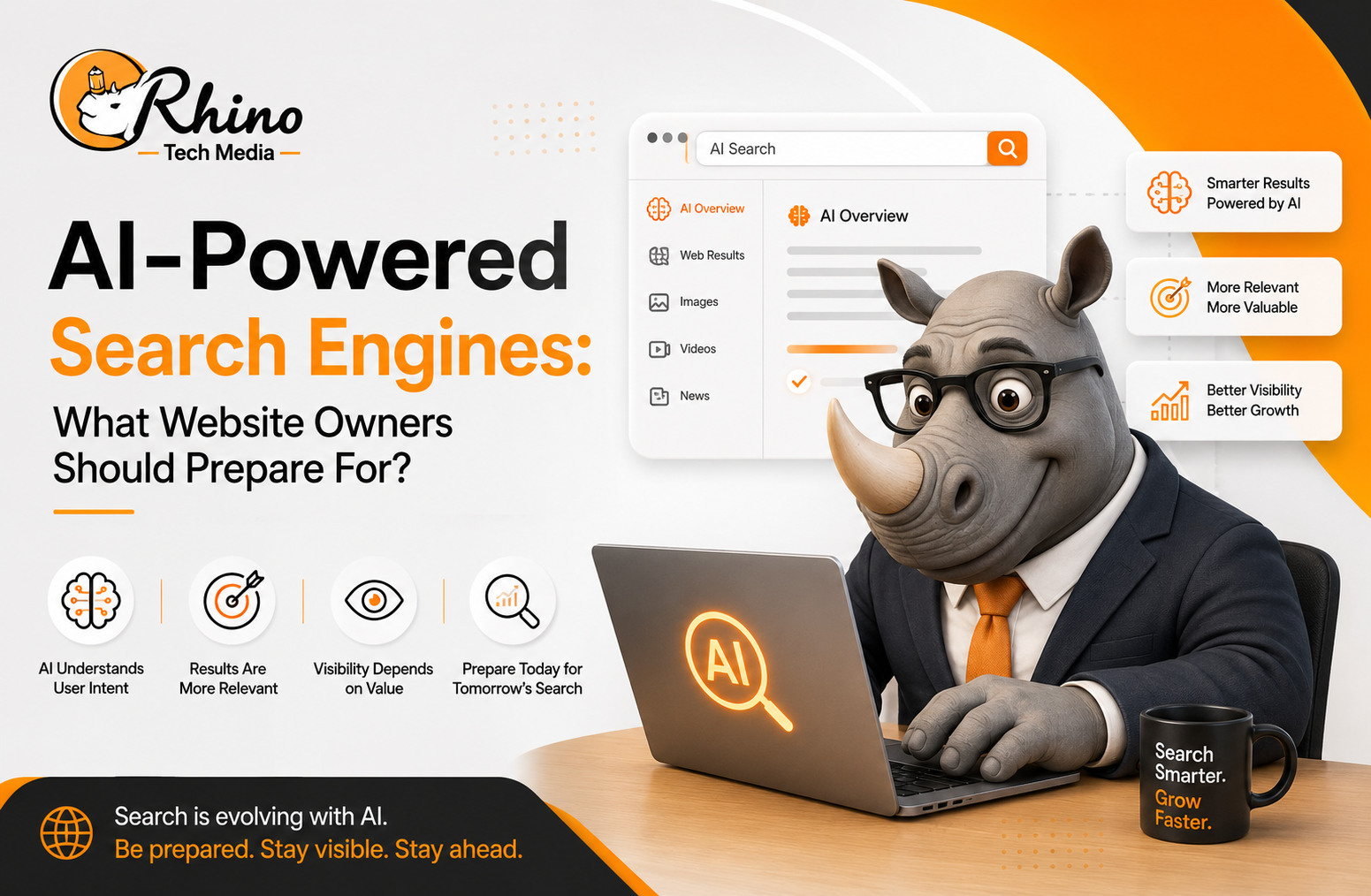
For years, the formula for improving online visibility was simple. Find the right keywords, publish helpful content, optimize your pages, and work toward ranking on the first page of Google. While these fundamentals still matter, the way people search for information is changing rapidly.
Today, users can ask detailed questions and receive AI-generated answers within seconds. Instead of visiting multiple websites, they often get a summarized response, ask follow-up questions, compare options, and continue their research in one seamless conversation.
This shift is already happening at scale. Google Search AI Overviews have expanded how users interact with search by providing AI-generated summaries directly within results. Google has also introduced Google AI Mode, which allows users to explore topics through more conversational searches.
For website owners, this raises an important question: if AI can answer a user’s question instantly, why would anyone still visit a website?
The answer isn’t to abandon SEO. Instead, businesses need to rethink what makes their websites valuable in an AI-first search environment.
How AI-Powered Search Is Changing SEO?
Traditional search engines acted as directories. Users entered a keyword, reviewed a list of results, and clicked on the page that looked most relevant.
AI-powered search works differently. Instead of typing:
“Best CRM software”
someone may ask:
“Which CRM is best for a small business with a limited budget, a five-person sales team, and WhatsApp integration?”
This type of search provides far more context, allowing AI to generate personalized responses while suggesting relevant sources for deeper reading.
Businesses are no longer competing only for keyword rankings. They are competing to become trusted sources throughout a customer’s decision-making journey.
Modern SEO is increasingly focused on understanding user needs, creating valuable experiences, and following search quality principles outlined in resources such as Google Search Central SEO Starter Guide.
Why Websites Still Matter?
AI can answer many informational questions directly, but it cannot replace original expertise or practical experience.
If your content simply repeats information available elsewhere, users may never need to visit your site. However, websites that provide original research, real-world case studies, expert opinions, practical tools, or unique insights continue to offer value beyond AI summaries.
The question is no longer:
“How do I rank for this keyword?”
Instead, ask:
“Why would someone choose to visit my website after reading an AI-generated answer?”
Businesses that demonstrate experience and expertise can build stronger trust. This aligns with Google’s focus on creating helpful, reliable content designed for people rather than only search engines.
What Website Owners Should Do?
1. Focus on User Intent, Not Just Keywords
Keywords remain important, but understanding the user’s real problem is even more valuable.
For example, someone searching for “business insurance” is often looking for answers to questions such as:
- How much coverage is needed?
- What does it cost?
- Which risks are covered?
- What policy suits their business?
Instead of publishing several short articles targeting similar keywords, create one comprehensive resource that answers the customer’s complete journey.
The best SEO starts with understanding people, not search terms.
2. Publish Content Only Your Business Can Create
AI is excellent at summarizing existing information. What it cannot easily replicate is your company’s real experience.
Share lessons from successful and failed projects, customer challenges, implementation stories, industry research, or expert interviews.
This type of content builds credibility and gives readers a reason to trust your business.
The more original experience you include, the more valuable your content becomes in an AI-driven search landscape.
3. Build Topic Authority
Publishing one article isn’t enough to establish expertise.
If your business specializes in artificial intelligence, create related content covering AI automation, AI agents, AI security, private AI platforms, implementation strategies, productivity, and regulations.
Link these articles together naturally. Over time, your website becomes a trusted knowledge hub instead of a collection of unrelated blog posts.
This approach also improves your website structure by helping search engines understand the relationship between different topics. Following good internal linking practices recommended by Google Search Central Internal Links Guide can improve how search engines discover and understand your content.
4. Give People a Reason to Visit Your Website
One of the biggest challenges in AI-powered search is convincing users to click beyond the AI-generated summary.
For example, someone searching for:
“How much does it cost to build a website?”
may receive a general price estimate from AI. But a web development company can offer something far more valuable, such as a cost calculator that considers:
- Number of pages
- Ecommerce features
- Design complexity
- Third-party integrations
- Custom functionality
- Ongoing maintenance
Similarly, businesses can attract visitors by providing:
- Original research and industry reports
- Interactive tools and calculators
- Detailed case studies
- Expert interviews
- Comparison guides
- Downloadable templates
The goal is not to hide information from users. It is to offer something more useful than a simple AI summary.
Unique experiences, practical resources, and first-hand insights give users a reason to continue their journey on your website.
5. Keep Technical SEO Strong
AI-powered search has not replaced the importance of technical SEO. Search engines still need to discover, crawl, understand, and index your website effectively.
Continue following SEO best practices by focusing on:
- Fast page loading speeds
- Mobile-friendly design
- Proper crawlability and indexing
- Clear page titles and headings
- Strong internal linking
- Secure HTTPS browsing
- Structured data where appropriate
Resources such as Google Search Central Technical SEO Documentation and Google Structured Data Guidelines provide guidance on improving website visibility and search understanding.
Even the best content can struggle to perform if search engines cannot easily access or understand it.
A strong technical foundation remains essential for long-term visibility.
6. Write for Real Questions
People rarely search using perfect keyword phrases. Instead, they ask questions based on their situation.
For example, rather than searching for:
“AI customer support”
someone may ask:
“How can a small business use AI customer support without losing the human touch?”
This reveals a deeper concern about customer experience, not just technology.
Create content that answers the complete question by explaining:
- Why the topic matters?
- How the solution works?
- Benefits and limitations
- Who should use it?
- When it may not be the right choice?
- What readers should do next?
Content that reflects real customer questions is more valuable than content written only to target keywords.
Understanding search intent is also a key part of modern SEO strategies recommended by Google Search Central Helpful Content Guidance.
7. Use AI as an Assistant, Not the Author
AI can improve content creation by helping with research, brainstorming, outlining, editing, and organizing ideas.
However, publishing large amounts of generic AI-generated content without adding original value can reduce quality and trust.
The best approach is to let AI support the writing process while human expertise shapes the final article.
Readers should feel that the content reflects real knowledge, experience, and thoughtful analysis rather than automated text alone.
Human expertise, originality, and accuracy will remain important factors in building trust online.
8. Measure What Matters
Traffic and rankings remain useful metrics, but they are no longer enough.
A website with fewer visitors may generate more qualified leads, while another with high traffic may produce very few customers.
Instead, monitor metrics such as:
- Organic impressions
- Branded searches
- Qualified enquiries
- Conversion rates
- Returning visitors
- Newsletter subscriptions
- Sales and business growth
SEO should contribute to business results, not just website traffic.
Tools such as Google Search Console can help website owners understand search performance, visibility, and user behaviour.
Conclusion
AI-powered search is transforming how people discover information, but it is not making websites obsolete.
Instead, it is raising the standard for what users expect.
Businesses that combine strong SEO fundamentals with original insights, real expertise, practical tools, and genuinely helpful content will continue to earn visibility and trust.
The future of SEO is no longer about simply ranking for keywords. It is about becoming a trusted resource that people return to when they need deeper answers, expert guidance, and confidence before making important decisions.
