
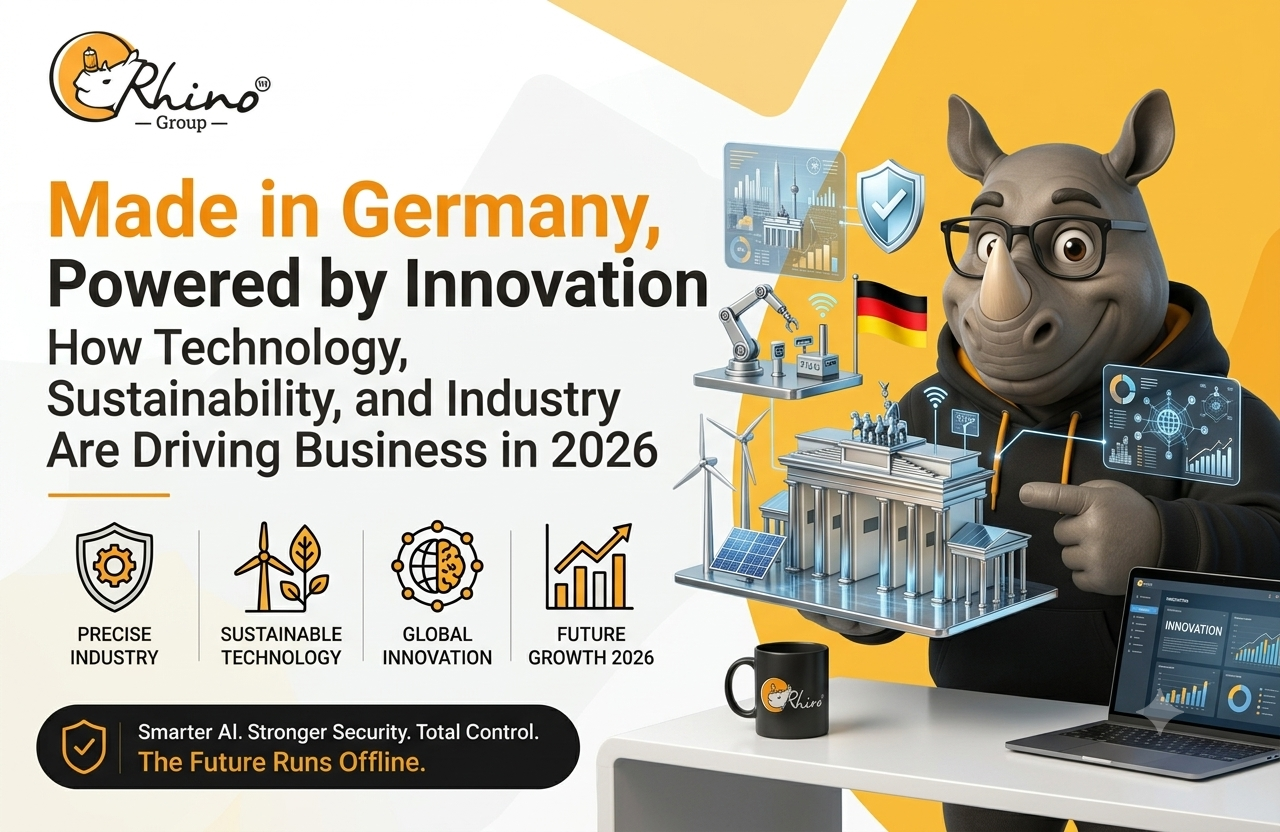
How Technology, Sustainability, and Industry Are Driving Business in 2026
Overview
Germany remains one of the world’s leading industrial and economic powers, and in 2026 its business landscape is being reshaped by rapid technological innovation, sustainability initiatives, and advanced manufacturing. While the country continues to build on its renowned engineering excellence, German businesses are increasingly embracing artificial intelligence, automation, digital transformation, and clean energy to remain competitive in a fast-changing global economy.
Government investment in digital infrastructure, renewable energy, semiconductor manufacturing, and industrial modernization is accelerating innovation across key sectors. At the same time, companies are strengthening supply chain resilience, expanding smart factory technologies, and investing in research and development to address global competition and evolving market demands.
At the heart of this transformation are Germany’s globally recognized industries—including automotive, advanced manufacturing, industrial machinery, chemicals, healthcare, logistics, renewable energy, and financial technology—which continue to evolve through digitalization and innovation.
Key business trends shaping Germany in 2026 include:
- l Artificial intelligence and industrial automation
- l Industry 4.0 and smart manufacturing
- l Renewable energy and green hydrogen investments
- l Electric vehicles and next-generation mobility
- l Semiconductor production and advanced technologies
- l Digital transformation across businesses
- l Supply chain resilience and regional manufacturing
- l Cybersecurity and cloud computing
- l Sustainable business practices and the circular economy
- l Growth in startups, fintech, and deep-tech innovation
As Europe transitions toward a more digital and sustainable economy, Germany continues to strengthen its position as a global leader in innovation, industrial excellence, and high-value manufacturing. Businesses that embrace emerging technologies while maintaining Germany’s tradition of quality and engineering precision are well positioned to thrive in 2026 and beyond.
Manufacturing Expansion
The Backbone of Germany’s Economic Growth in 2026
Manufacturing remains the cornerstone of Germany’s economy, accounting for a significant share of the country’s exports, employment, and technological innovation. In 2026, the sector is evolving beyond traditional production methods by embracing
- l Artificial intelligence (AI)
- l Automation
- l Robotics
- l Digital twins
- l Data-driven manufacturing processes
German manufacturers are investing heavily in smart factories that improve efficiency, reduce waste, and enhance product quality while remaining globally competitive.
Germany’s manufacturing strength continues to be driven by world-class industries such as
- l Automotive machinery
- l Industrial machinery
- l Chemicals
- l Electronics
- l Aerospace
- l Medical technology
- l Precision engineering
These sectors benefit from a highly skilled workforce, advanced research institutions, and strong collaboration among government, universities, and private industry.
Key Drivers of Manufacturing Expansion
German manufacturers are focusing on several strategic priorities to fuel long-term growth:
- l Expanding smart factories powered by AI and industrial automation.
- l Increasing the use of robotics to improve productivity and workplace safety.
- l Investing in digital twins and predictive maintenance to reduce equipment downtime.
- l Modernizing production facilities with Internet of Things (IoT) sensors and real-time analytics.
- l Strengthening domestic and European supply chains to improve resilience.
- l Accelerating investments in semiconductor manufacturing and advanced electronics.
- l Supporting high-value exports through continuous innovation and product quality.
- l Improving energy efficiency and reducing carbon emissions in production processes.
Industry 4.0 Continues to Evolve
Germany remains a global leader in Industry 4.0, where intelligent machines, connected systems, and advanced software work together to optimize manufacturing operations.
Industry 4.0 technologies enable companies to:
- l Monitor production in real time.
- l Automate repetitive manufacturing tasks.
- l Detect equipment failures before they occur.
- l Optimize inventory management and logistics.
- l Improve product customization without sacrificing efficiency.
- l Reduce operational costs through predictive analytics.
These technologies allow manufacturers to respond faster to changing customer demands while maintaining the high standards associated with “Made in Germany.”
Workforce Transformation
As manufacturing becomes more digital, workforce requirements are evolving. To remain globally competitive, German companies are investing in continuous learning, digital skills, leadership development, and employee well-being.
Employers are increasingly seeking professionals with expertise in:
- l Artificial intelligence
- l Robotics programming
- l Data analytics
- l Industrial software
- l Automation engineering
- l Cybersecurity
- l Mechatronics
- l Advanced manufacturing systems
Continuous employee training and upskilling have become essential for maintaining Germany’s industrial competitiveness. At the same time, businesses are addressing labor shortages by expanding recruitment efforts, improving workplace flexibility, and attracting international talent to support long-term economic growth.
High-Value Manufacturing Sectors
Germany’s reputation as one of the world’s leading manufacturing economies is built on its ability to produce high-quality, technologically advanced products that are in demand across global markets. Germany continues to excel in several globally competitive industries:
- l Automotive manufacturing
- l Industrial machinery
- l Aerospace and aviation
- l Chemicals and specialty materials
- l Medical technology
- l Electrical engineering
- l Renewable energy equipment
- l Precision engineering
- l Semiconductor manufacturing
- l Robotics and industrial automation
These sectors benefit from continuous investment in research, innovation, and workforce development. In 2026, high-value manufacturing continues to be a major driver of economic growth, exports, innovation, and employment. Rather than competing on low production costs, German manufacturers compete through engineering excellence, precision, reliability, and continuous innovation.
Challenges Facing Manufacturers
While Germany remains one of the world’s leading manufacturing nations, manufacturers face a range of challenges in 2026 that require strategic investment, innovation, and operational resilience. Despite strong opportunities, manufacturers continue to navigate several challenges:
- l Rising energy and operating costs
- l Global competition
- l Skilled labor shortages
- l Geopolitical uncertainty
- l Supply chain disruptions
- l Increasing cybersecurity risks
- l Compliance with environmental regulations
Companies that invest in innovation, digital transformation, and sustainable production are better positioned to overcome these challenges. Successfully addressing these challenges will be critical to maintaining Germany’s reputation for engineering excellence and high-quality manufacturing.
Conclusion
Germany’s manufacturing sector is entering a new phase of growth driven by technology, sustainability, and resilience. By combining world-class engineering with AI, automation, and green innovation, manufacturers are creating smarter factories, more efficient production systems, and higher-value products. This transformation reinforces Germany’s position as one of the world’s leading industrial economies and prepares its manufacturing sector for long-term success in an increasingly competitive global market.
