The Hidden Risks of AI Dependency and How Smart Businesses Are Building AI Resilience
Artificial intelligence has quickly become an essential part of modern business. From writing marketing content and generating code to answering customer queries and analyzing reports, AI helps organizations work faster and smarter. Among the many AI tools available today, ChatGPT has become a trusted assistant for businesses of all sizes. As companies integrate AI into their daily operations, one important question is often overlooked.
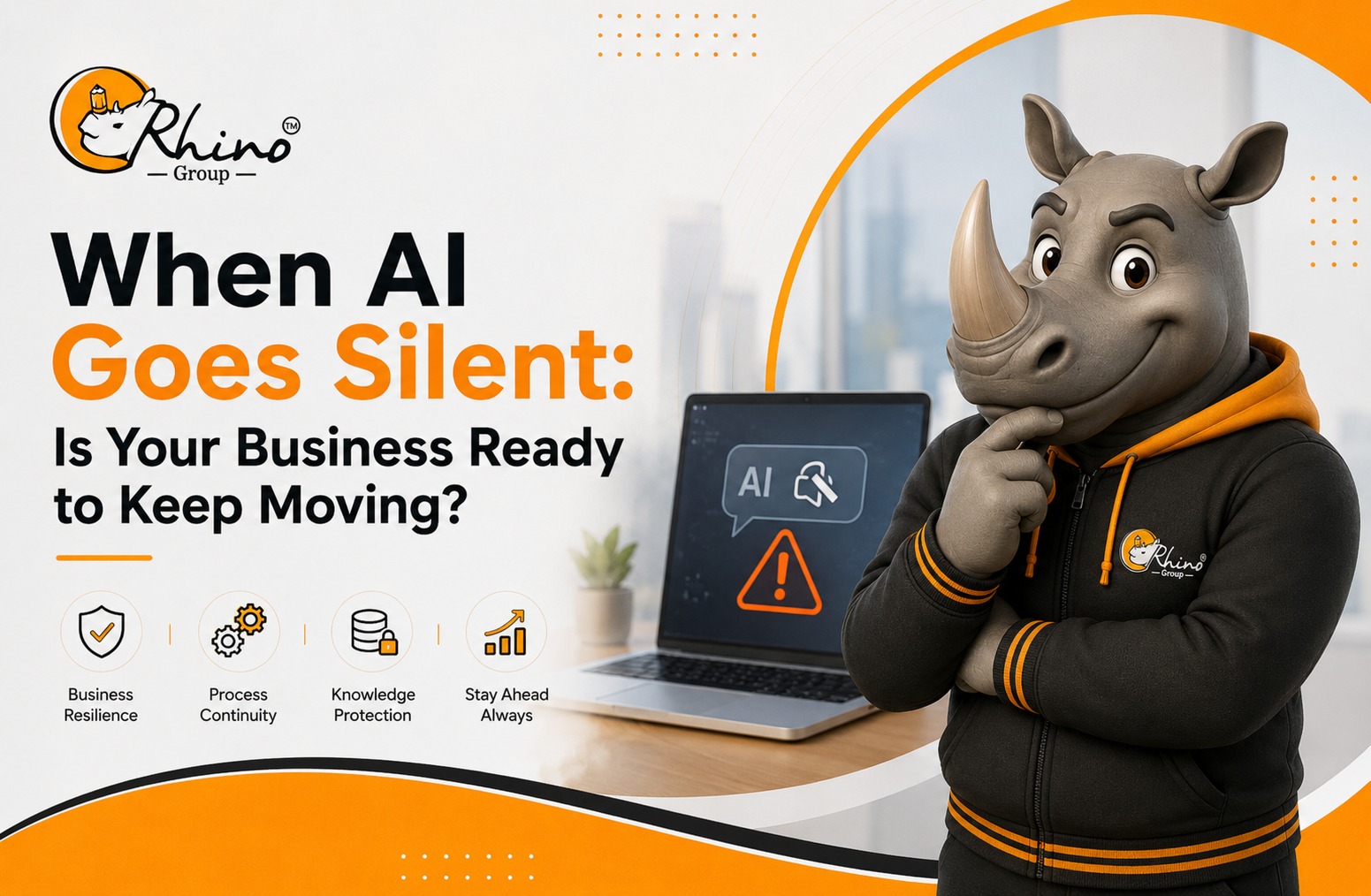
What happens if your primary AI tool suddenly becomes unavailable?
A temporary service disruption may last only a few minutes or hours, but the impact on productivity can be significant if your business depends on a single AI platform. The solution is not to reduce AI adoption. Instead, businesses should focus on building resilience so work can continue smoothly, regardless of temporary interruptions. Organizations that prepare today will be better equipped to maintain productivity, serve customers, and adapt to future challenges.
AI Has Become an Essential Part of Every Business
Just a few years ago, artificial intelligence was viewed as an emerging technology that businesses experimented with. Today, it supports daily operations across almost every department.
Marketing teams use AI to create blogs, advertisements, email campaigns, and social media content. Sales professionals draft proposals and personalized customer emails in minutes. HR teams prepare job descriptions, interview questions, and internal communications. Developers use AI to write code, identify bugs, and improve documentation. Business leaders rely on AI to summarize reports, analyze information, and prepare for important meetings.
This widespread adoption has transformed AI from a helpful tool into a business necessity. While this has increased efficiency, it has also created a growing dependency that many organizations do not fully recognize until an unexpected disruption occurs.
When AI Stops, Productivity Slows
Imagine your team beginning an ordinary workday. Marketing is preparing a product launch. Customer support is responding to hundreds of inquiries. Developers are working on software updates. HR is preparing recruitment documents.
Then your primary AI assistant suddenly becomes unavailable.
At first, employees assume it is a temporary issue. As time passes, small delays begin to appear throughout the organization. Content creation slows down. Research takes longer. Developers spend more time solving problems manually. Customer responses become slower, and meetings begin without prepared summaries.
The business continues operating, but not at its usual pace. These small disruptions accumulate, reducing efficiency across multiple teams. Even a short interruption can affect deadlines, customer satisfaction, and overall productivity.
The Real Risk Is Dependency
Every technology experiences occasional maintenance, upgrades, or unexpected service interruptions. Cloud platforms, payment gateways, communication tools, and email services all face temporary outages from time to time.
Artificial intelligence platforms are no different.
The real concern is not whether ChatGPT or another AI platform is reliable. The greater risk is designing business operations around the assumption that one platform will always be available.
When essential workflows depend entirely on a single AI solution, even a brief disruption can slow projects, delay decisions, and interrupt customer service. Businesses that diversify their technology are better prepared to continue operating when unexpected situations arise.
How Smart Businesses Build AI Resilience?
Leading organizations are not reducing their investment in artificial intelligence. Instead, they are creating stronger systems that continue supporting employees even when one AI service becomes temporarily unavailable.
A resilient AI strategy includes several practical steps.
Maintain access to more than one trusted AI platform for important business tasks.
Document critical workflows and operating procedures instead of relying only on AI conversations.
Store valuable company knowledge in secure internal knowledge management systems.
Create clear AI governance policies that define how AI should be used responsibly.
Train employees to review AI generated content, verify information, and complete essential work independently when necessary.
These practices help organizations reduce operational risks while continuing to benefit from AI powered productivity.
Human Expertise Remains the Greatest Competitive Advantage
Artificial intelligence is transforming the workplace, but it cannot replace human judgment, creativity, and experience.
Employees understand customer needs, solve complex problems, build relationships, and make strategic decisions. AI supports these capabilities by reducing repetitive work and providing valuable insights, allowing people to focus on higher value activities.
Businesses that invest in employee skills alongside AI adoption become more resilient and adaptable. When people understand the processes behind their work instead of depending entirely on AI generated responses, organizations remain productive regardless of temporary technology disruptions.
Technology works best when it enhances human expertise rather than replacing it.
Questions Every Business Should Ask
As AI becomes more deeply integrated into business operations, leaders should regularly evaluate their preparedness.
Ask yourself these questions.
- Can your team continue working if your primary AI platform becomes unavailable?
- Are important documents stored securely outside AI chat histories?
- Do employees have access to alternative AI tools when needed?
- Have essential workflows been properly documented?
- Does your organization have clear AI governance policies?
Answering these questions today can help prevent costly disruptions tomorrow.
Conclusion
Artificial intelligence is transforming businesses across every industry by improving productivity, accelerating innovation, and helping teams accomplish more in less time. It has become one of the most valuable technologies available to modern organizations, and its role will continue to grow in the years ahead. However, as businesses increasingly depend on AI for critical operations, resilience becomes just as important as adoption.
Building an AI resilient business is not about using less artificial intelligence. It is about using it wisely. Organizations that diversify AI platforms, document important business processes, strengthen knowledge management, establish governance policies, and continuously develop employee skills create a strong foundation for sustainable growth. These proactive measures reduce operational risks while ensuring that teams remain productive during temporary service interruptions.
The future belongs to organizations that combine innovation with preparation. Businesses that view AI as a powerful partner rather than a single point of dependency will be better positioned to adapt, compete, and deliver exceptional customer experiences. Technology will continue to evolve, but resilience, strategic planning, and human expertise will always remain the driving forces behind long term success.
AI is here to stay, and its potential is remarkable. The smartest businesses will not simply adopt more AI. They will build resilient systems that allow people and technology to work together confidently, ensuring continued growth, stronger customer relationships, and lasting business success, no matter what challenges the future may bring.
