
Think about how many times you pick up your phone every day. Whether it’s checking messages, joining meetings, shopping online, finding directions, or simply browsing social media, smartphones have become part of almost every moment of our lives. It’s hard to imagine a world without them.
But technology never stands still.
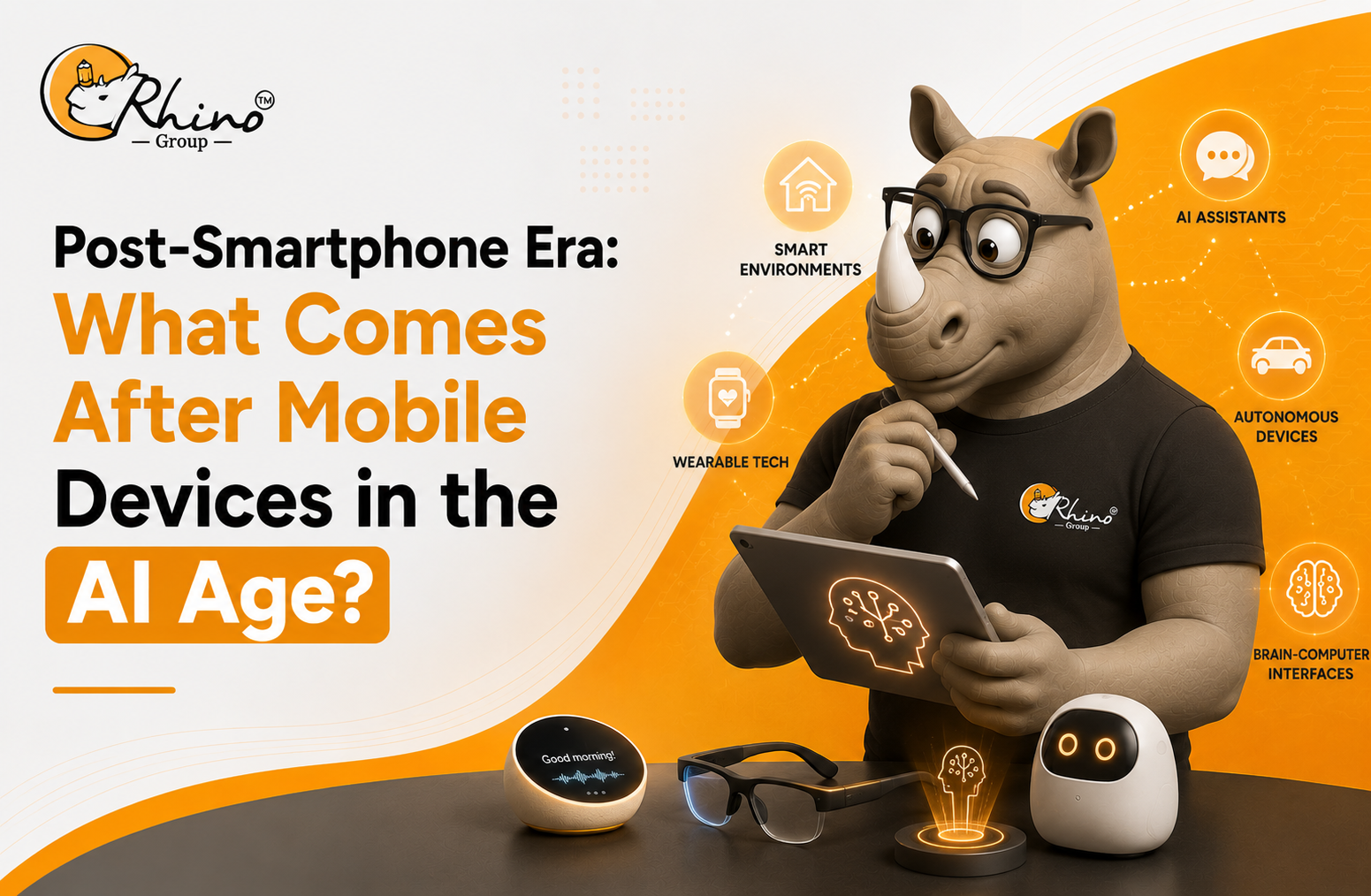
Artificial intelligence is changing the way we interact with digital devices, and many experts believe we’re entering the Post-Smartphone Era. Instead of relying on a single screen in our pocket, the next generation of technology will be built around intelligent assistants, wearable devices, smart glasses, and AI that understands what we need before we even ask.
This doesn’t mean smartphones will disappear overnight. Just as laptops didn’t replace desktops completely, smartphones will continue to be useful. The difference is that AI is making technology more natural, connected, and effortless. The focus is shifting from using apps to simply interacting with intelligent systems that work quietly in the background.
Why Are We Moving Beyond Smartphones?
Smartphones have improved dramatically over the years, but most updates today feel familiar. Better cameras, faster processors, and brighter displays are welcome improvements, yet they don’t fundamentally change how we use our devices.
At the same time, people are becoming more aware of the downsides of constant screen time. Long hours spent looking at phones can affect productivity, focus, and even well-being. Many users now want technology that fits naturally into their daily lives without demanding their full attention.
This is where AI makes a difference. Instead of opening multiple apps to complete simple tasks, people increasingly expect technology to understand their requests, automate routine activities, and provide information instantly.
AI Is Becoming the Real Interface
One of the biggest changes happening today is that artificial intelligence is becoming the primary way people interact with technology.
Rather than tapping through several menus, users can simply ask an AI assistant to schedule appointments, summarize emails, book travel, or answer questions in seconds.
AI is also becoming more context-aware. It can remember preferences, understand conversations, and make helpful suggestions based on previous interactions. This creates a smoother and more personal experience that feels less like using software and more like working with a helpful assistant.
Technologies Leading the Post-Smartphone Era
Several emerging technologies are bringing this vision closer to reality.
AI Wearables
Wearable technology has already become popular through smartwatches and fitness trackers. The next generation of AI-powered wearables will do much more than count steps.
These devices can monitor health, provide personalized insights, detect emergencies, and deliver important information without requiring users to pull out their phones. As AI continues to improve, wearables will become smarter, faster, and more useful in everyday life.
Smart Glasses
Smart glasses are another exciting development. Instead of looking down at a screen, users can view directions, translations, notifications, and digital information directly in front of them.
This hands-free experience could transform industries like healthcare, manufacturing, logistics, education, and field services, where quick access to information can improve both productivity and safety.
Ambient Computing
Perhaps the biggest shift is something called ambient computing. Rather than interacting with a specific device, technology becomes part of the environment around us.
Imagine walking into your office and having the lights adjust automatically, your meeting notes appear instantly, and your preferred workspace settings activate without touching a single screen. AI quietly manages these tasks in the background, making everyday experiences simpler and more efficient.
What Does This Mean for Businesses?
Businesses are likely to benefit just as much as consumers from this shift.
AI-powered devices can help employees access information faster, automate repetitive work, improve customer service, and support better decision-making. Retailers can deliver more personalized shopping experiences, healthcare providers can monitor patients more effectively, and manufacturers can improve workplace efficiency through connected AI systems.
Companies that begin exploring AI-first solutions today will be better prepared for the changing expectations of customers and employees in the years ahead.
Challenges Still Ahead
While the future looks promising, there are still important challenges to overcome.
Privacy and data security remain major concerns, especially as AI devices collect more personal information. Battery life, affordability, and compatibility between different platforms also need continuous improvement.
Building trust will be just as important as developing new technology. People want AI that is reliable, transparent, and designed to support their lives without compromising their privacy.
Conclusion
The Post-Smartphone Era isn’t about saying goodbye to smartphones. Instead, it’s about expanding the way we experience technology. As artificial intelligence becomes more capable, we are moving toward a future where devices work together seamlessly, information is available when we need it, and technology feels less like a tool and more like a natural part of everyday life.
We’re already seeing the first signs of this transformation through AI wearable technology, smart glasses, voice assistants, and ambient computing. These innovations are making digital experiences faster, more intuitive, and less dependent on constantly looking at a screen. While smartphones will continue to play an important role, they are gradually becoming one part of a much larger connected ecosystem.
For businesses, this is an opportunity to rethink how they engage customers, improve operations, and prepare for the next wave of digital innovation. For individuals, it promises greater convenience, smarter productivity, and technology that adapts to everyday needs instead of demanding constant attention.
The future of mobile devices isn’t about replacing one gadget with another. It’s about creating experiences that are more intelligent, more personal, and more connected than ever before. Those who embrace these changes early will be well positioned to benefit from the exciting opportunities that lie ahead.
Technology has always evolved to make life easier, and this next chapter is no different. As AI continues to advance, the future looks incredibly promising. The post-smartphone era is not something to fear It’s an opportunity to build a smarter, more connected world where innovation helps people work better, live more comfortably, and unlock possibilities that once seemed impossible.
