Why Forward-Thinking Companies Are Turning to AI Knowledge Systems to Protect Expertise, Improve Productivity, and Drive Smarter Decisions?
In every organization, there are employees who seem to have all the answers. They know why a process exists, how a difficult client issue was resolved, or what lessons were learned from a project completed years ago. Their knowledge is built through experience, and over time, they become the people everyone turns to when something goes wrong.
Now imagine one of those employees resigns.
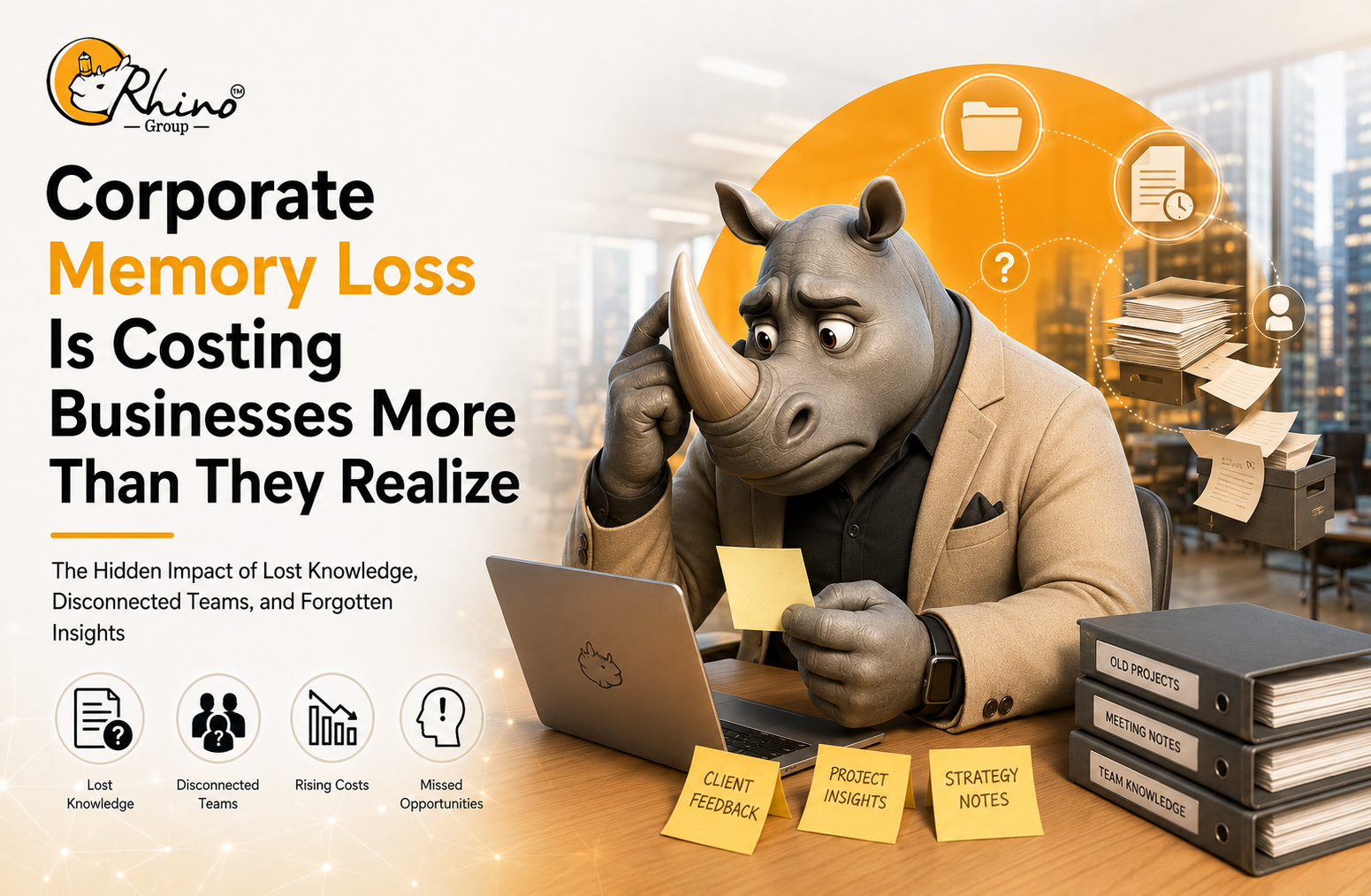
Suddenly, teams struggle to find important information. They search through emails, old documents, chat messages, and shared folders, hoping to piece together knowledge that should have been readily available. Projects slow down, decisions take longer, and mistakes that were solved years ago are repeated. This is not just an operational inconvenience. It is corporate memory loss, and it is becoming a growing challenge for businesses of every size.
As companies embrace digital transformation, they are realizing that their greatest asset is not just technology or data. It is the knowledge their people create every day. This is why AI Knowledge Management, AI Knowledge Systems, and Enterprise Knowledge Management are rapidly becoming business priorities. These solutions help organizations preserve expertise, improve collaboration, and ensure valuable knowledge remains accessible long after employees move on.
Understanding Corporate Memory Loss
Corporate memory refers to the collective knowledge an organization builds over time. It includes documented processes, customer insights, project experiences, technical expertise, and the countless decisions that shape how a business operates.
The problem is that much of this knowledge is never properly documented. It often lives in individual inboxes, messaging apps, spreadsheets, personal notes, or simply in employees’ minds. When experienced people leave, years of valuable information can disappear with them.
This creates several challenges for businesses:
- Longer onboarding for new employees
- Repeated mistakes and duplicated work
- Slower decision-making
- Inconsistent customer experiences
- Increased operational costs
- Reduced productivity across teams
Many organizations don’t realize the impact until they begin searching for information that no longer exists.
Why Traditional Knowledge Management No Longer Works?
Most businesses already store documents in cloud drives, internal portals, or shared folders. While these tools are useful, they often become digital filing cabinets filled with outdated or duplicate information.
Employees spend valuable time trying different keywords, opening multiple files, or asking colleagues where information is stored. Instead of supporting productivity, information becomes harder to find as the business grows.
Today’s fast-moving organizations need more than document storage. They need intelligent systems that understand context, connect related information, and deliver accurate answers within seconds.
That is exactly where AI Knowledge Management is changing the way businesses work.
How AI Knowledge Systems Are Transforming Modern Businesses?
Unlike traditional knowledge repositories, AI-powered systems organize information automatically and make it searchable using natural language.
Instead of spending thirty minutes looking for a document, an employee can simply ask:
“How did we resolve a similar customer issue last year?”
The system instantly searches meeting notes, project documentation, support tickets, policies, and previous conversations to provide the most relevant answer.
Beyond intelligent search, AI Knowledge Systems offer several practical advantages:
Preserve Business Expertise
Critical knowledge remains within the organization even when experienced employees retire or move to new opportunities.
Accelerate Employee Onboarding
New team members can quickly understand processes, policies, and previous projects without depending entirely on senior colleagues.
Improve Collaboration
Departments can easily access shared knowledge, reducing communication gaps and avoiding duplicate work.
Support Faster Decisions
Leaders gain immediate access to historical information, helping them make informed business decisions with greater confidence.
A Real-World Example
Imagine a growing software company where a senior developer leaves after completing several large client projects. Much of the project’s technical knowledge exists only in emails and personal notes.
The new developer spends weeks trying to understand previous decisions, delaying product updates and frustrating customers.
Now imagine the same company using an AI-powered knowledge system.
Every meeting summary, design decision, technical document, and troubleshooting guide is stored in one intelligent platform. Instead of starting from scratch, the new developer quickly finds everything needed to continue the project with confidence.
The difference is not just better documentation. It is business continuity.
Why More Organizations Are Investing in AI Knowledge Management?
The workplace has changed significantly over the past few years. Hybrid work, remote teams, rapid hiring, and increasing employee mobility have made knowledge sharing more challenging than ever.
Forward-thinking organizations understand that protecting organizational knowledge is no longer optional. It is essential for maintaining productivity, improving customer service, and supporting long-term growth.
Businesses adopting AI Knowledge Systems are experiencing benefits such as:
- Reduced time spent searching for information
- Faster project delivery
- Better employee productivity
- Improved customer support
- Stronger collaboration across departments
- More consistent business processes
- Greater resilience during employee transitions
As artificial intelligence continues to evolve, knowledge management is becoming smarter, faster, and more valuable for organizations of every size.
Conclusion
Corporate memory is one of the most valuable assets a business can own, yet it is often overlooked until it begins to disappear. Every conversation with a customer, every successful project, every lesson learned from a challenge, and every internal process contributes to the knowledge that helps an organization grow stronger over time. Losing that knowledge doesn’t just affect productivity—it impacts decision-making, customer satisfaction, innovation, and long-term business performance.
AI is not replacing the experience and expertise of employees. Instead, it ensures that valuable knowledge is captured, organized, and made accessible whenever it is needed. By investing in AI Knowledge Management and Enterprise Knowledge Management, businesses create an environment where information is no longer hidden in emails or dependent on a handful of experienced employees. It becomes a shared resource that empowers every team member to work smarter and make better decisions.
The organizations that will succeed in the years ahead are not simply those adopting artificial intelligence; they are the ones using it to preserve what matters most: their collective knowledge. As workplaces continue to evolve, businesses that protect and share their expertise will be better equipped to innovate, adapt to change, and remain competitive. Investing in an intelligent knowledge system today is not just a technology decision; it is a strategic investment in resilience, collaboration, and sustainable growth for the future.
