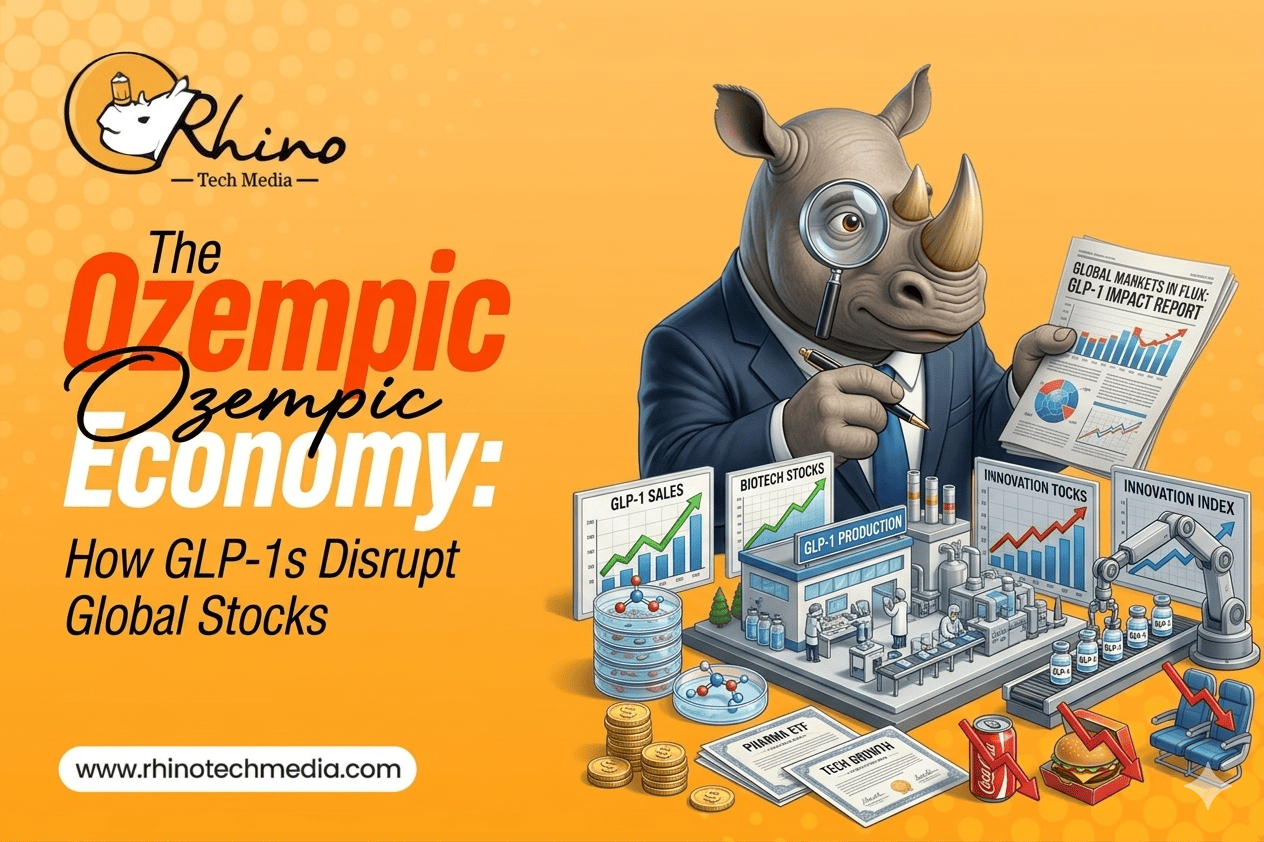
The Ozempic Economy: How GLP-1s Disrupt Global Stocks
The rise of GLP-1 (glucagon-like peptide-1) drugs,popularized by brands like Ozempic, Wegovy, and Mounjaro,has triggered one of the most unexpected economic shifts of the decade. Originally developed to treat type 2 diabetes, these drugs are now reshaping consumer behavior, corporate strategies, and ultimately, global stock markets. What is emerging is increasingly referred to as the “Ozempic Economy”,a structural transformation where appetite suppression translates into financial disruption across multiple sectors.
The Scale of the GLP-1 Boom
The economic significance of GLP-1 drugs begins with their explosive market growth. Estimates suggest the global GLP-1 market could expand from around $60 billion today to over $150 billion by the next decade, with some projections reaching nearly $190 billion by 2035.
This surge has already created massive shareholder value. Companies like Novo Nordisk and Eli Lilly have seen unprecedented market capitalizations, with GLP-1 drugs driving their transformation into some of the most valuable pharmaceutical firms globally.
The investment thesis is simple: obesity is a global epidemic, and GLP-1 drugs offer one of the first scalable, effective pharmaceutical solutions. As adoption rises, so does revenue predictability,making these companies attractive long-term bets for investors.
Pharma Stocks: The Primary Winners
Unsurprisingly, pharmaceutical companies dominate the winners’ circle. Eli Lilly and Novo Nordisk are locked in an innovation race, with new injectable and oral GLP-1 drugs fueling investor excitement.
The introduction of oral GLP-1 pills is especially significant. It lowers barriers to adoption, expands patient pools, and creates recurring demand,similar to statins in cardiovascular care.
Beyond global giants, the ripple effects are also visible in emerging markets. Indian pharmaceutical firms like Sun Pharma, Lupin, and Torrent Pharma are expected to benefit from producing generic versions of semaglutide, opening a new growth frontier.
For stock markets, this means a long runway of earnings growth in pharma,arguably one of the strongest structural tailwinds in healthcare investing today.
Consumer Behavior: A Structural Shift
What makes the Ozempic Economy unique is that it doesn’t stop at healthcare,it fundamentally alters how people live and spend. GLP-1 drugs suppress appetite, reduce cravings, and even change food preferences.
Studies show users are spending less on fast food, snacks, and alcohol, while increasing spending on healthier foods, fitness, and wellness products.
This shift is not marginal,it is behavioral. Consumers are eating less, choosing differently, and prioritizing long-term health over indulgence. For markets, this creates both winners and losers.
Food, Beverage, and Restaurant Stocks Under Pressure
The most immediate disruption is visible in the food industry. Lower calorie consumption translates directly into reduced demand for packaged snacks, sugary beverages, and fast food.
Restaurants are already adapting by offering smaller portions and high-protein menus tailored to GLP-1 users.
However, adaptation comes with margin pressure. Lower volume consumption could weigh on revenues for fast-food chains and processed food companies. Investors are beginning to reassess long-term growth assumptions in these sectors, particularly those heavily reliant on high-calorie consumption.
Retail, Apparel, and Lifestyle Shifts
Another surprising impact is in apparel and retail. As consumers lose weight, demand shifts toward smaller clothing sizes and even second-hand fashion markets. This creates inventory challenges for retailers and forces brands to rethink sizing strategies.
At the same time, lifestyle changes,such as increased physical activity and wellness spending,are benefiting sectors like fitness, travel, and athleisure. The Ozempic Economy is not just reducing consumption; it is redistributing it.
Beauty and Wellness: Unexpected Beneficiaries
While some industries face headwinds, others are thriving. Rapid weight loss associated with GLP-1 drugs can lead to side effects such as hair thinning and skin changes. This has driven increased demand for skincare, supplements, and cosmetic treatments.
Beauty companies and wellness brands are capitalizing on this trend, creating new product lines tailored to GLP-1 users. This crossover between healthcare and aesthetics represents a new category of consumer demand,one that investors are increasingly paying attention to.
Market Volatility and Competitive Risks
Despite the optimism, the GLP-1 story is not without risks. Competition between drugmakers is intensifying, leading to pricing pressures and fluctuating stock performance.
Additionally, high costs remain a barrier to widespread adoption, although prices are expected to decline as generics enter the market and insurance coverage expands.
There is also uncertainty about long-term adherence, side effects, and regulatory dynamics,all of which could influence future valuations.
Conclusion: A New Economic Paradigm
The Ozempic Economy represents more than a pharmaceutical breakthrough,it is a systemic shift in how people consume, live, and spend. From food and retail to beauty and biotech, GLP-1 drugs are redrawing the map of global capitalism.
For investors, the key insight is clear: this is not a short-term trend but a multi-decade transformation. Pharma stocks may lead the charge, but the real story lies in second-order effects,where changing human behavior reshapes entire industries.
In that sense, GLP-1s are not just disrupting waistlines,they are disrupting the very foundations of global markets.
