
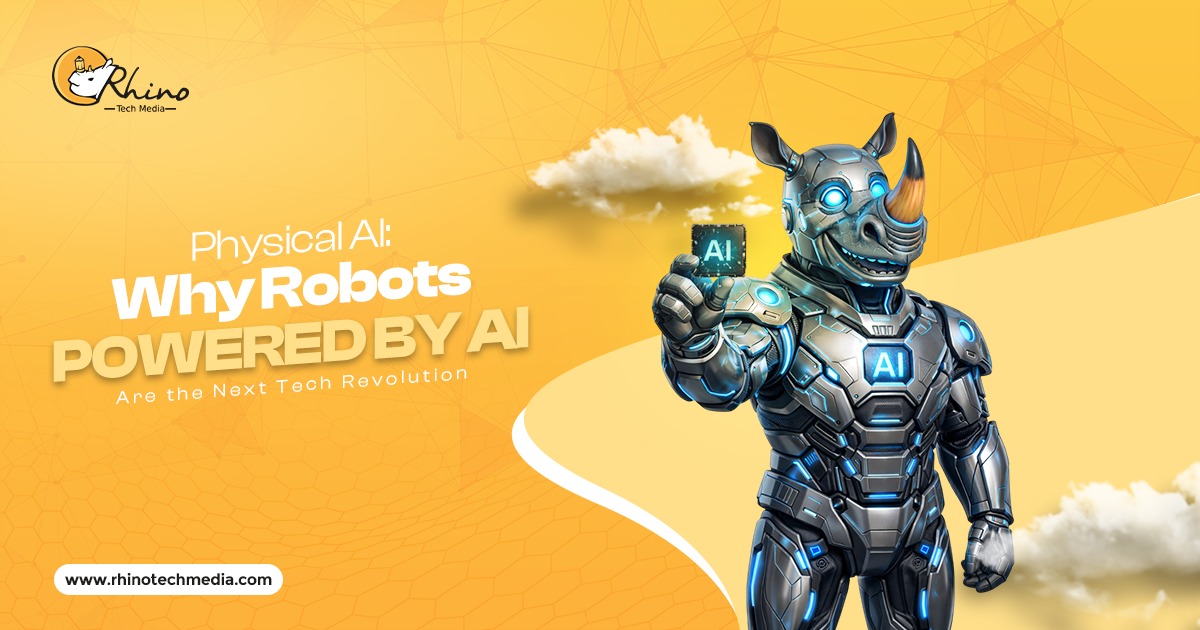
Physical AI: Why Robots Powered by AI Are the Next Tech Revolution
The world has already witnessed the transformative power of artificial intelligence in the digital space—from recommendation algorithms to conversational assistants. However, a new frontier is rapidly emerging: Physical AI. This refers to the integration of artificial intelligence into physical systems such as robots, enabling them to perceive, learn, and act in the real world. Unlike traditional software-based AI, Physical AI bridges the gap between computation and action, marking the beginning of what many consider the next major technological revolution.
At its core, Physical AI combines machine learning, computer vision, sensor technology, and robotics. These systems are designed not only to process data but also to interact with their surroundings. For example, an AI-powered robot in a warehouse can identify objects, navigate obstacles, and make decisions in real time—tasks that previously required human intervention. This ability to operate autonomously in dynamic environments is what sets Physical AI apart.
One of the key drivers of this revolution is the advancement in hardware capabilities. Modern robots are equipped with sophisticated sensors such as LiDAR, cameras, and tactile feedback systems, allowing them to gather detailed information about their environment. Coupled with powerful AI models, these robots can interpret complex data and respond intelligently. As hardware becomes more affordable and efficient, the adoption of Physical AI is expected to accelerate across industries.
Another critical factor is the evolution of machine learning techniques. Deep learning models have significantly improved the ability of machines to recognize patterns and make predictions. When applied to robotics, these models enable systems to learn from experience rather than relying solely on pre-programmed instructions. This means robots can adapt to new situations, improve their performance over time, and even collaborate with humans more effectively.
The impact of Physical AI is already being felt across multiple sectors. In manufacturing, AI-powered robots are enhancing productivity by performing repetitive tasks with high precision and consistency. They can operate 24/7 without fatigue, reducing operational costs and increasing efficiency. In healthcare, robotic systems are assisting in surgeries, rehabilitation, and patient care. These systems can perform delicate procedures with a level of accuracy that minimizes risks and improves outcomes.
Logistics and supply chain management are also undergoing significant transformation. Autonomous robots are being deployed in warehouses to manage inventory, sort packages, and streamline operations. Delivery robots and drones are beginning to redefine last-mile delivery, offering faster and more efficient services. This not only improves customer satisfaction but also addresses labor shortages in the industry.
Agriculture is another domain where Physical AI is making a substantial impact. AI-driven robots can monitor crop health, detect pests, and optimize irrigation, leading to increased yields and sustainable farming practices. By reducing the reliance on manual labor and minimizing resource wastage, these technologies are helping to address global food security challenges.
Despite its immense potential, the rise of Physical AI also presents several challenges. Safety is a primary concern, especially when robots operate in close proximity to humans. Ensuring that these systems can reliably detect and respond to unexpected situations is crucial. Additionally, ethical considerations such as job displacement and data privacy need to be addressed. As automation becomes more prevalent, there is a growing need to reskill the workforce and create new opportunities in emerging fields.
Another challenge lies in the complexity of real-world environments. Unlike controlled digital settings, the physical world is unpredictable and constantly changing. Developing AI systems that can handle such variability requires robust algorithms and extensive training data. Researchers and engineers are continuously working to improve the reliability and adaptability of these systems.
Looking ahead, the future of Physical AI is incredibly promising. As technology continues to evolve, we can expect to see more advanced robots capable of performing complex tasks across diverse environments. From smart homes and autonomous vehicles to space exploration and disaster response, the applications are virtually limitless. The convergence of AI and robotics is not just enhancing existing processes but also creating entirely new possibilities.
In conclusion, Physical AI represents a significant leap forward in the evolution of technology. By enabling machines to interact with the physical world intelligently, it is transforming industries, improving efficiency, and reshaping the way we live and work. While challenges remain, the potential benefits far outweigh the risks. As we stand on the brink of this new era, one thing is clear: robots powered by AI are not just the future—they are the next tech revolution.
