
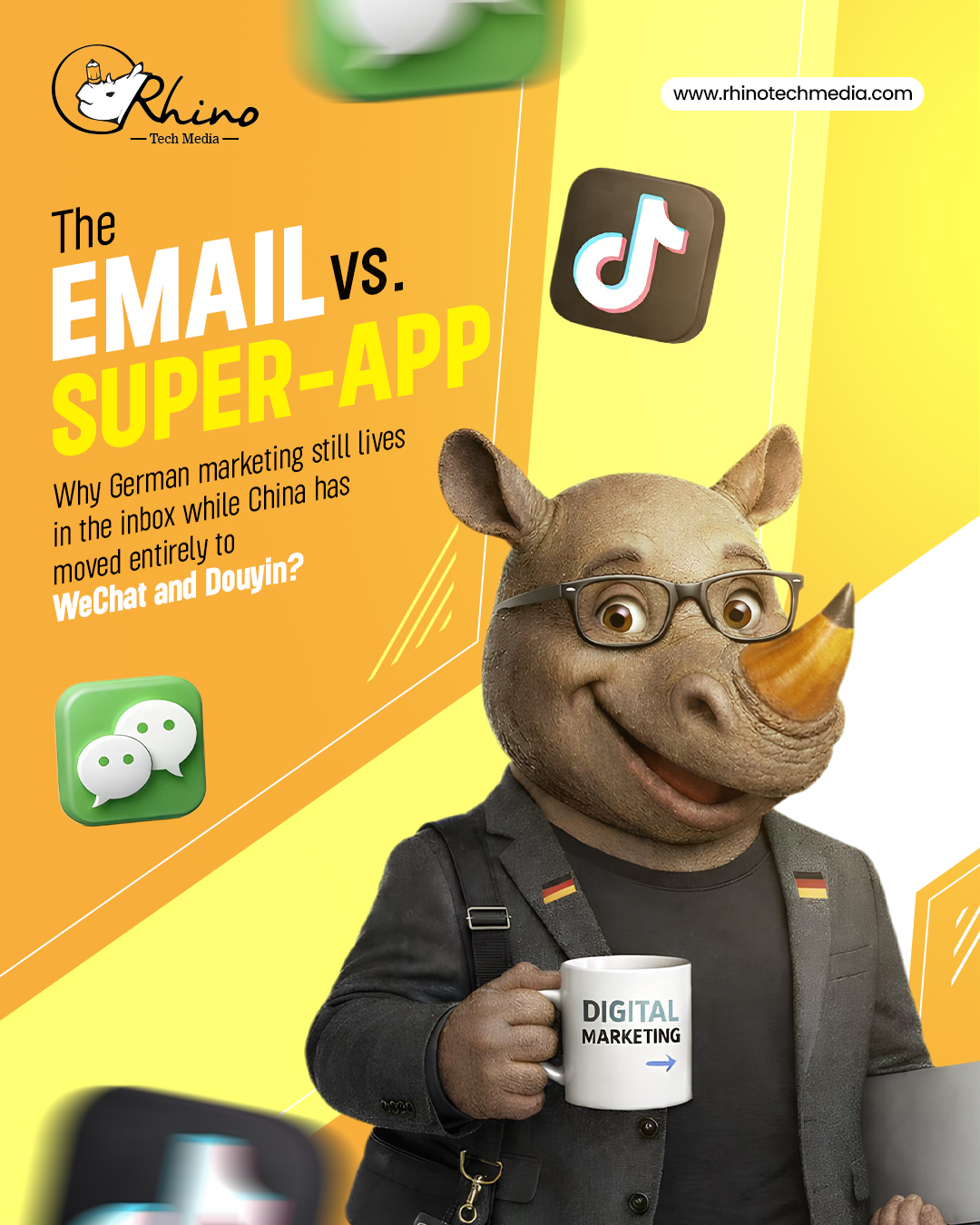
The Email vs. Super-App Divide: A Comparative Marketing Essay
Introduction
Digital marketing today is shaped by the platforms and communication norms prevalent in different regions. In Germany and much of the Western world, email marketing remains a foundational channel, deeply embedded in business and consumer interactions. In contrast, China’s digital ecosystem has evolved around multifunctional “super-apps” such as WeChat and Douyin, rendering traditional email marketing largely ineffective. Understanding this divide is crucial for marketers aiming to operate globally and adapt to localized digital behaviors.
The German Marketing Landscape: Email’s Lasting Relevance
In Germany, email continues to be one of the most powerful digital marketing tools. According to recent studies, a large majority of German online shops actively use email campaigns as part of their core marketing mix, with approximately 90% sending regular marketing emails and only a small minority opting out entirely. This highlights how email remains central in German digital practices.
The reasons for email’s enduring role in Germany are both cultural and practical:
- High email engagement: A majority of Germans check their inboxes regularly, with estimates suggesting that eight out of ten people use email frequently, making it a direct line to consumers.
- Strong infrastructure and ROI: Email marketing is not only cost-effective and measurable, but also delivers high return on investment (ROI), making it attractive for businesses across industries.
- Regulatory clarity and trust: Germany’s strict data protection laws (like GDPR) reinforce a permission-based approach to email marketing, often resulting in higher engagement and better deliverability compared to markets with laxer consent norms.
- Fragmented social landscape: While social media is widely used, Germany’s digital ecosystem lacks a single dominant, multifunctional platform,unlike China’s WeChat,so email remains a unifying channel across demographics.
In sum, the German digital marketing environment reinforces email as a reliable bridge between brands and consumers, both in B2C and B2B contexts.
China’s Super-App Ecosystem: A Unified Digital Universe
China’s digital landscape, by contrast, has grown around super-apps,integrated platforms that combine messaging, social networking, payments, commerce, and more into a single interface. WeChat, launched in 2011, has evolved into the country’s most dominant digital hub, used not just for personal communication but also for business, commerce, customer service, and content distribution.
A few core features of China’s ecosystem illustrate why email is sidelined:
- Mobile-first and app-centric adoption: Because smartphones became widespread before entrenched email habits developed, Chinese users often bypassed email altogether, instead favoring chat and social functions as primary digital behaviors.
- Daily integration of services: WeChat and Douyin are more than communication tools,they manage payments, shopping, official services, and brand engagement without leaving the app, effectively internalizing the whole customer journey.
- Business communication on consumer platforms: Many Chinese professionals use WeChat for professional outreach, negotiations, and sales conversations, with studies showing that up to 90% of business communication in China happens on WeChat, far surpassing email usage.
- Low email engagement: Email is rarely checked by Chinese users; less than a small fraction open email regularly, and many don’t use it for either personal or business interactions.
Together, these factors explain why email marketing that thrives in the West fails to penetrate Chinese digital behavior, compelling marketers to adopt super-app tactics to connect with audiences effectively.
Comparative Dynamics: Culture, Technology, and Marketing
The divergence between German and Chinese marketing paradigms stems from deeper cultural and technological differences:
1. Technological Evolution
Germany’s digital adoption patterns emerged in a world where email and desktop computing were foundational to internet use. Email became embedded in personal and professional communications early and consistently. China’s mobile revolution, by contrast, leap-frogged traditional desktop Internet usage, leading users to adopt mobile apps as the default interface for all digital activity.
2. Consumer Behavior and Expectations
German consumers expect direct, somewhat formal communication through email, which can be personalized and consent-based. Chinese consumers, comfortable with real-time messaging and mobile commerce within super-apps, engage more naturally with interactive feeds, chat interactions, and in-app purchases.
3. Ecosystem Structure
China’s super-apps function as “walled gardens”,closed ecosystems where discovery, interaction, transaction, and feedback all occur without leaving the platform. This contrasts with the Western model of interconnected but specialized services (separate apps for messaging, search, payments, and shopping).
Implications for Global Marketers
Marketers operating in these two contexts must tailor their strategies accordingly:
- In Germany and similar Western ecosystems: Email remains a core channel for storytelling, customer lifecycle management, and measurable engagement. Here, integrating email with complementary digital channels (search, social, SEO) optimizes outreach.
- In China and comparable markets: Success hinges on mastering super-app platforms like WeChat and Douyin, crafting content that thrives in mobile environments, and leveraging integrated commerce, social sharing, and mini-programs to connect with users where they already spend time.
Understanding the local technology adoption and cultural communication norms is therefore not just desirable but essential for effective marketing.
Conclusion
The contrast between German marketing’s reliance on email and China’s embrace of super-apps like WeChat and Douyin highlights how digital habits shape strategic choices. While email remains relevant in Germany due to high engagement and infrastructural roots, China’s mobile ecosystem has leap-frogged traditional channels, embedding marketing inside multifunctional platforms that reflect everyday life. Marketers should not assume a universal approach; instead, they must adapt to the communication landscape of each market to succeed in a globally connected,yet locally distinct,digital world.