
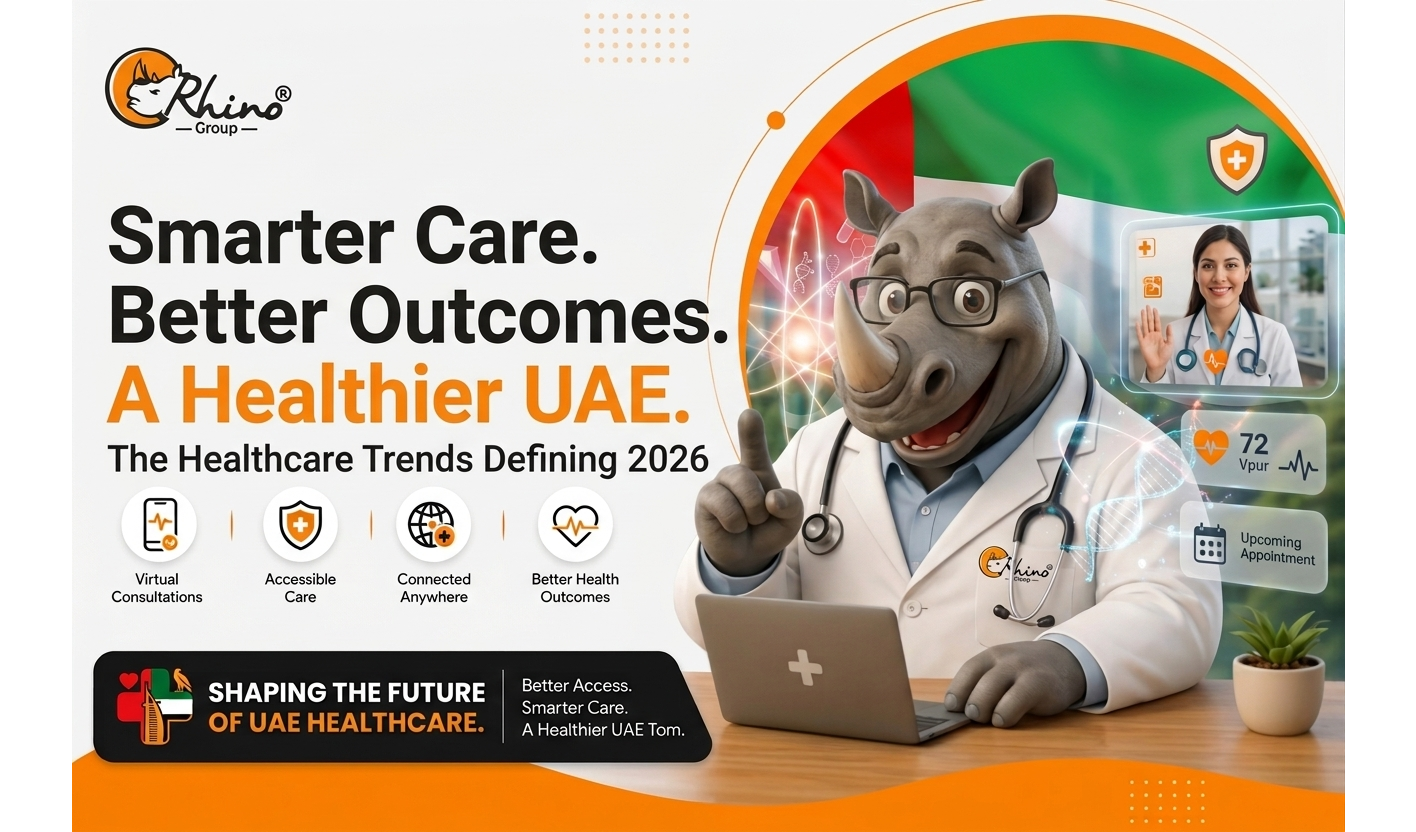
The Healthcare Trends Defining 2026
Overview
The UAE healthcare sector is entering a new phase of transformation in 2026, driven by artificial intelligence, digital health, precision medicine, advanced diagnostics, and smart healthcare infrastructure. Supported by strong government investment and ambitious national strategies, the UAE is positioning itself as a regional leader in innovative, technology-enabled healthcare.
Healthcare providers are increasingly adopting AI-powered tools, remote care, connected health platforms, and data-driven decision-making to improve efficiency and patient outcomes. At the same time, growing demand for preventive care, personalised treatment, and specialised medical services is creating new opportunities across the healthcare ecosystem.
Key Highlights:
l AI-Powered Healthcare: Artificial intelligence is increasingly being used for diagnostics, medical imaging, clinical decision-making, drug discovery, and personalised treatment.
l Digital Health Expansion: Telemedicine, digital health platforms, electronic health records, and remote patient monitoring are becoming increasingly integrated into healthcare delivery.
- l Smart Hospitals: Hospitals are adopting automation, connected medical devices, robotics, and real-time data systems to improve operational efficiency and patient care.
- l Precision & Personalised Medicine: Advances in genomics, molecular diagnostics, and data analytics are supporting more targeted approaches to prevention, diagnosis, and treatment.
- l Preventive & Population Health: Greater emphasis is being placed on early detection, health screening, wellness, and managing chronic diseases before they become more complex.
- l Advanced Medical Tourism: The UAE continues to strengthen its position as a destination for specialised healthcare, attracting international patients seeking advanced treatments and high-quality medical services.
- l Biotechnology & Life Sciences: Investment in biotechnology, pharmaceuticals, research, and advanced medical technologies is creating new opportunities for innovation and healthcare development.
- l Healthcare Data & Interoperability: Secure health-data exchange and connected healthcare systems are becoming increasingly important for delivering coordinated, patient-centred care.
- l Robotics & Medical Automation: Robotic surgery, automated laboratory systems, pharmacy automation, and other technologies are helping healthcare providers improve precision and productivity.
- l Sustainable Healthcare: Healthcare organisations are increasingly exploring energy-efficient facilities, sustainable technologies, waste reduction, and environmentally responsible operations.
- l Public–Private Partnerships: Collaboration between government institutions, private healthcare providers, technology companies, and investors is helping accelerate healthcare innovation.
- l Patient-Centred Care: The UAE healthcare market is shifting toward more convenient, personalised, digitally connected experiences that place patients at the centre of care.
Digital Health and Telemedicine Expansion
Digital healthcare has become an increasingly important component of healthcare delivery in the UAE. Patients can access consultations, medical information, appointments, prescriptions, and follow-up services through digital platforms.
Telemedicine is particularly valuable for patients who require routine consultations, chronic disease management, or follow-up care without visiting a hospital or clinic.
Major areas of development include:
- l Teleconsultations and virtual healthcare
- l Digital appointment systems
- l Electronic health records
- l Remote patient monitoring
- l Digital prescriptions
- l Mobile health applications
- l Online patient portals
- l Connected healthcare platforms
The next stage of digital healthcare will focus on integrating these services into broader healthcare ecosystems rather than operating them as standalone digital products.
Smart Hospitals and Healthcare Automation
The UAE is increasingly developing healthcare environments where connected devices, automation, robotics, and real-time data work together.
Smart hospitals can use technology to improve everything from patient admission and scheduling to diagnostics, surgery, medication management, and facility operations.
Smart hospital technologies include:
- l Connected medical devices
- l Automated laboratory systems
- l Robotics
- l Digital patient monitoring
- l Smart hospital management platforms
- l Automated pharmacy systems
- l Real-time operational analytics
- l Intelligent facility management
Automation can reduce repetitive workloads, improve operational efficiency, and allow healthcare professionals to spend more time on patient care.
Precision and Personalised Medicine
Healthcare is gradually moving from a one-size-fits-all approach toward treatments that consider an individual’s genetics, lifestyle, medical history, and biological characteristics.
Developments in genomics, molecular diagnostics, biomarkers, and data analytics are supporting more personalised approaches to disease prevention and treatment.
Growth areas include:
- l Genomic testing
- l Molecular diagnostics
- l Biomarker analysis
- l Personalised cancer treatment
- l Genetic risk assessment
- l Pharmacogenomics
- l Precision prevention
- l Personalised treatment planning
This trend is particularly significant for oncology, rare diseases, inherited conditions, and chronic illnesses.
Advanced Diagnostics and Medical Imaging
Diagnostics are becoming increasingly sophisticated as healthcare providers adopt AI-assisted imaging, molecular testing, automation, and advanced laboratory technologies.
Modern diagnostic technologies can help healthcare professionals detect diseases earlier and provide more detailed information for treatment planning.
Important developments include:
- l AI-assisted radiology
- l Advanced medical imaging
- l Molecular diagnostics
- l Automated laboratory testing
- l Genetic testing
- l Liquid biopsy technologies
- l Point-of-care diagnostics
- l Digital pathology
The expansion of advanced diagnostics is expected to strengthen early detection and support the growth of precision medicine.
Growth of Biotechnology and Life Sciences
The UAE is increasingly looking beyond healthcare delivery toward the broader life sciences ecosystem. Biotechnology, pharmaceuticals, medical research, diagnostics, and health technology are becoming strategically important areas.
Investment in life sciences can support the development of new treatments, diagnostics, research capabilities, and healthcare technologies.
Key opportunities include:
- l Biotechnology research
- l Pharmaceutical development
- l Advanced diagnostics
- l Cell and gene therapies
- l Medical research
- l Biomanufacturing
- l Health technology
- l Clinical research
The development of a stronger life sciences ecosystem could also attract international companies, researchers, investors, and specialised talent.
Pharmaceutical Innovation and Local Manufacturing
Pharmaceuticals remain an important component of the UAE healthcare ecosystem, while local manufacturing and supply-chain resilience are receiving greater attention.
The healthcare industry is increasingly interested in improving access to essential medicines while developing stronger regional capabilities.
Key trends include:
- l Pharmaceutical manufacturing
- l Biosimilars and biologics
- l Advanced therapies
- l Medicine supply-chain development
- l Pharmaceutical technology
- l Drug research and development
- l Digital pharmaceutical services
Greater integration between healthcare providers, pharmaceutical companies, research institutions, and technology firms could strengthen the country’s healthcare innovation ecosystem.
Medical Tourism Continues to Expand
The UAE has established itself as an important destination for international patients seeking high-quality medical services. In 2026, medical tourism continues to benefit from advanced hospitals, specialist physicians, modern infrastructure, and international connectivity.
Patients are increasingly seeking specialised services rather than basic healthcare alone.
High-potential areas include:
- l Cosmetic and aesthetic medicine
- l Orthopaedics
- l Fertility treatment
- l Oncology
- l Cardiology
- l Dental care
- l Advanced surgery
- l Rehabilitation
- l Preventive health programmes
The combination of healthcare, hospitality, tourism, and digital services creates significant opportunities for the UAE’s medical tourism ecosystem.
Robotics and Automation in Healthcare
Robotics is gradually moving from experimental applications into practical healthcare environments. Robots can support surgeons, laboratories, pharmacies, logistics teams, and rehabilitation services.
Potential applications include:
- l Robotic-assisted surgery
- l Rehabilitation robotics
- l Automated laboratory processes
- l Robotic pharmacy systems
- l Hospital logistics
- l Disinfection systems
- l Assistive technologies
As these technologies mature, healthcare providers will increasingly evaluate robotics based on measurable improvements in safety, efficiency, precision, and patient outcomes.
Connected Devices and Remote Patient Monitoring
Wearables and connected medical devices are changing how healthcare providers collect and analyse patient information.
Instead of relying exclusively on occasional hospital visits, healthcare professionals can increasingly monitor selected health indicators remotely.
Examples include:
- l Smartwatches and health trackers
- l Remote cardiac monitoring
- l Glucose monitoring
- l Connected blood-pressure devices
- l Digital respiratory monitoring
- l Home-based patient monitoring
- l Chronic disease management platforms
Remote monitoring can be especially valuable for patients with long-term conditions who require continuous observation.
Chronic Disease Management
Chronic diseases remain a major healthcare challenge, making long-term disease management an important market opportunity.
Technology is helping providers move toward continuous monitoring and personalised management rather than relying only on periodic consultations.
Important areas include:
- l Diabetes management
- l Cardiovascular disease
- l Obesity
- l Respiratory conditions
- l Kidney disease
- l Cancer care
- l Remote monitoring
- l Personalised lifestyle programmes
Digital platforms, wearable devices, AI analytics, and patient education can support better long-term disease management.
Sustainable Healthcare Infrastructure
Sustainability is also becoming increasingly relevant to healthcare development. Hospitals and healthcare facilities are exploring ways to reduce energy consumption, waste, and operational costs while maintaining high-quality care.
Sustainable healthcare initiatives include:
- l Energy-efficient hospitals
- l Renewable energy integration
- l Smart building systems
- l Medical waste reduction
- l Sustainable procurement
- l Water-efficiency measures
- l Environmentally responsible facility design
The combination of sustainability and smart technology could help healthcare organisations build more efficient facilities for the future.
Healthcare Workforce Transformation
Technology is changing not only healthcare services but also the skills required from healthcare professionals.
Doctors, nurses, laboratory specialists, pharmacists, administrators, and other professionals increasingly need to understand digital systems and data-driven healthcare.
Workforce priorities include:
- l AI and digital health skills
- l Data literacy
- l Continuous professional training
- l Advanced clinical specialisation
- l Technology-enabled patient care
- l Healthcare management
- l Cybersecurity awareness
- l Multidisciplinary collaboration
The future healthcare workforce will increasingly combine clinical expertise with technological and analytical capabilities.
Key Opportunities in UAE Healthcare in 2026
The transformation of the healthcare sector is creating opportunities for investors, healthcare providers, technology companies, and entrepreneurs.
High-potential areas include:
- l Artificial intelligence and health technology
- l Digital health platforms
- l Medical diagnostics
- l Precision medicine
- l Biotechnology
- l Pharmaceutical manufacturing
- l Medical devices
- l Robotics
- l Healthcare cybersecurity
- l Remote patient monitoring
- l Medical tourism
- l Preventive healthcare
- l Healthcare analytics
- l Smart hospital infrastructure
Challenges Facing the UAE Healthcare Sector
Despite its strong growth potential, the sector also faces challenges that healthcare organisations must address as technology adoption accelerates.
Major challenges include:
- l Managing the cost of advanced technologies
- l Protecting sensitive health data
- l Ensuring cybersecurity
- l Integrating different digital healthcare systems
- l Recruiting highly specialised talent
- l Maintaining regulatory compliance
- l Ensuring equitable access to advanced healthcare
- l Demonstrating the clinical value of emerging technologies
- l Managing the ethical use of artificial intelligence
Successfully addressing these challenges will be essential for maintaining sustainable growth.
Conclusion
UAE Healthcare Trends 2026 reflect a fundamental shift from reactive healthcare toward smarter, more predictive and personalised care. AI, digital health, precision medicine, biotechnology, smart hospitals, and advanced diagnostics are reshaping how healthcare is delivered.
For healthcare providers and investors, the opportunity extends beyond adopting individual technologies. The greatest potential lies in creating an integrated healthcare ecosystem where data, technology, medical expertise, and patient-centred care work together.
The UAE’s healthcare transformation is therefore not simply about adopting new technology—it is about building a smarter, more connected, and more resilient healthcare system for the future.
