
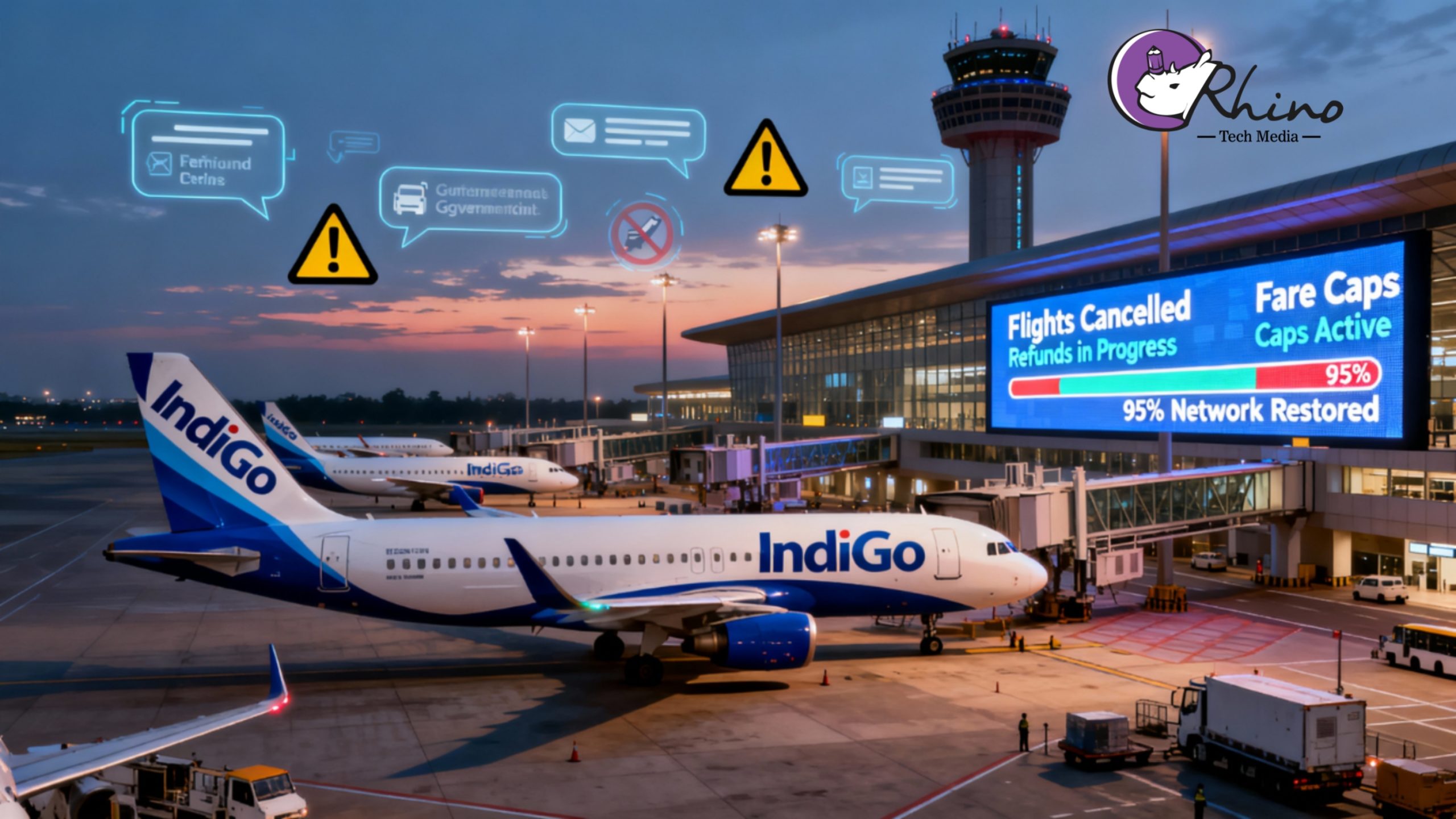
What happened: the crisis
IndiGo, India’s largest domestic airline, faced a major operational collapse in early December 2025. The root cause: new pilot/crew flying/rest rules (the “Flight Duty Time Limitation” or FDTL norms) which came into force on 1 November 2025. IndiGo reportedly failed to comply with significant portions of them (night landings, rest hours) and that led to mass flight cancellations.
Because IndiGo carries about ~60 % of the domestic traffic, the wave of cancellations and reduced capacity rippled through the whole market.
As flights were cancelled or restricted, seats became scarce, and airlines (including but not only IndiGo) began charging very high fares. For example: return fares on major routes reportedly jumping to Rs 80,000-90,000.
Government intervention: fare-caps
Seeing what they described as “unreasonable surge” in fares during the disruption, the Ministry of Civil Aviation (MoCA) issued a directive on 6 December 2025, mandating all airlines to adhere to domestic economy fares caps (excluding business class) until further notice.
The caps are:
- Up to 500 km: ₹7,500 base fare.
- 500-1,000 km: ₹12,000 base fare.
- 1,000-1,500 km: ₹15,000 base fare.
- Above 1,500 km: ₹18,000 base fare.
These caps exclude taxes and fees (like UDF, PSF, etc). They apply to all bookings made via airlines or OTAs and cover all domestic carriers under this disruption-period.
Current fare situation and real-world picture
What the caps imply for major routes
- For example, a route like Delhi → Mumbai is about ~1,400-1,500 km depending on flight path, so it falls in the “1,000-1,500 km” bucket and thus the cap is ₹15,000 base fare.
- A route like Delhi → Bengaluru is >1,500 km, so the cap would be ₹18,000 base fare.
Reality: fares are still high
However, multiple reports indicate that many fares remain above these caps or that the implementation is lagging:
- The order says airlines “shall” adhere, but industry sources note that actual fares on key routes (e.g., Delhi-Mumbai) were still 25 %+ above the cap at the time of reporting.
- Some reports say that because the caps were introduced only after the surge had begun, many passengers had already paid much higher fares (₹40,000 or more) and the caps are seen as “too late”.
- The MoCA directive also covers “till fares stabilise or till further review” meaning it is a temporary measure.
What this means for you
So if you were checking fares today, you might see:
- On a normal booking you might see fares close to the cap (₹15k/₹18k base fare depending on route) plus taxes/fees.
- But because the system is still stabilising, you may still encounter prices above the cap — particularly for last-minute bookings, or itineraries with connections, or flights in high demand.
- Also: the “cap” is for base fare; additional components (taxes, airport fees, surcharges) are extra and may push the total ticket cost higher.
Essay summary
In short: the IndiGo crisis triggered by crew-time regulation non-compliance led to widespread flight cancellations and a dramatic drop in domestic capacity. With fewer seats and many urgent travellers, domestic airfares surged sharply — in some cases five to ten times the usual rates. Seeing this, the government stepped in with fare-caps aimed at protecting passengers from opportunistic pricing.
Ideally, the caps should bring some rationality back: e.g., a Delhi-Mumbai flight should not cost more than around ₹15,000 base fare (for economy) during this disruption period, and Delhi-Bengaluru not more than ~₹18,000. But the practical reality is more nuanced: the caps are newly implemented; actual systems and airline pricing engines may not fully reflect them yet; and passengers booking at the last minute or via non-direct channels may still face inflated costs.
For someone looking to travel in this period, the best approach is: book early (so you avoid the scarcity premium), compare airlines (other carriers may have seats and less premium pricing), and verify the base fare + taxes to see if an airline is charging above the cap (in which case you might have a claim). Also, keep track of airline communications — for example, the Air India Group has said it will refund any bookings made above the capped fare amount.
Caveats & things to watch
- The caps are temporary — applied until fares stabilise or further review, so this could change.
- The cap only covers economy class on non-regional routes (not business class, not flights under the regional connectivity scheme).
- The cap applies to “base fare” but total ticket price includes taxes, surcharges, which may vary.
- Some bookings might have multiple legs, stop-overs, or non-standard routing which complicate enforcement of the cap.
- Even at capped fares, if demand remains high or availability low, the fare class you get might be limited or the schedule inconvenient.
Conclusion
The IndiGo fiasco has shaken India’s domestic aviation market. While the government’s fare-caps provide a guardrail to protect travellers from extreme pricing, the system is still recovering. For major routes like Delhi-Mumbai or Delhi-Bengaluru, you should expect economy base-fares around ₹15,000-₹18,000 (plus taxes) in the near term – anything wildly above that should ring alarm bells. But given ongoing instability, one must still shop smart, book early, and remain vigilant.