
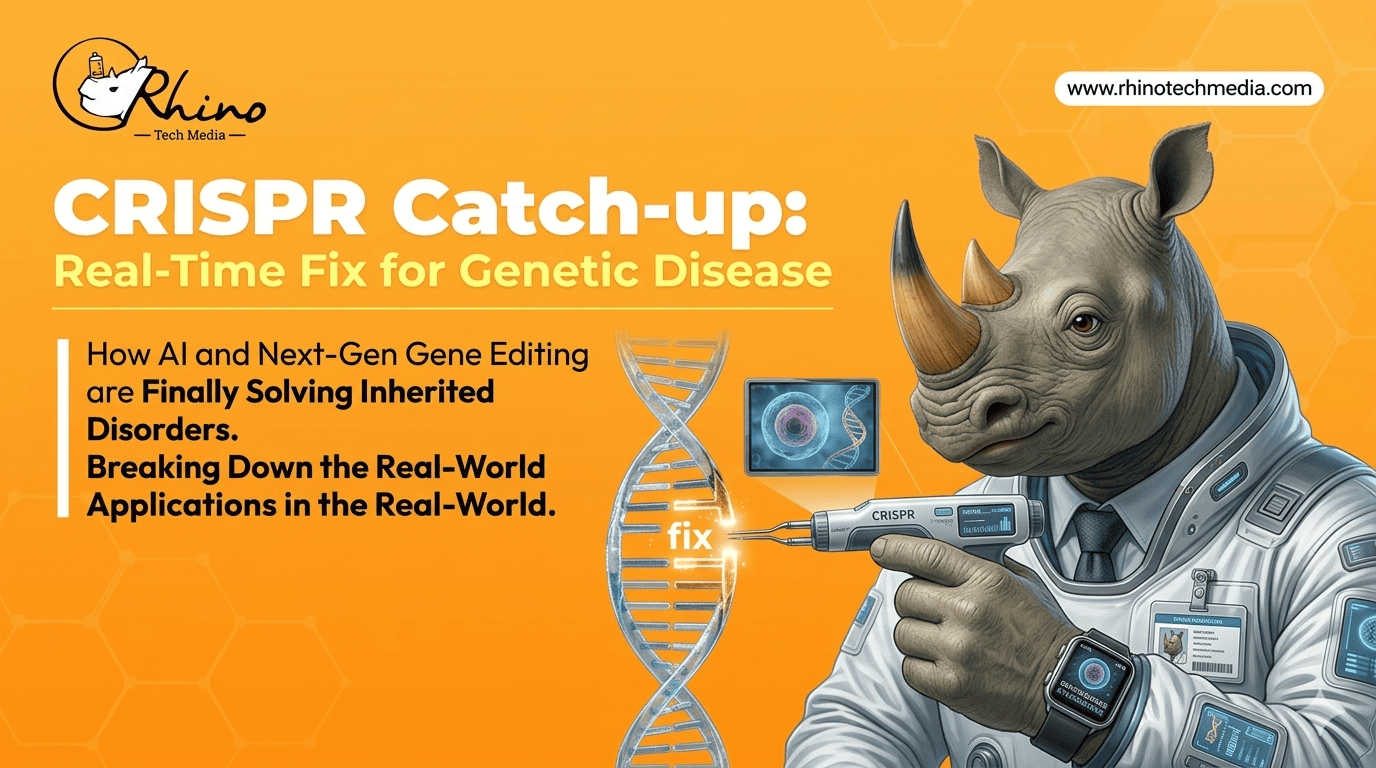
CRISPR Catch-up: Real-Time Fix for Genetic Disease
The field of genetic medicine is undergoing a radical transformation, and at the center of this revolution is CRISPR (Clustered Regularly Interspaced Short Palindromic Repeats). Often described as “molecular scissors,” CRISPR allows scientists to edit DNA with unprecedented precision. What once seemed like science fiction—the ability to correct genetic mutations in real time,is now becoming a clinical reality. This blog explores how CRISPR is evolving into a “real-time fix” for genetic diseases, its breakthroughs, and the challenges that remain.
Understanding CRISPR: The Basics
CRISPR technology originated as a natural defense mechanism in bacteria, where it was used to cut invading viral DNA. Scientists adapted this system into a powerful gene-editing tool by combining a guide RNA with a Cas enzyme (commonly Cas9), enabling precise targeting and cutting of specific DNA sequences.
Once the DNA is cut, the cell’s natural repair mechanisms take over. Scientists can exploit this process to either disable faulty genes or replace them with healthy ones. This ability to directly “rewrite” genetic code marks a shift from treating symptoms to addressing the root cause of diseases.
From Lab to Clinic: Real-Time Genetic Fixes
In recent years, CRISPR has transitioned from experimental labs to real-world medical applications. By 2026, several landmark achievements have demonstrated its therapeutic potential. Notably, CRISPR-based treatments for sickle cell disease and beta-thalassemia have received regulatory approval, marking the first time gene editing has been used as a curative therapy rather than a management tool.
What makes CRISPR particularly exciting is its potential for real-time intervention. Scientists are now developing techniques to edit genes directly inside the human body (in vivo), rather than extracting cells, modifying them in a lab, and reinserting them. Early clinical trials have shown that CRISPR can successfully target specific organs, such as the liver, and significantly reduce disease-causing proteins.
Even more groundbreaking is the emergence of personalized CRISPR therapies. In one case, a baby with a rare metabolic disorder received a custom-designed gene-editing treatment tailored to their unique mutation. This approach represents a major step toward precision medicine, where treatments are designed for individual patients in real time.
Next-Generation Editing: Beyond Cutting DNA
Traditional CRISPR methods rely on cutting DNA, which can sometimes lead to unintended changes. To overcome this, scientists have developed advanced techniques such as base editing and prime editing. These methods allow for highly precise modifications,down to a single “letter” in the genetic code,without creating double-strand breaks.
These innovations significantly reduce risks and open the door to treating a wider range of genetic conditions, including those caused by subtle mutations. Additionally, artificial intelligence is now being integrated into CRISPR research, helping scientists design more accurate edits and predict potential side effects before they occur.
Expanding Applications in Disease Treatment
CRISPR’s applications extend far beyond rare genetic disorders. It is being explored in the treatment of cancer, cardiovascular diseases, and even infectious diseases. For instance, CRISPR can be used to engineer immune cells to better recognize and destroy cancer cells, enhancing the effectiveness of immunotherapy.
There is also growing interest in “one-time” treatments for chronic conditions. Early trials suggest that a single CRISPR-based intervention could provide long-lasting or even permanent relief by permanently altering disease-causing genes.
In addition, CRISPR is revolutionizing diagnostics. New CRISPR-based tools can detect diseases at extremely low levels, enabling earlier and more accurate diagnosis.
Challenges and Ethical Considerations
Despite its promise, CRISPR is not without challenges. One major concern is off-target effects, where unintended parts of the genome are edited. While newer techniques have improved precision, ensuring absolute safety remains a critical hurdle.
Another challenge is delivery,getting CRISPR components to the right cells in the body. While organs like the liver are relatively accessible, targeting tissues such as the brain remains difficult.
Ethical concerns also play a significant role. The possibility of editing human embryos raises questions about “designer babies” and genetic inequality. There is an ongoing debate about where to draw the line between therapeutic use and enhancement.
The Future: Toward Real-Time Genetic Medicine
The concept of CRISPR as a “real-time fix” is becoming increasingly realistic. With advancements in delivery systems, AI-driven design, and ultra-precise editing techniques, the dream of correcting genetic diseases as they arise is closer than ever.
In the near future, doctors may be able to diagnose a genetic condition and administer a customized CRISPR therapy within weeks,or even days. This would represent a paradigm shift in medicine, transforming genetic diseases from lifelong conditions into treatable, and potentially curable, events.
Conclusion
CRISPR is redefining the boundaries of modern medicine. By enabling real-time correction of genetic errors, it offers hope for millions suffering from inherited diseases. While challenges remain, the rapid pace of innovation suggests that CRISPR will continue to evolve into a cornerstone of precision healthcare.
As science advances, the question is no longer whether we can edit genes, but how responsibly and effectively we will use this power to shape the future of human health.
