
Imagine delivering a project on time, meeting every quality standard, and sending your invoice with confidence, only to wait months for your payment. For many Micro, Small, and Medium Enterprises (MSMEs) in India, delayed payments are not just a minor inconvenience but a serious business challenge.
While expenses such as employee salaries, rent, raw materials, and operational costs continue to increase, delayed payments can create cash flow problems, slow business growth, and limit future opportunities.
To address this challenge, the Micro, Small and Medium Enterprises Development (MSMED) Act, 2006 provides legal protection to eligible MSMEs by requiring buyers to make payments within a specified timeline. If buyers fail to clear payments within the permitted period, they become liable to pay compound interest at three times the Reserve Bank of India (RBI) Bank Rate.
As awareness and compliance continue to grow in 2026, understanding this provision is important for both MSMEs and buyers. Knowing your rights helps protect your business, while timely payments help build stronger supplier relationships and a more reliable business ecosystem.
What Is the MSME 45-Day Payment Rule?
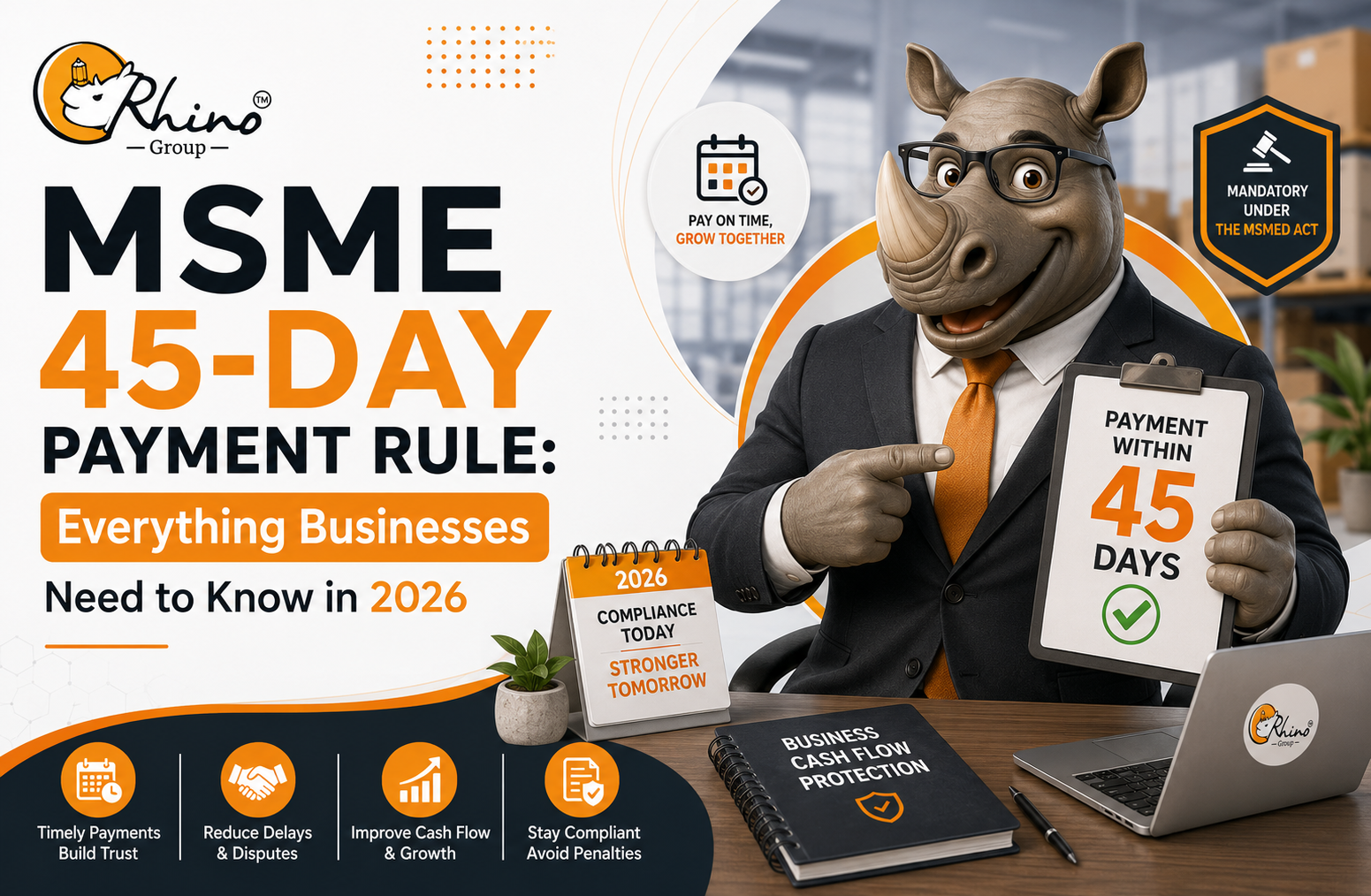
The MSME 45-Day Payment Rule is a legal provision under the MSMED Act that protects registered MSMEs from extended payment delays. It ensures that buyers settle payments within the legally defined timeline, helping small businesses maintain stable cash flow.
Key Highlights of the Rule
- Buyers should make payments within the agreed timeline after accepting goods or services.
- If a written agreement exists, the payment period cannot exceed 45 days from the date of acceptance or deemed acceptance.
- If there is no written agreement, payment must generally be made within 15 days from the date of acceptance or deemed acceptance.
- Delayed payments attract compound interest at three times the RBI Bank Rate.
- The benefit applies to eligible Micro and Small Enterprises registered under Udyam Registration.
This provision encourages responsible payment practices and supports the financial stability of India’s MSME sector.
Why Timely Payments Matter for MSMEs?
MSMEs are a major contributor to India’s economy by supporting employment, innovation, manufacturing, and entrepreneurship. However, delayed payments can create significant financial pressure, especially for smaller businesses operating with limited working capital.
A delayed invoice can impact:
- Employee salary payments.
- Purchase of raw materials.
- Daily operational expenses.
- Loan repayment schedules.
- Business expansion plans.
- Investment opportunities.
When businesses receive payments on time, they can focus on improving products, serving customers better, and growing sustainably.
Understanding the 3x Interest Provision
The MSMED Act discourages unnecessary payment delays by imposing statutory interest on overdue amounts.
If a buyer does not make payment within the legally permitted period, they are required to pay compound interest calculated at three times the RBI Bank Rate until the outstanding amount is settled.
Why Does This Provision Matter?
This rule:
- Protects MSMEs from financial difficulties caused by delayed payments.
- Encourages buyers to follow payment discipline.
- Promotes fairness in business transactions.
- Builds trust between suppliers and buyers.
For buyers, making timely payments is not only a legal responsibility but also an important part of responsible corporate governance.
Who Can Claim Protection Under This Rule?
The payment protection applies to eligible Micro and Small Enterprises that meet the required registration criteria.
Businesses that may benefit include:
- Manufacturing enterprises.
- Service providers.
- Small-scale suppliers.
- Startups registered as MSMEs.
- Businesses with valid Udyam Registration.
Maintaining proper documentation is essential when dealing with payment disputes.
Important documents include:
- Udyam Registration Certificate.
- Purchase orders.
- Tax invoices.
- Delivery acknowledgements.
- Payment communication records.
- Written agreements, if available.
Proper records help businesses establish their claims and recover delayed payments more effectively.
How Can MSMEs Raise a Delayed Payment Complaint?
MSMEs facing payment delays can seek support through the MSME Samadhaan portal introduced by the Ministry of Micro, Small & Medium Enterprises.
Through this platform, eligible MSMEs can file delayed payment complaints against buyers. These cases may be reviewed by the Micro and Small Enterprises Facilitation Council (MSEFC) for resolution.
Keeping invoices, agreements, and delivery records updated can make the dispute resolution process smoother.
A Practical Example
Consider a small engineering company that supplies machinery to a large manufacturing organization. The products are delivered on time, inspected, and accepted without any quality issues. However, the buyer continues delaying payment.
During this period, the MSME still needs to pay employees, purchase materials, and manage daily expenses. Instead of using its working capital for business growth, the company struggles to maintain operations.
The MSME payment protection provisions help businesses recover outstanding payments along with applicable statutory interest, reducing the financial impact of delayed settlements.
Common Mistakes MSMEs Should Avoid
Although the law provides strong protection, businesses can weaken their position by ignoring basic compliance practices.
Common mistakes include:
- Delaying Udyam Registration.
- Issuing incomplete invoices.
- Not maintaining delivery proof.
- Failing to clearly define payment terms.
- Ignoring overdue invoices for long periods.
Simple administrative discipline can prevent unnecessary disputes and improve payment recovery.
How Businesses Can Prepare for Better Payment Compliance in 2026?
As digital business practices continue to grow, transparent payment management has become increasingly important.
MSMEs can improve payment recovery by:
- Tracking outstanding invoices regularly.
- Setting clear credit and payment terms.
- Maintaining digital transaction records.
- Following up on overdue payments promptly.
- Keeping business registrations and documents updated.
Buyers can improve compliance by:
- Creating structured payment approval workflows.
- Verifying supplier details in advance.
- Avoiding unnecessary internal delays.
- Maintaining clear communication with suppliers.
Businesses that prioritize financial discipline, accurate documentation, and timely settlements will be better positioned to build stronger partnerships in 2026 and beyond.
Conclusion
The MSME 45-Day Payment Rule is more than a legal requirement. It represents an effort to create a fair and transparent business environment where small enterprises can operate with confidence.
Timely payments help MSMEs maintain cash flow, support employment, invest in innovation, and contribute to India’s economic growth. At the same time, buyers who follow responsible payment practices strengthen supplier relationships, improve their reputation, and reduce the risk of financial and legal complications.
Strong business relationships are built on trust, accountability, and mutual respect. By understanding their responsibilities under the MSMED Act and adopting better payment practices, both MSMEs and buyers can create a more stable and sustainable business ecosystem.
