
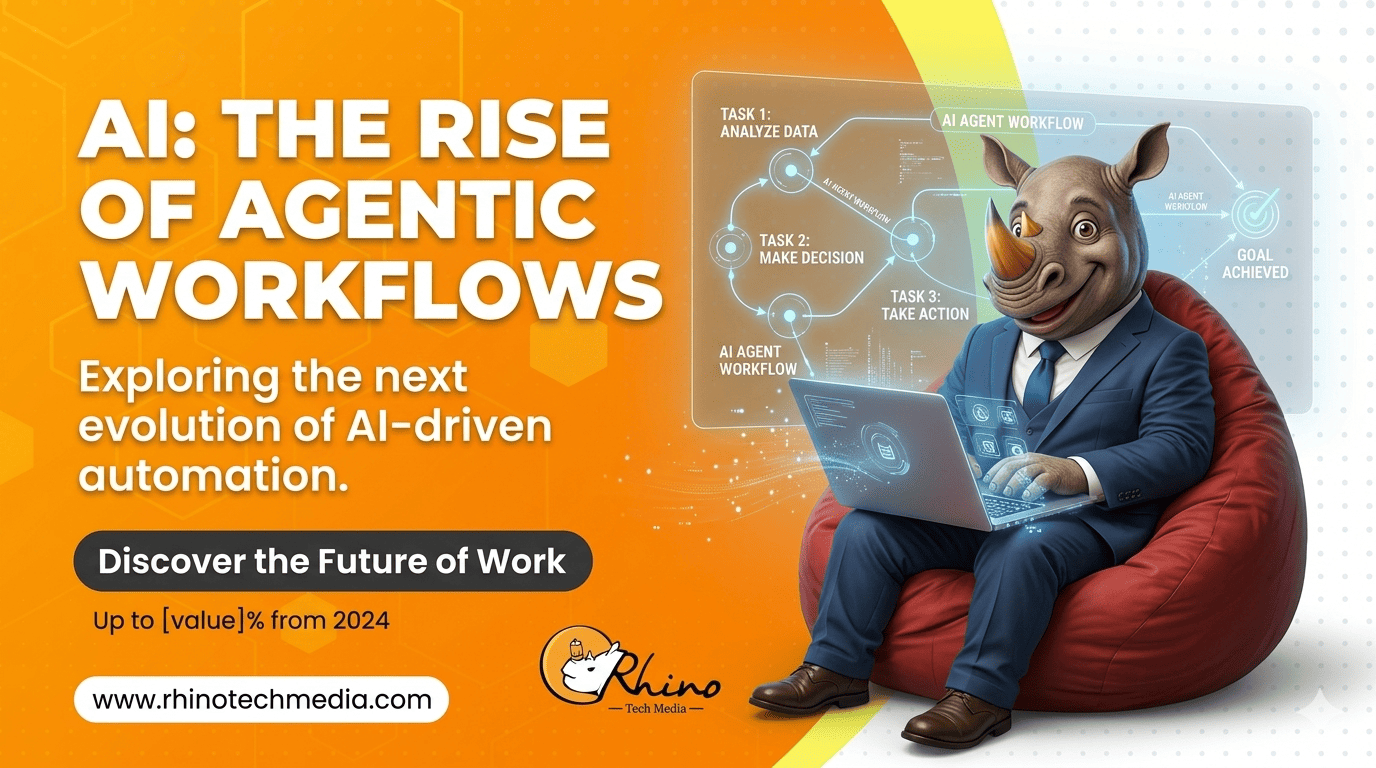
Artificial Intelligence is no longer just about prediction, automation, or answering questions,it is entering a new phase defined by autonomy. At the center of this shift is the concept of agentic workflows: systems where AI doesn’t just assist humans but actively plans, decides, and executes tasks with minimal intervention. This evolution is transforming how businesses operate, how individuals work, and how digital systems interact with the real world.
What Are Agentic Workflows?
Agentic workflows refer to AI-driven processes where intelligent agents can independently perform multi-step tasks. Unlike traditional automation, which follows rigid, pre-defined rules, agentic systems are adaptive. They can analyze a goal, break it down into subtasks, execute those steps, and adjust in real time based on feedback or changing conditions.
For example, instead of simply generating a report when prompted, an agentic AI system could gather data, analyze trends, create the report, design visuals, and even email it to stakeholders,all without continuous human input. The key difference lies in initiative: the system is not just responding, it is acting.
The Shift from Tools to Agents
Historically, AI has functioned as a tool,something humans actively use. You input a command, and it outputs a result. Agentic workflows change this dynamic by turning AI into a collaborator or even an operator.
This shift is powered by advances in large language models, memory systems, and integrations with external tools like APIs, databases, and software platforms. These technologies allow AI to maintain context over longer periods, make decisions based on evolving data, and interact with multiple systems simultaneously.
In essence, AI is moving from being a “smart assistant” to becoming a “digital worker.”
Key Components of Agentic Systems
Agentic workflows rely on a combination of capabilities:
- Goal Understanding: The ability to interpret high-level objectives rather than simple commands.
- Task Decomposition: Breaking down complex goals into manageable steps.
- Tool Use: Interacting with software, databases, and external systems to execute tasks.
- Memory: Retaining context and learning from past interactions.
- Feedback Loops: Adjusting actions based on results or errors.
These components enable AI agents to operate in dynamic environments where conditions are not always predictable.
Real-World Applications
The impact of agentic workflows is already visible across industries:
- Business Operations: AI agents can manage customer service pipelines, handle scheduling, and even oversee supply chain logistics.
- Content Creation: From ideation to publishing, agentic systems can create, edit, and distribute content across platforms.
- Software Development: AI agents can write code, debug errors, run tests, and deploy applications with minimal human oversight.
- Design and Architecture: For professionals like interior designers, agentic AI can generate layouts, source materials, estimate costs, and create presentations,streamlining the entire workflow.
These applications are not just about efficiency; they redefine the role of human professionals, shifting focus from execution to strategy and creativity.
Benefits of Agentic Workflows
The rise of agentic workflows brings several advantages:
- Increased Productivity: Tasks that once required hours of manual effort can now be completed in minutes.
- Scalability: Businesses can handle larger workloads without proportionally increasing human resources.
- Consistency: AI agents can maintain uniform quality across tasks.
- 24/7 Operation: Unlike humans, AI systems can operate continuously without fatigue.
For entrepreneurs and small business owners, this is particularly transformative. It enables lean teams to achieve outputs that previously required entire departments.
Challenges and Concerns
Despite their potential, agentic workflows introduce new challenges:
- Control and Oversight: Autonomous systems can make decisions that may not always align with human intentions.
- Reliability: Errors in one step can propagate through the workflow, leading to larger issues.
- Ethical Considerations: Questions around accountability, transparency, and bias become more complex when AI acts independently.
- Job Displacement: As AI takes over execution-heavy roles, the workforce must adapt to new skill requirements.
These concerns highlight the importance of designing systems with human-in-the-loop mechanisms, ensuring that autonomy does not come at the cost of accountability.
The Future of Work
Agentic workflows are not about replacing humans but augmenting them. The future workplace will likely involve collaboration between humans and AI agents, where humans provide direction, creativity, and judgment, while AI handles execution and optimization.
This shift will also redefine skills. The ability to manage AI, set clear objectives, and interpret outputs will become as important as technical expertise. In many ways, professionals will evolve into “orchestrators” of intelligent systems.
Conclusion
The rise of agentic workflows marks a pivotal moment in the evolution of Artificial Intelligence. By enabling systems to act independently and intelligently, we are moving toward a world where AI is not just a tool but an active participant in work and decision-making.
For businesses and individuals alike, the opportunity lies in embracing this shift early,understanding how to leverage these systems effectively while remaining mindful of their limitations. Those who can strike this balance will not only enhance productivity but also unlock entirely new ways of working and creating value.
